
dental implants
Dental Implants in South San Francisco: A Decision Guide Before Your Evaluation
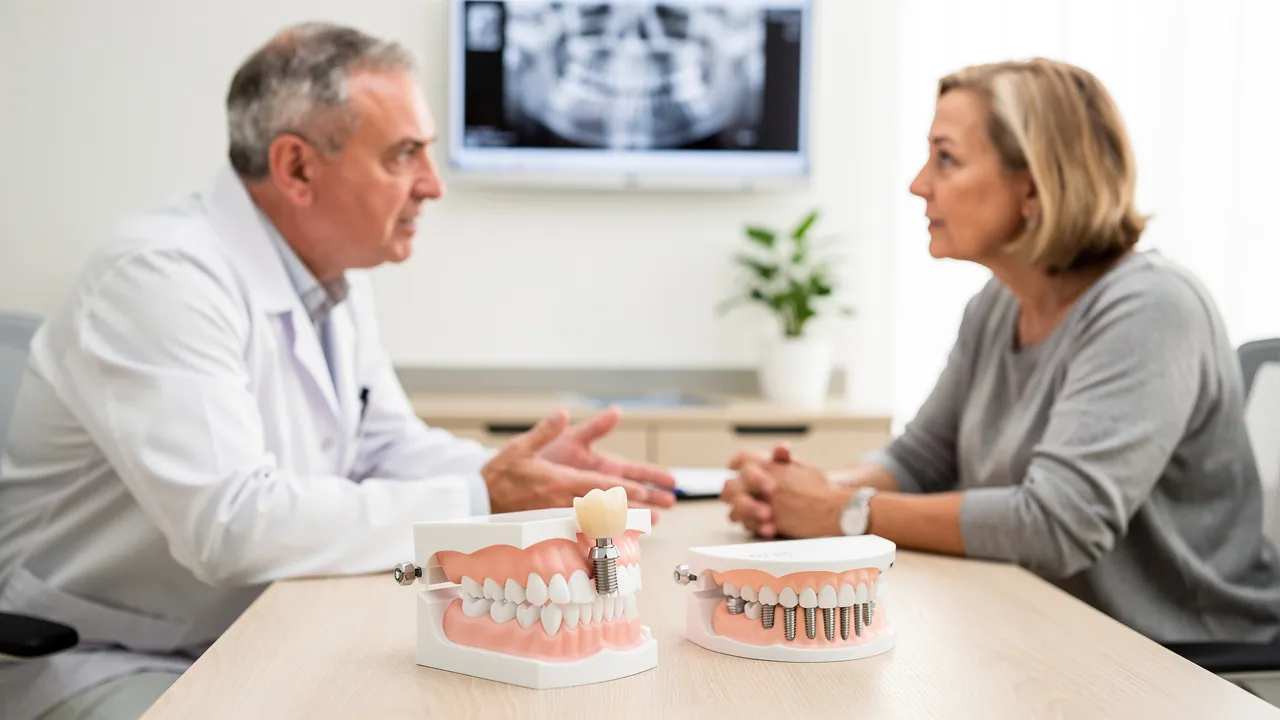
Start with the decision an implant evaluation must clarify
A dental implant consultation should help you move from a general concern about missing, damaged, or painful teeth to a treatment discussion that fits your mouth, goals, and health history. An implant consultation helps determine which implant-supported replacement option may fit your situation, whether you are considering replacement of one tooth, several teeth, or stabilization of full dentures.
You do not need to arrive with a treatment choice already made. The useful decision at this stage is whether to arrange an evaluation and what you need the appointment to clarify. A consultation may include a review of your mouth, jaw, health history, and goals, along with an assessment of bone and gum health, care that may be needed first, and a proposed treatment path with costs and timing.
A calm way to approach the appointment is to work through three questions:
- What problem are you trying to address, and what kind of replacement is being discussed?
- What information does the dentist need before recommending a plan?
- What would the treatment involve in stages, including healing, restoration, maintenance, and cost?
Those questions keep the conversation specific without turning general information into an individual eligibility decision. Your evaluation is where the dentist can connect the broad treatment pathway to your examination and imaging. Bring your concerns plainly, ask for explanations in everyday language, and leave with a clear account of what is known, what still needs assessment, and what choices remain open.
The decision is not simply whether you like the idea of an implant. You are deciding whether you have enough information to discuss a personalized plan. That means understanding what an implant replaces, how the visible tooth or teeth would be attached, what stages may be involved, and what the financial discussion should include.
Understand what dental implants are meant to replace
Their purpose in restorative care is to provide a foundation for replacing missing teeth rather than functioning as the visible tooth itself.
A missing tooth can lead you to ask about a single replacement, while several missing teeth may lead to a discussion of a bridge or another supported option. An implant consultation can also address whether implants may help stabilize full dentures. The type of tooth loss and the number of teeth involved shape the conversation, but those facts alone do not determine which treatment is appropriate for you.
The word “implant” therefore describes only part of the finished restoration. The visible replacement may be a crown for a single tooth, a bridge for multiple missing teeth, or another custom-made replacement discussed during planning. The evaluation connects the condition you want addressed with the components needed to replace it.
If you are seeking care for a painful or damaged tooth, describe the symptoms and any changes you have noticed rather than assuming an implant is the answer. The purpose of the appointment is to examine the situation and discuss the available path. Ask which problem the proposed treatment is intended to address and whether care for another dental condition needs to come first.
A useful opening question is: “What would the implant replace in my case, and what other replacement options should we discuss?” That question keeps the conversation centered on the function and scope of the proposed restoration instead of on the implant label alone.
You can also ask whether the proposed treatment is intended to replace one visible tooth, several teeth, or support a denture. That distinction affects the type of restoration discussed later. It also helps you understand why a plan may include more than one implant or more than one replacement tooth without assuming that a particular arrangement is required.
Separate the implant components from the finished replacement
An implant restoration may include an implant placed in the jawbone, an abutment, and a final crown or other replacement tooth. These parts have different places in the treatment plan, so ask the dentist to identify each component rather than treating the complete restoration as a single item.
For a single missing tooth, the replacement tooth is typically a customized crown. The crown is designed around size, shape, color, and fit. When more than one tooth is missing, the proposed restoration may instead involve a custom-made bridge or denture. Treatment planning may also include discussion of single-tooth implants, implant-supported bridges, or full-arch solutions, depending on your situation.
The implant is the portion placed in the jawbone. The crown, bridge, denture, or other artificial tooth is the part that completes the proposed restoration. Ask for these distinctions in plain language so you know which part is being discussed at each appointment.
The distinction matters when you discuss scope and cost. A quoted or estimated treatment plan may refer to the implant placement, the restorative parts, or the full sequence. Ask these questions:
- Which teeth or spaces would the proposed restoration replace?
- Is the plan for a single-tooth crown, an implant-supported bridge, a denture-related solution, or another arrangement?
- Does the discussed plan include the implant, abutment, final crown or replacement, and any separate stages?
- Which parts would be completed during the same phase, and which parts would follow healing?
- Who will explain how the finished replacement is expected to fit with the surrounding teeth?
We handle implant placement, the abutment, and the final crown in-house using digital surgical guides. That is a description of our process, not a conclusion about which components you need. At an evaluation, ask how our process would apply to your proposed restoration and which parts of the plan are included in the written treatment discussion.
A component-by-component explanation can also make the financial conversation easier to follow. If someone refers only to “the implant,” ask whether that means the surgical component, the restorative component, or the complete proposed sequence. You should be able to connect each amount and appointment to a specific part of the treatment plan.
Map implant treatment in three broad stages
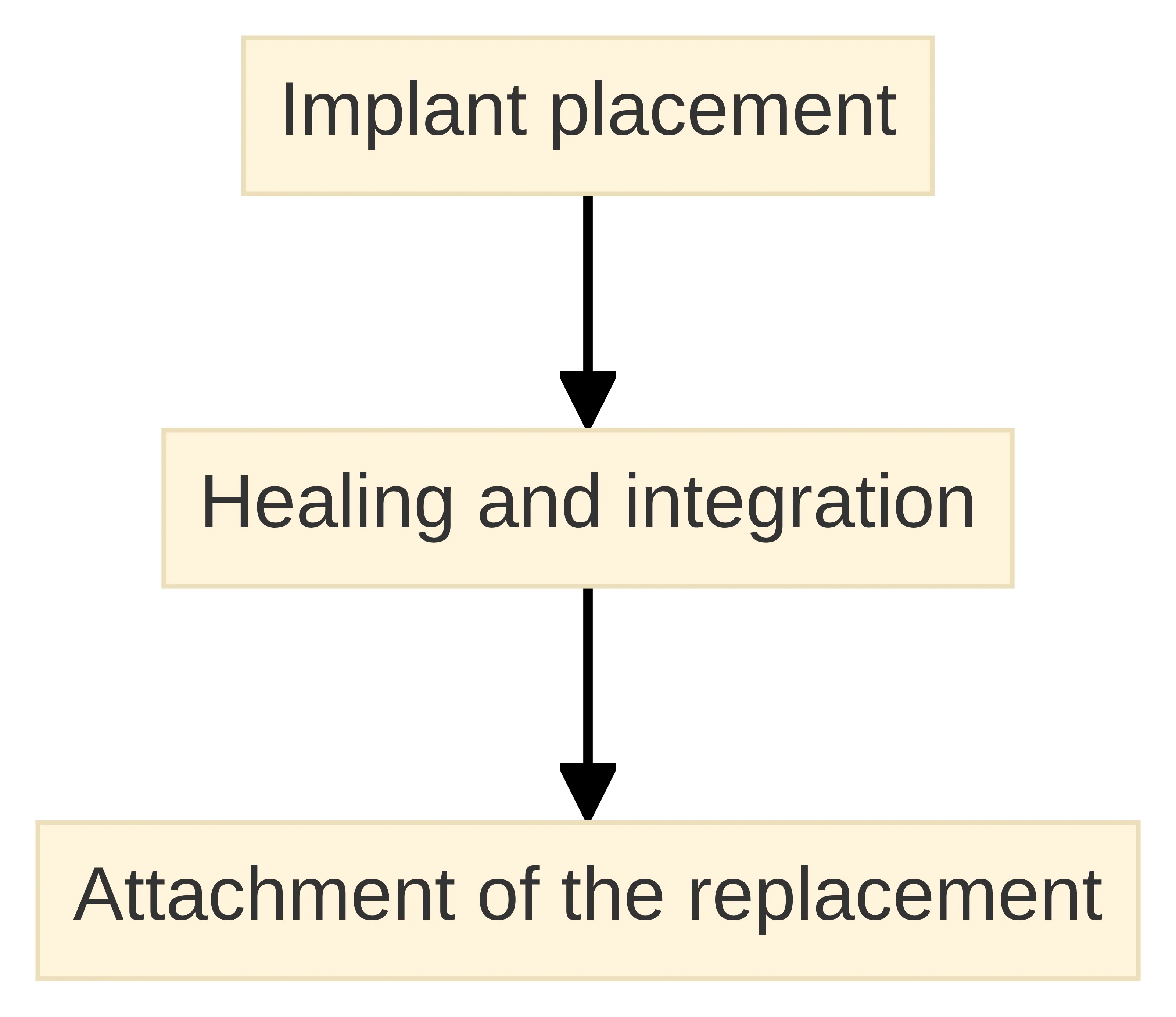
Implant treatment generally includes implant placement, healing as the bone integrates with the implant, and attachment of the replacement tooth or teeth. Thinking in these three broad stages gives you a framework for understanding the plan without assuming that every case follows the same schedule.
1. Implant placement
The first stage is surgical placement of the implant in the jawbone. Ask what the proposed placement would involve in your case, which area would be treated, and whether the dentist expects the replacement tooth to be attached at the same time or at a later stage. Ask which part of the planned restoration is being placed during that appointment and what follow-up is expected afterward.
2. Healing and integration
During osseointegration, bone grows around the implant and helps hold it in place. This healing stage is part of why the treatment plan may be divided into appointments rather than completed as one uninterrupted procedure. Ask what instructions you would receive during healing, what follow-up visits are planned, and what signs or changes should prompt you to contact the practice.
The term describes a process, not a guaranteed calendar. Your dentist can explain how healing fits into the proposed sequence and what needs to happen before the restorative component is attached. Ask whether the next stage depends on a follow-up assessment or another finding.
3. Attachment of the replacement
The final stage is placement of the artificial tooth or teeth. A single-tooth implant is typically restored with a customized crown, while multiple missing teeth may be restored with a bridge or denture. Ask when the restorative component would be designed, how fit and appearance would be discussed, and which appointment completes the proposed replacement.
This three-stage outline is a way to organize your questions, not a personal schedule. Your dentist may describe a different sequence or combine stages. Ask for the proposed order in writing so you can distinguish what happens before placement, during healing, and after the implant has integrated.
A helpful way to leave the consultation is with three separate answers: what would be placed, what healing period would be discussed, and what replacement would be attached afterward. If any answer remains conditional, ask what information is needed before the plan can be made more specific.
Treat timing and staging as consultation questions
Implant timing and staging vary, so a general timeline should not be treated as a promise for your treatment. Some treatment plans may involve waiting up to several months before replacement teeth are attached while the implant integrates, while other plans may involve placing the implant and replacement teeth in one visit. The appropriate sequence depends on the plan developed for the individual case.
Ask the dentist to separate the calendar into events rather than giving you one vague estimate. A useful sequence to clarify is:
- the evaluation, examination, and any imaging;
- care that may need to happen before implant placement;
- the placement appointment;
- the healing and follow-up period;
- the appointment or appointments for the crown, bridge, denture, or other replacement; and
- ongoing visits or maintenance discussions after restoration.
Ask which parts of the plan are staged and why. Ask what would need to be true before the next stage could begin. Ask what instructions apply during healing, including any food or activity guidance, and ask whom to contact if recovery does not follow the expectations explained at the appointment.
A consultation should also clarify whether the proposed timing is an estimate or a fixed appointment sequence. Cost and timing belong in the same conversation because a change in staging may affect which services are discussed at each step. Write down the expected order, the conditions for moving forward, and the questions you still need answered before deciding.
You may also want to ask how a change in one stage would affect the stages that follow. For example, ask whether a delay in attaching the replacement would change the number of visits, the timing of the final crown or bridge, or the financial amounts discussed. The point is not to predict every possible change. It is to understand which parts of the plan are fixed and which parts depend on healing or another assessment.
Use the phrase “What would make this timeline change?” as a practical prompt. The answer should identify a condition or decision point rather than leave you with a single calendar estimate that sounds more certain than the plan allows.
What the dentist may evaluate before recommending a plan
An implant evaluation may review your mouth, jaw, health history, and goals before a treatment path is recommended. The dentist may also check bone and gum health, identify care that needs attention first, and discuss the type of replacement that could address your situation.
The evaluation is not limited to the space where a tooth is missing. The proposed restoration needs to be considered alongside the surrounding teeth, jaw, gums, and the broader plan for your oral care. Ask what the dentist is assessing and how each finding affects the options under discussion.
You can organize the appointment around these areas:
- The dental problem: Explain which tooth or teeth concern you, how long the problem has been present, and what you want the replacement to do.
- The mouth and jaw: Ask what the examination shows about the treatment area and whether the surrounding structures affect the plan.
- Bone and gum health: Ask whether these areas need treatment or monitoring before implant placement.
- Health history: Share the history and information the dentist requests so the discussion reflects your circumstances.
- Goals: Describe whether your priority is replacing one tooth, addressing several missing teeth, or discussing support for a denture.
- Care needed first: Ask whether another condition should be addressed before the implant conversation moves to placement.
A dentist may use the evaluation to determine whether implant-supported replacement is appropriate for you, but you should not treat a general checklist as a personal candidacy answer. Ask for the reason behind each recommendation and request a plain-language explanation of what remains uncertain.
Your goals deserve a place in the assessment as well. Tell the dentist whether you are mainly concerned about replacing a missing tooth, restoring the ability to use that area, discussing the appearance of the replacement, or understanding alternatives. Stating the goal does not commit you to an option; it gives the treatment discussion a clear starting point.
Bring a concise history of the problem if you can. Note which tooth or teeth are involved, when you first noticed the concern, and any treatment or imaging you have already received. Your notes do not replace an examination, but they can help you describe the issue accurately and ask more focused questions.
Ask how imaging will shape the treatment plan
Dental imaging may help the dentist assess the proposed treatment area before recommending implant placement. Digital imaging, including cone-beam CT, may be used to assess bone density and map nearby anatomical structures such as nerves and sinuses.
The practical question is not simply whether an image will be taken. Ask what the image is intended to show and how the findings will affect the proposed plan. You can ask:
- What part of my mouth or jaw is being evaluated?
- What does the imaging show about the area where the implant would be placed?
- How do nearby nerves or sinuses relate to the proposed placement?
- Would the imaging change the number of stages, the replacement type, or the timing discussed?
- Will the findings be explained to me as part of the written treatment plan?
We digitally plan dental implants with an in-house Cone Beam CT scanner and use a surgical guide during placement for higher precision. That description explains our process. It does not tell you what your scan will show or establish that a particular plan is suitable for you.
Ask us to connect the imaging discussion to your proposed restoration. You should be able to distinguish the image itself, the finding the dentist identifies, and the treatment decision that follows from that finding.
If you already have dental images or records, bring them or tell the office where they came from. Ask whether they can be used for the discussion or whether additional imaging is needed. The answer should be tied to the treatment area and the questions the dentist needs to resolve.
Bring a treatment and recovery question checklist
A focused implant question checklist can help you compare the proposed plan with your priorities during the evaluation. The checklist should cover the treatment choice, imaging, staging, recovery instructions, long-term care, risks, cost, and insurance rather than focusing only on the day of placement.
Questions about the proposed treatment
- Which replacement option are you recommending for my situation, and what alternatives should we discuss?
- Which implant system is recommended, why does it fit the proposed plan, and what clinical reasoning supports that recommendation?
- What would the implant, abutment, crown, bridge, or denture each contribute to the finished restoration?
- What care should be completed before placement?
- What part of the proposed plan addresses the problem I want to solve?
Questions about imaging and staging
- What will the examination and imaging assess?
- How will the findings affect the order of treatment?
- Which appointments are expected, and which stages might be combined or separated?
- What conditions would need to be met before the next stage?
- Which parts of the plan are estimates, and which appointments can be scheduled in advance?
Questions about recovery
- What instructions should I follow after placement?
- What foods or activities should I expect the dentist to discuss during healing?
- What follow-up is planned during osseointegration?
- Which changes should lead me to contact the practice?
- Who should I contact if a question comes up between appointments?
Questions about maintenance and risks
- What long-term care will the replacement require?
- What possible risks or complications should I understand before treatment?
- How will the completed restoration be assessed at follow-up?
- What maintenance visits or home-care instructions should I expect the dentist to explain?
- What changes in the replacement or surrounding area should prompt a follow-up discussion?
Questions about the financial plan
- What is included in the proposed fee discussion, and what is separate?
- How are costs divided across the stages?
- What insurance information can be checked before treatment?
- Which parts of the plan could change if the treatment sequence changes?
Write down the answers, not just the questions. A clear plan should identify what the dentist recommends, why it is being recommended, what remains conditional, and what you would need to decide before proceeding.
Take the checklist in the order that matches your concerns. If the replacement type is still unclear, begin there. If the main uncertainty is timing or recovery, move those questions earlier. You do not need to ask every question word for word. Use the list to make sure the conversation covers the decisions that matter to you.
Before leaving, summarize the plan back in your own words: the proposed replacement, the next stage, the expected timing, the questions that remain open, and the financial items that need clarification. Ask whether your summary matches the dentist’s recommendation. This gives you a practical record without turning the consultation into a promise about the eventual result.
Resolve costs and insurance before committing
Implant costs should be discussed as part of the complete treatment path rather than as one universal price. A consultation may include discussion of costs and timing, and the proposed amount can depend on the components, stages, and care described for your situation.
Ask for a written explanation of the financial scope. The conversation should distinguish among:
- examination and imaging;
- implant placement;
- the abutment and final crown or other replacement;
- any separate stage of treatment;
- follow-up or maintenance discussed by the dentist; and
- the portion your insurance may or may not address.
Do not treat a listed practice fee as a complete or individualized implant price. Your final responsibility may vary with treatment needs and the plan recommended after evaluation. Ask what the estimate includes, what it does not include, and whether the amount is an estimate or a confirmed charge for a particular service.
We provide verification of benefits before treatment and accept 14 in-network PPO carriers. These are practice-specific statements as of October 26, 2026; they do not establish that your plan will cover a particular implant service or determine your final responsibility. Bring your insurance information and ask how the benefits discussion applies to the proposed stages.
A useful question is: “Can you show me how the clinical plan and the financial plan correspond?” That question helps you see whether the amount discussed covers the complete replacement or only one part of the process.
Insurance information should be treated as one part of the financial discussion, not as a substitute for a written treatment estimate. Ask which services are being submitted or discussed, what portion may be subject to your plan’s rules, and which amount remains your responsibility under the proposed plan. The answer may depend on the specific treatment components and your coverage.
If the treatment plan changes after examination or imaging, ask how the financial explanation changes with it. Keep the clinical sequence and the cost sequence together in your notes. That makes it easier to understand what you are being asked to decide before treatment begins.
Know what to prepare for a Westborough evaluation
A Westborough Dental Care evaluation is easier to use when you bring the information needed to discuss your dental concern and treatment questions. Please bring your insurance card, a list of current medications, and any prior dental records or X-rays to your first visit.
Use a short preparation list:
- Write down which tooth or teeth concern you and what you want to address.
- Bring your insurance card.
- Bring a current list of medications.
- Bring prior dental records or X-rays that you have available.
- Bring the questions you want answered about options, imaging, staging, recovery, maintenance, costs, and insurance.
- Note any previous conversations or treatment related to the tooth or teeth you want to discuss.
Our first visit lasts about 60 to 90 minutes and includes a comprehensive exam, a full series of digital X-rays, a professional cleaning if gum health allows, and a written treatment plan. That description applies to our first visit; ask how the visit will address your implant concerns and whether additional evaluation is needed for the proposed treatment.
Arrive ready to describe your goals without deciding the outcome in advance. If you have prior records, bring them even if you are unsure whether they will be useful. The appointment can then focus on connecting your history, examination, imaging, and goals to the options the dentist explains.
Your notes can be brief. Record the location of the concern, the questions you want answered, and any timing or financial issue that could affect your decision. If you are bringing someone with you, ask that person to help take notes so you can concentrate on the discussion.
The most useful preparation is not a conclusion about candidacy. It is a clear account of your concerns and enough information to discuss the proposed next step.
Use Westborough’s documented process as a question to verify
We handle implant placement, the abutment, and the final crown in-house using digital surgical guides.
This documented workflow gives you a concrete way to structure the conversation, not a reason to assume that one process applies identically to every situation. Ask how our documented workflow would relate to your proposed restoration and what the dentist expects the imaging and guide to contribute.
You can ask:
- Will an in-house Cone Beam CT scan be part of my evaluation or treatment planning?
- What will the scan assess in the area being considered?
- How would a surgical guide be used during the proposed placement?
- Which parts of my treatment would be handled in-house?
- Would the implant placement, abutment, and final crown be planned as separate stages for me?
- What alternative restoration or sequence should I understand before choosing a plan?
The answer should connect our process to your examination and proposed treatment rather than relying on technology terms alone. Ask what is planned, what is conditional on your evaluation, and what information will appear in the written treatment plan.
Our role is to explain the care we offer and the process we use in South San Francisco. Your evaluation is the place to discuss how that process relates to your own dental findings, goals, and questions.
Use the process discussion to ask for meaning, not just terminology. A scanner, guide, implant, abutment, and crown each refer to a part of the care pathway. Ask how those parts fit together in the plan being discussed with you, which decisions have already been made, and which decisions depend on your examination or imaging.
Request the evaluation in South San Francisco
A dental implant consultation is a practical next step when you want to understand whether an implant-supported replacement fits your situation without assuming the answer in advance. Bring your records, medication list, insurance card, and question checklist; then ask the dentist to explain the proposed components, imaging, stages, healing instructions, maintenance, risks, costs, and timing.
We accept new patients, and you can request an appointment through online booking or by calling us directly. We provide care in South San Francisco, where a dentist can discuss the treatment path related to your dental concerns. A qualified dentist must decide individual suitability after reviewing your examination, history, goals, and any needed imaging.
Leave the conversation with a clear understanding of the proposed replacement, the next decision point, the questions that remain open, and the financial information still needed. That gives you a sound basis for deciding whether to proceed with the plan presented to you.
Questions to bring to a dental implant evaluation
What are the main stages involved in dental implant treatment?
Dental implant treatment generally includes three stages: surgical placement of the implant, healing and osseointegration where the bone integrates with the implant, and finally, the attachment of the replacement tooth or teeth.
What questions should I ask during my dental implant consultation?
You should ask about the recommended treatment options, the type of implant system being suggested, the expected timeline for treatment, potential risks, and what long-term care will be required.
What should I bring to my dental implant evaluation at Westborough Dental Care?
Bring your insurance card, a list of current medications, any prior dental records or X-rays, and a list of questions you want answered regarding treatment options, costs, and recovery.
What should I know about costs and insurance coverage for dental implants?
Discuss costs as part of the complete treatment plan, as they can vary based on the components and stages involved. Westborough Dental Care provides verification of benefits before treatment and accepts several in-network PPO carriers.
Need help applying this?
Talk to a billing specialist who knows your payer mix.
Westborough Dental Care welcomes new patients in South San Francisco. Book a visit to meet Dr. Zoulas and the team.
Schedule a meeting