
dental implants side effects
Dental Implant Side Effects: How to Tell What Needs Follow-Up

Start with the decision: monitor, contact, or seek prompt care
Dental implant symptoms do not all answer the same question. Pain, swelling, bleeding, altered sensation, drainage, or a feeling that something has changed can be part of the concern you bring to a dental professional, but the symptom name alone does not establish its cause or urgency.
Use the symptom pattern to choose a next step rather than trying to name a complication yourself. A stable, limited concern with no worsening may be something you document and discuss at the planned follow-up. A symptom that is severe, worsening, persistent, or otherwise concerning warrants contact with the treating dental practice. A significant change in sensation, function, bleeding, or the stability of the restoration deserves prompt professional dental evaluation rather than extended self-monitoring. These categories guide communication; they do not diagnose you.
The monitor, contact, or prompt-care choice is easier when you separate observation from interpretation. Monitoring means recording what you notice and following the instructions already provided by your dental practice while watching for change. Contacting the practice means describing the symptom and asking whether the timing of an evaluation should change. Prompt care means arranging professional evaluation without waiting for a routine visit when the symptom is severe, worsening, persistent, or affecting sensation, function, or stability.
Dental implant follow-up should be based on your procedure, health history, and current findings. A retrospective study reviewed 150 patients who had implant surgery from 2015 to 2020 and categorized complications such as infection, implant failure, and peri-implantitis by nature and severity. The categories show why a short symptom description cannot replace an examination. Start with the pattern, give the treating practice a clear account, and let a qualified dental professional determine what the finding means.
Use four questions before interpreting any symptom
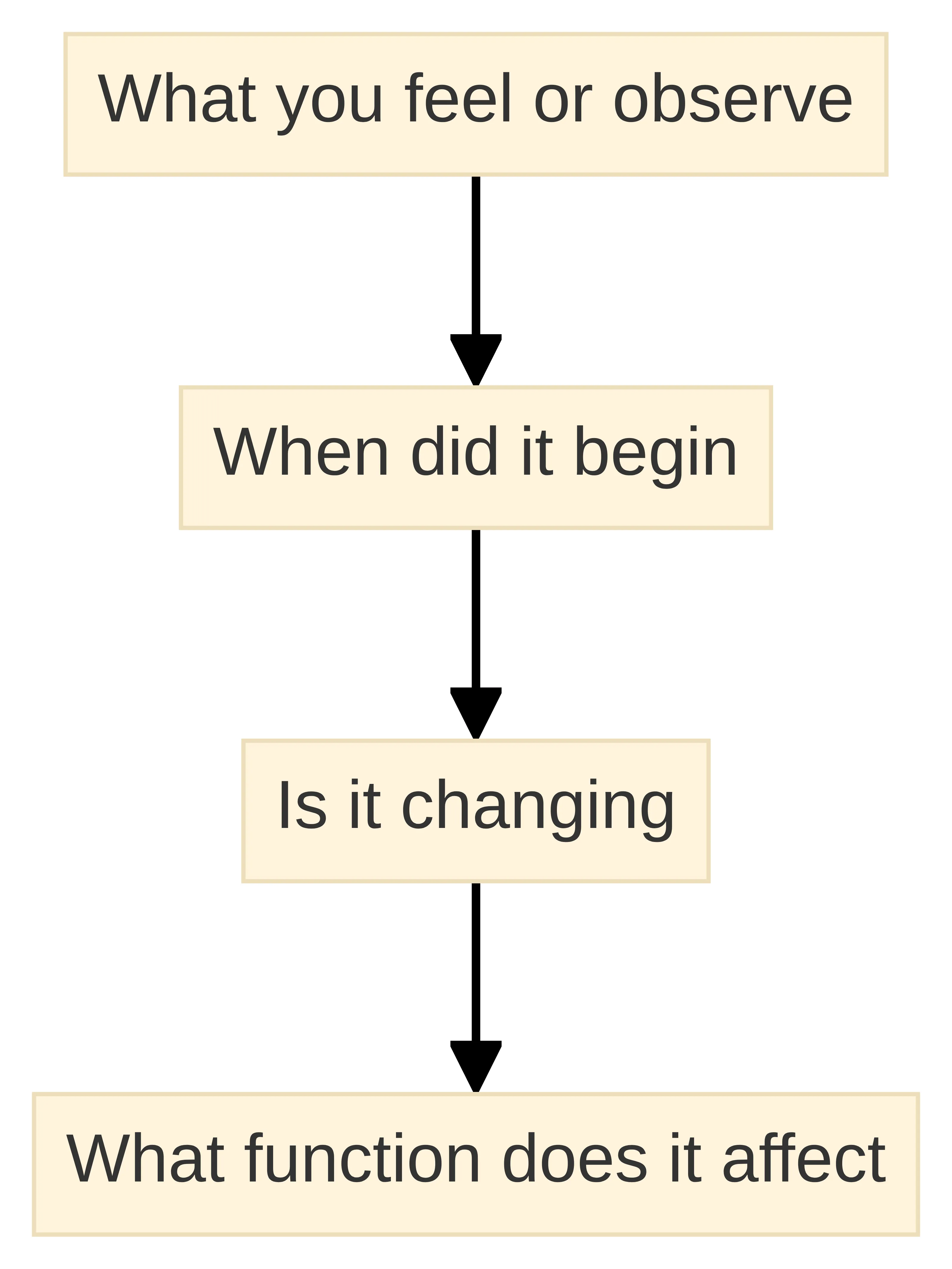
Four questions can organize dental implant symptoms before you contact a dental professional: what do you feel, when did it begin, is it changing, and what function does it affect? The questions are a communication tool, not a test that tells you whether healing is normal. They help you give a precise account instead of relying on a broad label such as “side effects.”
Use the four questions in this order:
- What do you feel or observe? Describe pain, swelling, bleeding, altered sensation, a change around the implant, or movement of the restoration in ordinary words.
- When did it begin? Note whether the symptom appeared after treatment, after a period without symptoms, or after a new event.
- Is it changing? Record whether the symptom is easing, staying similar, returning, or becoming more severe or persistent.
- What function does it affect? Explain whether the change involves sensation, chewing, speaking, opening your mouth, or the way the restoration feels.
A clear timeline gives the treating practice a better starting point than a severity label by itself. These four questions also keep different kinds of information from being blended together. The first records the observation; the second anchors it in time; the third records its direction; and the fourth shows whether the change affects use of the mouth or restoration. None of those answers supplies a clinical conclusion. Together, they give a professional a structured account to consider alongside the examination and the instructions for the procedure you received.
If the concern involves bleeding, note when you observed it rather than assigning a cause. If it involves sensation, identify the area and describe the quality of the change. If it involves the restoration, describe what feels different during chewing or at rest. This approach keeps the record focused on what you observed, the sequence of events, and the question you want the dental professional to answer instead of deciding in advance that the change is biological, mechanical, or nerve-related.
Timing and direction matter because implant concerns can involve different processes. Study findings do not set a timetable for your symptoms.
Write down the answers before a call or appointment if you can do so comfortably. Include the location, the sensation, the date it began, and whether the pattern is improving or worsening. Mention a change that affects function or stability even if the discomfort seems limited. If the symptom is severe, worsening, persistent, or otherwise concerning, contact a dental professional promptly rather than using your notes as a reason to wait.
Separate recovery concerns from complication categories
Dental implant side effects are patient-observed changes after implant-related treatment, while a complication is a professional description of a problem identified through clinical assessment. The two terms should not be treated as interchangeable. Discomfort, swelling, bleeding, altered sensation, or a changed bite may be the reason you seek advice, but none of those observations alone identifies infection, failed osseointegration, peri-implantitis, nerve involvement, or a mechanical problem.
The useful distinction is between a recovery concern that is limited and changing in a reassuring direction, and a pattern that is severe, worsening, persistent, or affecting function. That distinction still does not produce a diagnosis. It tells you how quickly to contact a dental practice and what information to provide. Examples include unsuccessful osseointegration and fractures of the implant, framework, or prosthetic components.
Keep the categories separate:
- Recovery concern: a symptom you are observing and describing after treatment.
- Biological concern: a question about tissue response, healing, infection, osseointegration, or inflammation that requires professional assessment.
- Mechanical concern: a question about the implant, framework, prosthetic component, fit, or stability.
- Nerve-related concern: a change in sensation or pain pattern that needs focused evaluation.
Use the category to shape your question, not to label yourself.
A symptom record should describe change without claiming a cause. Write “reduced sensation on the lower lip began after treatment” rather than “the implant damaged a nerve.” Write “the restoration feels mobile when I chew” rather than “the implant failed.” That wording preserves the distinction between what you notice and what a professional must determine.
A short record can include:
- the implant location or side of the mouth;
- the symptom’s character, such as aching, sharp pain, numbness, tingling, bleeding, or movement;
- the date and circumstances of onset;
- whether the symptom is improving, unchanged, recurring, or worsening;
- any effect on chewing, speaking, sensation, or daily activity; and
- the date of your last contact with the dental practice and the instructions you received.
A systematic review reports nerve-related symptoms in some implant-placement cases, including pain, reduced sensation, altered painful sensitivity, paresthesia, and neuropathic pain. That finding supports taking a sensory change seriously enough to describe clearly; it does not show that your symptom has a particular cause.
An organized record can keep an observation separate from an interpretation. It can state that bleeding was noticed without saying why it occurred, that sensation changed without naming nerve involvement, or that a restoration feels mobile without declaring implant failure. This wording remains useful when more than one concern is being considered because a professional can assess each observation in the context of the procedure, timing, and examination.
Keep the record chronological. Note what you noticed first, what changed afterward, and what instructions you received from the dental practice. If you contact the practice, add the date of the conversation and any next step that was given. The purpose is not to create a clinical record on your own; it is to preserve the details that may otherwise be difficult to recall when discussing a changing symptom.
What the available evidence cannot establish about short-term effects
Short-term recovery effects cannot be assigned one universal timetable from the study description available here. A retrospective study reviewed records from 150 patients who underwent implant surgery from 2015 through 2020 and categorized complications including infection, implant failure, and peri-implantitis by nature and severity. The study design and description do not give you a general schedule for how long pain, swelling, bleeding, or altered sensation should last after every type of implant procedure.
That boundary matters because implant treatment can involve different locations, surgical steps, restorations, and health circumstances. The meaning of a symptom depends on the procedure performed, the tissues involved, the timing, the direction of change, and the findings on examination. A symptom that is easing is not automatically harmless, and a symptom that concerns you is not automatically a complication. Use the treating practice’s instructions for your specific procedure, then contact the practice when the symptom is severe, worsening, persistent, or otherwise concerning. The absence of a universal timetable does not make a symptom meaningless; it means the available study description cannot classify that symptom for every patient or procedure. The same observation can require different questions depending on whether treatment involved implant placement, a restoration, or follow-up after an earlier procedure.
In a professional conversation, separate what the study material establishes from what must be determined about you. The available material can describe complication categories, reported nerve-related symptoms, and outcomes in particular study populations. It cannot identify the tissue involved in your case, determine whether a restoration is stable, or decide whether a symptom reflects healing or a complication. Ask the dental professional to relate the finding to the procedure performed, the timing of the change, and the instructions for your care.
Study results also cannot be turned into a personal prediction. A review describes long-term implant research, but its findings are specific to the study population, implant surface, follow-up design, and reported definitions. Those findings do not tell you whether a current symptom is expected, whether an implant is stable, or whether a treatment plan is suitable for you. They also do not replace an examination when your symptoms are severe, worsening, persistent, or affecting function. Use research findings to understand why follow-up matters, not to decide that your own symptom can wait.
When symptoms raise a biological concern
Biological concerns involve the tissues and healing processes around an implant, and they require professional assessment rather than self-diagnosis. Dental implant complications can include biological failure when osseointegration is unsuccessful.
You can use that information to frame a follow-up question: “Could this pattern indicate a concern with healing or the tissues around the implant?” Avoid treating a symptom as proof of peri-implantitis or failed osseointegration. A clinical assessment is needed to determine whether those terms apply.
Contact the treating dental practice when a biological concern is severe, worsening, persistent, or otherwise concerning. Give the practice the symptom location, onset, direction, and effect on function. Prompt professional dental evaluation is especially appropriate when the change is not settling, is becoming more pronounced, or is accompanied by a change in how the implant-supported restoration functions.
Peri-implantitis figures need careful interpretation because different measures are not interchangeable. One review described reported peri-implantitis prevalence ranging from 1% to 47%, while a long-term study described in another review reported that 2.6% of implants failed because of peri-implantitis. Prevalence and failure attribution answer different questions, so neither number can be used as your personal probability.
The practical conclusion is narrower. A persistent or worsening concern around an implant deserves communication with a dental professional, even when you cannot tell whether it involves inflammation, bone loss, healing, or another issue. Bring any previous instructions and describe what changed. Do not wait for a study percentage to decide whether to contact the practice.
When stability or restoration concerns change the question
Stability and restoration concerns change the question from “How uncomfortable is this?” to “Has the implant-supported structure or its function changed?” Mechanical complications can include fractures of the implant, framework, or prosthetic components. Movement, a changed bite, or a new functional problem should be described to the treating practice rather than dismissed as ordinary discomfort.
Do not test stability by repeatedly moving the area, biting on it to compare sensations, or attempting to adjust a restoration yourself. Instead, record what you noticed and when it happened. Contact a dental professional if the restoration feels loose, the implant area seems to move, chewing changes, or a mechanical concern is persistent, worsening, severe, or otherwise concerning. A professional must determine whether the change involves the restoration, a component, the implant, surrounding tissues, or another cause.
Functional changes deserve a direct description because “loose” can mean different things. Tell the practice whether the movement seems to involve a removable or fixed restoration, whether the sensation occurs only during chewing or also at rest, and whether the bite changed suddenly or gradually. State whether the change is improving, stable, or worsening.
A retrospective study categorized infection, implant failure, and peri-implantitis by nature and severity after reviewing implant-surgery records. The categorization supports professional review of a new functional change, but it does not let you identify the category at home. Arrange follow-up promptly when stability or function changes, and use the examination to clarify what has changed before discussing treatment choices.
Give nerve-related symptoms their own follow-up path
Nerve-related symptoms deserve their own follow-up path because altered sensation and pain can be described in several distinct ways. Describe the pattern without treating it as a diagnosis. That description does not establish that an implant caused the symptom.
Describe the change precisely:
- Is the sensation reduced, absent, increased, tingling, burning, or painful?
- Where do you feel it, and has the area changed?
- Did the change begin immediately after treatment or later?
- Is the sensation improving, unchanged, recurring, or worsening?
- Does it affect speaking, chewing, facial movement, or another function?
Contact the treating dental practice promptly when a sensory change is severe, worsening, persistent, or otherwise concerning. Give the practice the exact location and direction of change. Do not wait for a personal diagnosis before reporting a new or continuing sensory symptom.
Pain after implant treatment should be described by pattern rather than used as a diagnosis. State whether it is aching, sharp, burning, electric, pressure-related, or linked to chewing. State whether the intensity is changing and whether altered sensation occurs with it. A pain description gives the dental professional information to assess; it does not identify nerve injury, infection, mechanical failure, or routine recovery by itself.
A study of 150 patients who had implant surgery from 2015 to 2020 categorized complications by nature and severity, while the systematic review described several nerve-related symptom patterns. Neither source provides a personal threshold for waiting. Contact the treating practice when pain or altered sensation is severe, worsening, persistent, or otherwise concerning, and seek prompt professional dental evaluation when the change affects function or continues to develop.
Put risk evidence and recovery variation in context
Dental implant risk and recovery can vary with the procedure, the implant location, the restoration, health factors, and individual circumstances. The available study descriptions include different populations, designs, follow-up periods, and complication categories, so a result from one setting should not be treated as a forecast for your treatment. A retrospective study reviewed 150 patients who underwent surgery from 2015 to 2020, while a separate long-term study described in a review included 4,206 patients and more than 12,500 implants over 20 years.
The difference between those study designs is a reason to ask focused questions, not a reason to distrust every number. Ask which part of the evidence applies to the proposed procedure and which part does not. Ask what findings would change the follow-up plan. Keep the personal decision with a qualified dental professional who can examine you and consider your health history.
Implant survival numbers describe groups, not guarantees. The 20-year study described in a review reported a 93.3% cumulative survival rate for sandblasted-surface implants, with most failures occurring within one year after placement because of short-term failure of osseointegration; it also reported that 2.6% of implants failed because of peri-implantitis. Those results cannot tell you whether a current symptom is expected or whether your implant is stable.
Reported peri-implantitis figures also vary by the question being measured. One review described prevalence ranging from 1% to 47%, whereas the 2.6% figure concerns implants reported to have failed because of peri-implantitis. Keep prevalence, survival, and failure attribution separate. When you discuss your own concerns, focus on the symptom pattern, the procedure, the timing, and the professional assessment rather than trying to calculate an individual outcome from a group statistic.
Use the same separation when reading research or discussing it during a consultation. A survival result answers a group-level question about outcomes in a defined population and follow-up period; it does not classify a new symptom. A prevalence estimate answers how often a finding was reported under a particular definition; it does not establish that an individual implant has that condition. A complication review can show which biological or mechanical categories were considered; it does not tell you which category applies without an assessment.
For your appointment, write the evidence question and the personal question separately: “What did the study measure?” and “What does my examination show?” This makes it less likely that a population result will be used as a diagnosis. It also gives you a practical way to ask what additional information, examination, or follow-up would be needed before a professional changes the plan. If the answer is uncertain, ask what should be monitored, which instruction applies now, and when to contact the practice again. This turns evidence into better questions without pretending that research can interpret your individual symptom.
Expectations can shape how you interpret recovery and long-term concerns. One cited report found that 49% of patients who had an implant consultation expected dental implants to last more than 20 years. That expectation does not establish a guarantee or tell you what will happen in your case. It does show why longevity, maintenance, warning signs, and follow-up should be discussed before treatment.
Ask for concrete explanations instead of broad reassurance. Ask what the proposed procedure involves, which symptoms should prompt a call, how the practice wants you to describe a change, and what follow-up schedule applies to your plan. A qualified dental professional can relate those answers to your examination and health circumstances.
Questions to take to an implant consultation or follow-up
Implant consultation questions should help you understand the proposed procedure, the symptoms that need follow-up, and the limits of what can be predicted. Bring the questions in writing so you can compare the answers with the instructions you receive.
Ask:
- What part of the planned treatment is the implant, and what part is the framework or restoration?
- Which recovery changes should I report, and which changes should prompt prompt dental evaluation?
- What timing should I use for contacting the practice if pain, swelling, bleeding, or altered sensation persists or worsens?
- What should I do if the restoration feels loose or my bite changes?
- Which symptoms could raise a biological concern, and how would you evaluate that concern?
- Which changes in sensation should I report, and what details would help you assess them?
- What follow-up visits are planned, and what would cause the schedule to change?
- Which health factors or medicines should be considered before treatment?
- What findings would make you discuss another restorative option?
These questions ask for a plan without assuming that a complication is present.
Follow-up questions should focus on what changed since the procedure or last visit. Tell the dental professional when the symptom began, whether it is improving or worsening, and whether it affects sensation, chewing, speaking, or restoration stability. Ask what the examination found and which specific change should lead you to call again.
Useful follow-up questions include:
- What finding explains the symptom you are evaluating?
- Does the finding involve healing, tissue around the implant, the implant itself, or the restoration?
- What should I monitor, and for how long under the instructions for my treatment?
- What change means I should contact the practice sooner?
- Does the current finding change the next planned visit or treatment stage?
Ask how the professional’s assessment applies to your circumstances. It can help to separate questions about what was observed from questions about what happens next. First ask what the examination showed and which part of the implant-supported structure or surrounding area was considered. Then ask which instructions apply now, what change should lead to another contact, and whether the next planned visit remains appropriate.
If research findings come up in the discussion, ask which study result is relevant to the procedure being considered and which limitation should be kept in mind. A professional may need to distinguish a finding about survival, a finding about peri-implantitis, and a finding about nerve-related symptoms rather than treating them as one category. Writing down that distinction can make the follow-up conversation clearer without turning the notes into a diagnosis.
The questions also work when the implant was placed by another practice. State what treatment you know was performed, describe the change in ordinary language, and identify any uncertainty about the restoration or timing. The evaluation can then focus on the finding that needs clarification while leaving interpretation and treatment decisions to the qualified dental professional.
To make the appointment more useful, organize the discussion around three separate points: what you observed, what the examination showed, and what you should do next. Ask the professional to identify which of those points is established and which remains uncertain. For example, the fact that a restoration feels different is an observation; whether the change involves a component, the implant, surrounding tissue, or another cause requires professional assessment. The next step may be further evaluation, a change in follow-up, or instructions for what to monitor, but the appropriate choice depends on the findings.
Before leaving or ending the call, make sure you can state the current plan in your own notes. Record the professional’s description of the finding, the instructions that apply now, the change that should prompt another contact, and the planned follow-up. If no cause has been established, record that uncertainty rather than filling it with a diagnosis. Ask whether information from a previous provider, such as the procedure performed or relevant records, would help clarify the concern. If another practice performed the treatment, also ask which practice should handle the next assessment. This creates a clear handoff while keeping diagnosis and treatment decisions with a qualified dental professional.
Know the limits of the available guidance
General implant guidance cannot diagnose a symptom, determine whether your implant is suitable, or predict your personal recovery. The published material summarized here describes complication categories, study populations, reported outcomes, and nerve-related symptom patterns. It does not provide a single patient-specific timetable that can classify every episode of pain, swelling, bleeding, altered sensation, or movement.
Use general information to prepare for a professional conversation. Do not use it to dismiss a severe, worsening, persistent, or otherwise concerning symptom. Do not use a group statistic to decide that a symptom is harmless. Do not use a symptom label to conclude that an implant has failed. Give the treating dental practice a clear timeline and follow the individualized instructions you receive.
If you do not have a treating practice, arrange prompt evaluation with a qualified dental professional.
Connect the next evaluation to restorative dental care
Restorative dentistry addresses damaged and missing teeth through treatment options that include crowns, bridges, inlays and onlays, and dental implants. The appropriate option depends on a professional evaluation, the condition of the tooth or missing-tooth area, and your individual circumstances.
That evaluation can give your symptom question a clearer setting. If you have an implant concern, bring the symptom record and any information from the treating practice. If you are considering an implant, ask how the proposed restoration relates to the missing or damaged tooth and what follow-up questions apply. A restorative discussion should clarify options and boundaries rather than promise a particular result.
A restorative evaluation is a conversation about findings, options, and next steps, not a substitute for urgent assessment of a severe or worsening symptom. Our restorative care in South San Francisco includes dental implants, bridges, inlays and onlays, and crowns. If you are considering an appointment with us, bring the details that help a dental professional understand your concern.
The details you bring do not determine your implant eligibility or predict an outcome before an evaluation. Use the visit to ask what the findings mean, which options are being discussed, and what follow-up would be appropriate.
Prepare for a South San Francisco evaluation conversation
Questions for a South San Francisco restorative appointment should connect the symptom pattern with the decision you need to make. Consider asking:
- What does the examination show about the tooth, implant area, or restoration?
- Which restorative options are being considered, and what does each option involve?
- What symptoms should lead me to contact the practice after treatment?
- What information from a previous implant provider would help with this evaluation?
- What should I clarify before the next visit?
- What part of the plan remains uncertain until further evaluation?
Use these questions to organize the discussion while leaving individual suitability and interpretation to a qualified dental professional.
If you are arranging a first visit with Westborough Dental Care, the published visit description says it lasts about 60 to 90 minutes and includes a comprehensive exam, full-series digital X-rays, a professional cleaning if gum health allows, and a written treatment plan. Bring your insurance card, a list of current medications, and any prior dental records or X-rays. These preparation details can support the conversation, but they do not determine implant eligibility or replace evaluation. Use the visit to ask which information is relevant to your symptom timeline and which questions need follow-up.
Choose the next step after reviewing the symptom pattern
The symptom pattern should determine your next conversation: document a limited, stable concern while following your existing instructions; contact the treating practice when a symptom persists or needs clarification; and seek prompt professional dental evaluation when the change is severe, worsening, persistent, or affects sensation, function, bleeding, or stability. Dental implant side effects cannot be classified reliably from a symptom name alone, and a qualified dental professional must decide what an individual finding means.
Bring your four-part description - what you feel, when it began, how it is changing, and what function it affects - to the appointment or call. Ask which findings were identified, what follow-up is planned, and which change should prompt another contact. That approach gives you a clear boundary between observing a symptom and diagnosing a complication.
What should you ask if implant symptoms continue?
When should I contact my dentist after getting a dental implant?
You should contact your dentist if you experience severe, worsening, or persistent symptoms, such as significant pain, excessive swelling, or changes in sensation that do not improve over time.
What questions should I ask during a dental implant consultation?
During a consultation, consider asking about the specific procedure, expected recovery changes, symptoms that require follow-up, and what to do if the restoration feels loose or if your bite changes.
What is the typical duration for recovery after dental implant surgery?
Recovery duration can vary widely based on individual circumstances, the complexity of the procedure, and overall health. It’s important to follow your dentist’s specific instructions regarding recovery.
Need help applying this?
Talk to a billing specialist who knows your payer mix.
Westborough Dental Care welcomes new patients in South San Francisco. Book a visit to meet Dr. Zoulas and the team.
Schedule a meeting