
how to compare cosmetic dentistry providers in the United States
How to compare cosmetic dentistry providers in the United States
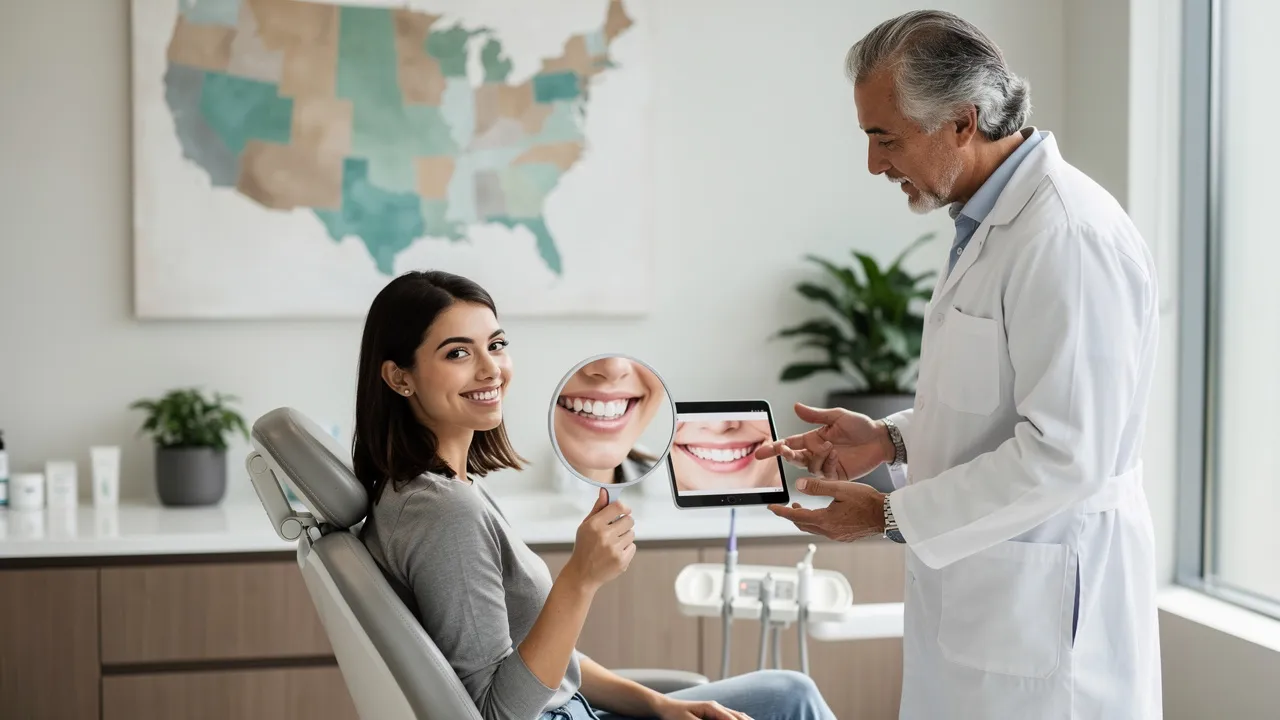
Use a treatment-plan scorecard before choosing a provider
Use the fit scorecard after a cosmetic practice gives you a proposed treatment plan: compare the documented concern, alternatives, sequence, maintenance, cost, and restorative scope before deciding how to proceed. A national label cannot make that decision for you.
Your fit scorecard should compare each shortlisted practice on these points:
- Goal match: Does the practice address the actual concern - color, shape, position, wear, missing structure, or strength?
- Preservation: Does the proposed approach explain how much healthy tooth structure changes and whether the treatment can be reversed?
- Provider preparation: Can you find current licensure, treatment-specific education, and experience with cases like yours?
- Planning: Will you receive a clear explanation of alternatives, materials, sequence, maintenance, time, and total cost?
- Restorative scope: Can the practice address damaged or missing teeth if your cosmetic concern overlaps with function?
- Practical fit: Do the payment, insurance, technology, appointment process, and follow-up arrangements work for you?
Give each category a simple personal mark such as strong, unclear, or concern. To make comparisons consistent, you can also use a three-level scale: clear answer, partial answer, or unresolved concern. The result is a transparent comparison tool, not an objective nationwide ranking.
A practice that gives you attractive examples but cannot explain alternatives, preparation, maintenance, or cost has not answered the questions that matter most. A practice that discusses limits and trade-offs gives you better material for a decision. Start by defining the change you want, then test every provider against the same criteria.
Define the smile concern before comparing providers
Cosmetic dentistry focuses on improving the appearance of your teeth, gums, and bite. For comparison purposes, name the specific change you hope to discuss.
Before you compare practices, write down the concern in ordinary language:
- Color: You want natural teeth to look lighter, but existing fillings, crowns, or veneers may not change with whitening.
- Shape or a small defect: You want to repair a chip, fill a minor irregularity, or reshape a limited area.
- Position or spacing: You want teeth moved rather than covered with a new material.
- Visible front surfaces: You want to change the appearance of selected teeth through a covering placed on the front.
- Wear, damage, or missing structure: You need to discuss strength and restoration as well as appearance.
The more precisely you describe the concern, the easier it is to ask why a provider recommends one option instead of another.
Your cosmetic plan should also account for existing oral conditions. A dentist should treat decay or gum disease before placing veneers because veneers over unhealthy teeth may worsen existing dental problems. A dental evaluation may include your history, concerns, prior treatment, oral and periodontal charting, diagnosis, radiographs, photographs, and a sequenced treatment plan. Ask whether the consultation examines the condition that could affect the cosmetic result instead of moving straight to a procedure name.
Your goal may also be narrower than the treatment menu suggests. A small color concern may call for a discussion of whitening, while a chipped edge may call for bonding or another restoration. Alignment concerns may call for clear aligners. Let the concern define the comparison; do not assume that treating more teeth creates a better plan.

Score preservation and treatment trade-offs
Preservation is a useful scorecard category because cosmetic treatments change your teeth in different ways. Professional whitening brightens natural tooth color without removing tooth structure. Composite bonding adds tooth-colored resin to reshape or fill minor defects and is described as reversible. Invisalign moves teeth while preserving structure. Porcelain veneers require minor enamel preparation, while ceramic crowns require significant tooth preparation. Veneers can cause irreversible changes to tooth, soft-tissue, or bony structures.
| Option | What it changes | Preservation and trade-off questions | Future-care questions |
|---|---|---|---|
| Whitening | Natural tooth color and many surface stains | It does not remove tooth structure, but ask whether the discoloration is likely to respond | Ask about touch-ups and what happens when existing restorations do not change shade |
| Bonding | A small area by adding composite resin | Ask what preparation is needed and whether the proposed repair is described as reversible | Ask how chipping or staining would be handled and whether repair or replacement may be needed |
| Veneers | The visible front surface of selected teeth | A porcelain veneer is a thin custom-made shell, and enamel preparation makes veneer treatment irreversible | Ask about material, maintenance, replacement, and alternatives involving less alteration |
| Crowns | The entire tooth when strength matters | Significant tooth preparation is associated with ceramic crowns, so ask why full coverage is being considered | Ask how the crown fits the restorative plan and what future replacement could involve |
| Clear aligners | Tooth position over time | Aligners move teeth while preserving structure, but the plan requires consistent wear and retention | Ask about the planned movement, retention, and what happens if wear instructions are difficult to follow |
Whitening has a specific boundary: it affects natural tooth structure, not veneers or crowns. It can lighten many stains in natural teeth, but some internal discoloration may respond differently, and it does not change the color of crowns, veneers, or fillings. If you plan to whiten, do it before a bonded or cemented restoration so the restoration shade can be matched to the lighter teeth.
Veneers require especially clear discussion because the visible change may come with a lasting commitment. Preparation may include enamel removal, an impression or 3D model, custom laboratory fabrication, a fit and shape check, adjustments, and bonding. Composite veneers may require less enamel removal and fewer visits than porcelain veneers and may be easier to fix if damaged, but they are not as stain- or wear-resistant. A guide citing the largest reviews reports that about 9 in 10 porcelain veneers in those reviews were still in place after 10 years; that figure describes the reviews cited by the guide, not a promise about your treatment.
The provider should connect the recommended material and preparation to your specific concern. You should understand what changes, what remains natural, what cannot be reversed, and what maintenance or replacement may follow. If the explanation skips those points, pause the comparison rather than scoring the option on appearance alone.
The least invasive option is not automatically the right option for every concern, and the option with the largest visible change is not automatically the right one either. Your comparison should ask whether the proposed treatment solves the stated problem while preserving healthy structure where possible. Ask the provider to explain what would happen if you chose a smaller treatment, postponed treatment, or addressed tooth position before changing tooth surfaces.
Verify the provider beyond the cosmetic label
Check current state licensure, continuing education, professional memberships, treatment-specific training, and experience with cases like yours. Professional membership may signal engagement with continuing education or industry standards, but it does not by itself establish a provider’s qualifications.
The consultation should include questions such as:
- What additional training do you have in the treatment I am considering?
- How many cases similar to mine have you completed?
- How do you evaluate outcomes over time?
- Which material do you recommend for my veneers or restoration, and why?
- Which dental laboratory does the practice use?
- What happens if I am not satisfied with the result?
The answers should relate to your concern rather than offer a generic promise. A specific explanation of material strengths, limitations, and maintenance is more useful than a label.
Before-and-after photographs can help you judge whether the practice has handled a concern like yours, but use them carefully. Ask for comparable cases photographed under consistent lighting and angles, without retouching, and confirm that the images are from the dentist’s own patients. A chipped tooth, isolated discoloration, alignment concern, and extensive restorative case are different comparisons. Look for enough context to understand what treatment produced the image.
Get a second opinion before extensive work when alternatives, risks, or long-term maintenance are not explained. A calm consultation should leave you with questions answered, not pushed toward an immediate commitment.
Inspect the consultation and written treatment plan
Your consultation preparation should begin with a written list of your smile goals, prior dental work, concerns about preservation, and practical limits on time or cost. Ask for a written itemized plan. Compare more than one provider on total cost and total time, not only on the first quoted procedure. The plan should explain which treatment is proposed, why it fits the concern, what alternatives exist, and what care follows.
A thorough dental evaluation may include more than a discussion of tooth color or shape. It may include:
- your personal and dental history, chief concern, and previous treatment;
- charting of missing teeth and existing restorations;
- oral and periodontal findings, diagnosis, and radiographic interpretation;
- clinical photographs and other records; and
- a treatment plan that sequences the proposed care.
A diagnostic assessment may include occlusal analysis, periodontal diagnosis, missing teeth, malocclusion, caries, abrasions, inadequate restorations, hypocalcifications, esthetic concerns, and radiographic interpretation. You do not need every item in every consultation, but you do need to know which findings affect your plan and why.
A treatment plan can specify the planned treatment, its sequence, and the order of treatment. Ask the provider to identify the material, laboratory process, number of visits, temporary steps if applicable, maintenance, and likely future decisions. The recommendation should be specific to your case, with the material’s trade-offs explained. You should also know what happens if the appearance or fit does not meet the agreed plan.
Dental-education requirements call for before-and-after clinical photographs with a minimum of five views: front in occlusion, right in occlusion, left in occlusion, full maxillary occlusal, and full mandibular occlusal. That requirement is a useful reminder to ask how the provider documents the starting condition and planned result; it is not a reason to assume that every cosmetic consultation uses the same record set.
Your notes at the end of the consultation should separate decisions from unanswered questions. Record the proposed treatment, alternatives that were discussed, material and laboratory details, expected visits, maintenance, total cost, and what happens if you change your mind or are dissatisfied. Mark any missing explanation before comparing providers. A plan that is attractive in theory but incomplete in writing is difficult to compare fairly.
Compare total cost, time, durability, and upkeep
Use published prices as context, not as your quote.
Procedure complexity affects the comparison. Urban operating costs can contribute to higher service prices, and more complex procedures or multiple veneers typically cost more than simpler options such as whitening or bonding. Ask what is included in the estimate: examination, imaging, preparation, laboratory work, temporary restorations, visits, retention, repairs, and follow-up. A lower starting price may not represent a lower total cost if the plan covers fewer parts of care.
A guide for Arlington reports that whitening typically lasts six months to two years, dental bonding lasts three to ten years with proper care, and porcelain veneers and dental implants can last 15 or more years with good oral hygiene and regular checkups. Ask what factors may shorten or extend the expected service period for the treatment being proposed.
Cosmetic treatment is not maintenance-free. Whitening may need touch-ups, bonding can chip or stain, veneers and crowns may eventually require replacement, and aligners require consistent wear and retention. Veneers may not be covered by insurance because they are considered cosmetic unless deemed medically necessary. Put maintenance, replacement, retention, and coverage questions beside the starting price so your comparison reflects the full plan.
Your provider worksheet should record five separate amounts or answers: the evaluation cost, the treatment estimate, the expected treatment time, the maintenance or retention plan, and the insurance or payment responsibility. Ask for the plan in writing. If an insurer is involved, coverage and your responsibility require information from the insurer as well as the proposed treatment details.
Your financial comparison should also account for what happens after the first treatment. Ask whether whitening touch-ups, replacement of a chipped restoration, aligner retention, or later crown or veneer replacement is part of the estimate or a separate responsibility. Compare the total time as well as the total dollars, because a plan with several stages may affect your schedule even when the initial procedure appears straightforward.
Apply the scorecard to Westborough Dental Care’s stated clinical fit
We are Westborough Dental Care in South San Francisco, California. We offer cosmetic dentistry for issues such as discoloration, chips, gaps, and irregularities. Our listed cosmetic treatments include porcelain crowns, dentures, Invisalign clear aligners, and bleaching. Those services may be relevant if your goal involves appearance, tooth position, or a broader restorative concern, but the treatment choice still depends on the evaluation and your specific condition.
Our restorative dentistry replaces or rebuilds damaged and missing teeth with crowns, bridges, inlays/onlays, and dental implants. That broader scope matters when a smile concern is connected to damaged or missing tooth structure rather than appearance alone. Use it as one scorecard question: does the practice have a treatment conversation that can include both cosmetic and restorative needs when your goals overlap?
Our cosmetic dentistry focuses on preserving healthy tooth structure rather than aggressively reshaping teeth. We also provide before-and-after photos from patients treated at our facility. You can use those materials to ask whether the examples resemble your concern and to discuss how preservation shaped the proposed plan. Similarity matters more than selecting an image because it looks appealing.
Westborough may fit your shortlist if you want cosmetic and restorative care considered together, are interested in the listed services, and value a preservation-focused discussion. It may not answer every question from the scorecard without a consultation. Bring your specific concern, the amount of change you want, and the questions about alternatives, preparation, maintenance, and total cost.
Check Westborough’s planning, technology, and payment details
We accept new patients and offer appointment requests through online booking or by phone. Our first visit lasts about 60 to 90 minutes; please bring your insurance card, comfortable clothes, and a list of medications. Use that time to present your scorecard questions and to understand what the evaluation will cover before you compare treatment plans.
We publish UCR fees and provide written treatment plans with cost estimates for free. A written plan gives you something concrete to compare: proposed treatment, order, estimated cost, and practical questions about follow-up. The estimate is part of the planning conversation; your treatment recommendation, timeline, and final responsibility depend on the evaluation and applicable coverage.
We are out of network with Delta Dental PPO, but we can file the claim for you. We accept 14 in-network PPO carriers. We also offer an in-house membership plan for uninsured patients with various pricing tiers. Compare the plan’s total responsibility rather than assuming that a carrier relationship or membership option determines coverage for cosmetic treatment.
Our same-day porcelain or ceramic crowns cost $2,334. Dr. Zoulas uses the PrimeScan intraoral scanner instead of traditional impression material for same-day crowns. This is a listed practice-specific amount, so place it beside the treatment scope, expected time, and maintenance details in your comparison.

Turn the comparison into a shortlist and next step
Start your shortlist by writing one sentence about your smile goal and one sentence about any restorative need. You can search for cosmetic dental professionals in your area through sources such as Yelp, Google Reviews, and the American Academy of Cosmetic Dentistry. Treat search results as starting points, not rankings. Then apply the same questions to each practice.
Your comparison worksheet can track these categories:
- Goal: What concern does the proposed treatment address?
- Preservation: What healthy structure changes, and is the change reversible?
- Experience: What current licensure, treatment-specific training, and similar-case experience can the provider explain?
- Evidence of work: Are the photographs from comparable cases and actual patients treated in the office?
- Plan: Are alternatives, material, laboratory, sequence, maintenance, and follow-up written down?
- Cost and time: What is the total estimate, how long does care take, and what may require future replacement or retention?
- Scope: Can the practice discuss cosmetic and restorative needs together when necessary?
Mark each category as clear, incomplete, or concerning. This method keeps an attractive photograph or a low starting price from carrying more weight than the treatment plan.
Your final provider comparison should include before-and-after photographs of actual patients treated in the office rather than stock images from a dental laboratory. Check professional membership only as a limited signal, not as proof of qualification, and give more weight to licensure, treatment-specific training, relevant experience, and a clear plan. Compare more than one provider on total cost and total time. If a practice cannot explain a material decision, alternative, risk, or maintenance requirement, leave that item incomplete and pause before committing.
Your shortlist can follow a simple sequence:
- Remove practices that do not address the concern or restorative need you identified.
- Mark unanswered questions about licensure, training, preservation, materials, or maintenance.
- Request written itemized plans from the practices that remain.
- Compare total cost, total time, alternatives, and future care using the same worksheet.
- Pause when the plan relies on pressure, vague promises, missing documentation, or unexplained extensive work.
This sequence turns a broad search into a decision you can explain to yourself: the selected practice fits because its plan answers the same practical questions you asked of every alternative.
Get qualified help before cosmetic planning when warning signs appear
Cosmetic planning should wait when you have symptoms that may require urgent dental care. The ADA identifies severe dental pain, localized pain and swelling from an abscess or infection, painful tooth fractures, and dental trauma with avulsion or luxation as dental emergencies. Seek urgent qualified dental help for significant facial swelling, uncontrolled bleeding, uncontrolled dental pain, or acute dental trauma.
Use the emergency pathway available where you are immediately if dental symptoms make it hard to breathe, speak, or swallow; cause major mouth swelling; affect an eye or your vision; or make it hard to open your mouth. Get immediate emergency help for a serious face or jaw injury, bleeding that will not stop, severe swelling of the mouth, lips, throat, or neck with breathing or eye-opening difficulty, or a head or facial injury involving loss of consciousness, vomiting, or double vision.
Arrange dental care if your gums bleed, are painful or swollen, or you have bad breath. NHS guidance says urgent dental treatment should be offered within 24 hours or 7 days depending on your symptoms. That timing comes from NHS guidance; in the United States, use the urgent-care pathway available in your area.
Elective veneer planning should not move ahead over untreated decay or gum disease. Do not delay care while comparing photographs, prices, or cosmetic labels when you have severe pain, swelling, uncontrolled bleeding, infection signs, or trauma. Contact a qualified dental professional promptly when you are unsure whether a symptom is urgent.
Choose the consultation that fits your scorecard
A sound shortlist connects your smile goal to preservation, relevant experience, planning, restorative scope, technology, total cost, maintenance, and follow-up. Westborough Dental Care’s stated services in South San Francisco, preservation-focused approach, restorative scope, written treatment plans, and listed payment details give you concrete points to discuss if they match your needs. Bring your worksheet and ask for the alternatives, sequence, expected upkeep, and costs in writing.
If the practice’s stated services and practical arrangements fit your goals, request the consultation through the available new-patient process and use the appointment to complete the scorecard rather than to commit to a procedure name.
Questions to ask before choosing a cosmetic dentistry provider
How can I verify a cosmetic dentist’s qualifications in the United States?
Check the provider’s current state dental license, continuing education, treatment-specific training, and experience with cases like yours. Professional membership may suggest engagement with education or industry standards, but it does not establish qualifications by itself. Ask how outcomes are evaluated and request examples from actual patients treated by the practice.
What should a written cosmetic dental treatment plan include?
It should identify the proposed treatment, why it fits your concern, alternatives, materials, preparation, treatment sequence, expected visits, maintenance, future replacement or retention needs, and total estimated cost. Compare written plans on both total cost and total time, and pause if extensive work is recommended without clear explanations of risks and alternatives.
Can teeth whitening change the color of veneers, crowns, or fillings?
No. Whitening affects natural tooth structure, not veneers, crowns, or fillings, and some internal discoloration may respond differently. If you plan to whiten, discuss doing it before a bonded or cemented restoration so the restoration can be matched to the lighter natural teeth.
What are warning signs that require urgent dental help instead of cosmetic planning?
Seek prompt qualified dental care for severe or uncontrolled pain, significant swelling, uncontrolled bleeding, a painful fracture, suspected infection, or dental trauma.
How can I tell whether a South San Francisco cosmetic dental practice fits my needs?
Compare the practice’s stated services with your concern and any restorative needs, then verify preservation, treatment-specific experience, written planning, technology, payment arrangements, insurance responsibilities, and follow-up. Westborough Dental Care reports cosmetic and restorative services, a preservation-focused approach, written treatment plans with cost estimates, and care in South San Francisco; an evaluation is still needed to determine whether its proposed plan suits you.
Need help applying this?
Talk to a billing specialist who knows your payer mix.
Westborough Dental Care welcomes new patients in South San Francisco. Book a visit to meet Dr. Zoulas and the team.
Schedule a meeting