Cosmetic dentistry
Cosmetic Dentistry: How to Compare Whitening, Bonding, Veneers, Crowns, and Clear Aligners

Start with the decision cosmetic dentistry is meant to support
Cosmetic dentistry focuses on improving the appearance of your teeth, gums, and smile, while general dentistry focuses on treating oral health problems. General dental care also includes preventive, restorative, diagnostic, maintenance, and emergency services. That distinction helps you name your goal, but it does not mean appearance and oral health can be separated during planning.
Cosmetic treatment planning should consider appearance, oral health, and function together. Whitening, veneers, clear-tray orthodontics, crowns, and cosmetic dentures may all enter the conversation, but they address different concerns and are not interchangeable. Your first useful decision is therefore not which procedure sounds familiar. It is what change you want to discuss and what should be protected while that change is planned.
Five questions can keep the discussion practical:
- What appearance concern do you want to address?
- Does the concern also involve oral health or function?
- How should the plan address preservation of healthy tooth structure?
- What appointments and ongoing care may be involved?
- What do you need to understand about fees, coverage, alternatives, risks, and expected results?
These questions create a useful comparison without assigning you a treatment or predicting what an examination will show.
Translate the smile concern into a treatment category
We offer cosmetic dentistry procedures to address discoloration, chips, gaps, and irregularities. We offer appearance-focused procedures to address those concerns. The concern gives you a starting point for the conversation, not a diagnosis or a treatment decision.
A concern-to-category map can help you prepare questions:
- For discoloration, ask whether whitening is the appropriate topic to discuss and what findings could affect the plan.
- For a chip or irregular edge, ask whether bonding, a veneer, a crown, or another restorative option belongs in the discussion.
- For a gap or crooked teeth, ask whether clear aligners, bonding, veneers, or a combination of options should be considered.
- For a concern involving a damaged or missing tooth, ask how restorative care relates to the appearance goal.
These categories can overlap. A visible concern may lead to different questions after dental findings and function are considered.
Appearance-focused options address different concerns and are not interchangeable. Ask how the proposed treatment relates to your goals, dental findings, and ongoing care before you compare prices or appointment plans.
For discoloration, begin the conversation with whitening
Whitening is an appearance-focused option for a conversation about discoloration. Professional whitening can brighten a smile up to eight shades whiter, but that figure describes a potential result rather than a promise about your smile. Your evaluation should connect the desired change with your oral health, function, and ongoing care.
Focused questions can help you decide whether whitening addresses the concern you want to discuss:
- What type of discoloration is being addressed?
- What result should you reasonably discuss rather than assume?
- Does the proposed plan account for your oral health and function?
- Would another option enter the conversation if the change involves shape, size, or irregularity as well as color?
- What ongoing care should you plan to discuss?
The last question matters because an appearance-focused choice is part of a continuing care plan, not an isolated procedure name.
When color is the main concern, whitening gives you a clear starting topic. Veneers, bonding, crowns, or aligners may enter a broader discussion when the concern also involves shape, damaged teeth, gaps, or alignment. Use those categories to organize your appointment questions, not to make a candidacy decision on your own.
For shape, size, or color changes, compare bonding and veneers
Porcelain veneers can modify the shape, size, or color of teeth, and veneers are among the common options discussed in general treatment overviews. If your goal involves more than discoloration, ask how a veneer plan would change the appearance you want to discuss and how it would relate to your dental findings.
Dental bonding is also a common cosmetic option, alongside veneers, but the two should not be treated as interchangeable. If the change you want involves discoloration, a chip, a gap, or an irregularity, ask which option relates to that concern, how the proposed work would relate to healthy tooth structure, and what ongoing care or alternatives to discuss before choosing it.
A useful bonding-versus-veneer conversation should cover:
- How each option relates to the appearance change you want.
- How healthy tooth structure would be treated or preserved.
- What planning and appointments may be involved.
- What maintenance and ongoing care you would need to discuss.
- What risks, alternatives, expected results, and costs apply to the proposed plan.
Our approach to appearance-focused care emphasizes preserving healthy tooth structure rather than aggressively reshaping teeth. That is a practice-specific approach to discuss with us, not a guarantee that every option or case will follow the same plan.
Before committing, ask about the dentist’s experience, the recommended treatment, expected results, risks, costs, and available alternatives. Add one direct question: “How would this choice affect healthy tooth structure and my ongoing care?”
When a tooth is damaged, separate cosmetic goals from restoration
A damaged or missing tooth can make appearance and restoration part of the same conversation. General dental care includes restorative treatment. The practical question is not whether a treatment sounds cosmetic. It is whether the proposed work addresses the condition of the tooth as well as the appearance you want to change.
We use crowns, bridges, inlays or onlays, and dental implants to replace or rebuild damaged and missing teeth. We also offer porcelain crowns and dentures as appearance-focused treatments. Those services give you categories to ask about, but they do not determine which option applies to your tooth.
If restoration enters your appearance discussion, ask:
- What part of the plan addresses the tooth’s condition?
- What part addresses the appearance of your smile?
- How will function affect the proposed option?
- Are a crown, bridge, inlay or onlay, implant, denture, veneer, or bonding part of the alternatives being discussed?
- What risks, appointments, ongoing care, and costs should you understand before deciding?
Keep appearance goals and restorative needs visible as two related questions. That makes the plan easier to understand.
When alignment is the concern, discuss clear aligners separately
Clear aligners are included among common appearance-focused options. Invisalign is described as an option for crooked or gapped teeth and for underbites, overbites, and crossbites. Those descriptions help you identify alignment questions; they do not establish that aligners are suitable for your specific dental findings.
Our aligners come out for meals and oral hygiene, with no food restrictions like traditional braces. That practical feature belongs in your comparison. Ask how removal, oral hygiene, appointments, and ongoing care would fit the plan being discussed with you.
Use these questions when alignment is your main concern:
- Is the change you want primarily about spacing, tooth position, or bite?
- How does the proposed plan account for oral health and function?
- What alternatives should you compare with clear aligners?
- What appointments and ongoing care should you expect to discuss?
- What risks, expected results, and costs apply to your plan?
Ask for the proposed treatment to be tied to your goals and dental findings rather than selected from the procedure name alone.
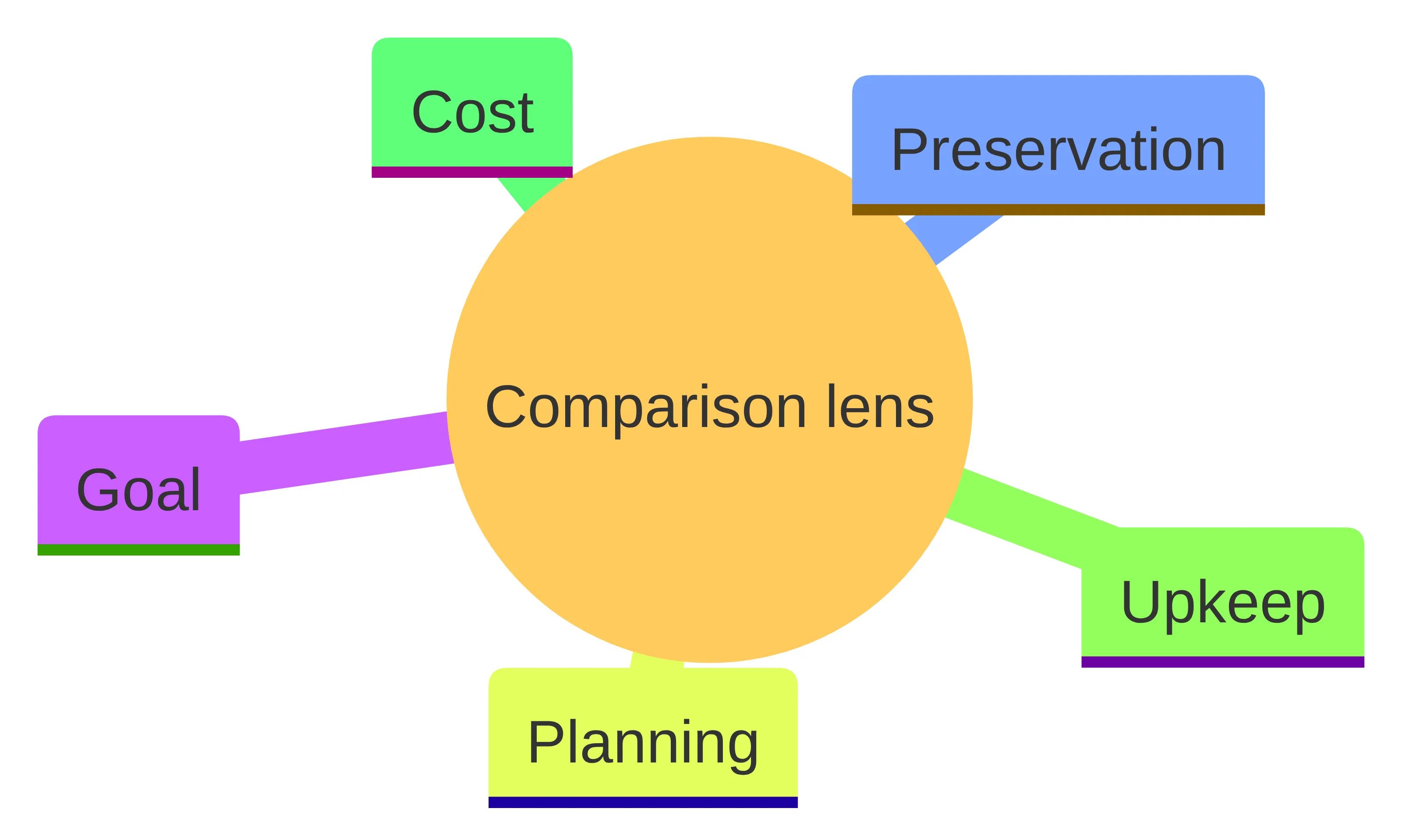
Use preservation and planning as the comparison lens
A useful comparison looks beyond the visible result. Treatment planning should account for appearance, oral health, and function. Appearance-focused treatments can change the look of your smile and may involve more than one appointment. Our approach emphasizes preserving healthy tooth structure rather than aggressively reshaping teeth.
Use five comparison lenses when you review an option:
- Goal: Name the visible change you want to discuss, such as color, shape, a chip, a gap, missing teeth, or alignment.
- Preservation: Ask how the plan would treat or preserve healthy tooth structure.
- Planning: Ask how oral health and function affect the recommendation and how many appointments may be involved.
- Upkeep: Ask what ongoing care matters, including how aligner removal for meals and oral hygiene fits your routine.
- Cost: Ask what the estimate includes, how complexity affects the discussion, and how coverage or payment responsibility will be handled.
This framework keeps you from treating every visible concern as the same kind of problem.
| Option | Main question to answer | Preservation and planning question | Upkeep and cost question |
|---|---|---|---|
| Whitening | Is discoloration the main appearance concern? | How do your oral health and function affect the plan? | What ongoing care and fee structure should you discuss? |
| Bonding | Would bonding address the change you want to discuss? | How would the proposed work relate to healthy tooth structure? | What maintenance, alternatives, and cost should you ask about? |
| Porcelain veneers | Would changing tooth shape, size, or color address your goal? | How would preservation of healthy structure be handled? | What appointments, risks, alternatives, and ongoing care apply? |
| Crowns or other restorations | Does the concern involve a damaged or missing tooth? | How do restoration, function, and appearance fit together? | What treatment stages and patient responsibility should you understand? |
| Clear aligners | Is crookedness, spacing, or a bite concern part of your goal? | How does the plan relate to your dental findings and function? | How do removal for meals and oral hygiene, appointments, and fees fit the plan? |
Use the table to narrow the options by the concern and practical issue that matter most. Whitening focuses on discoloration and may brighten a smile up to eight shades; veneers can modify tooth shape, size, or color; clear aligners are described for crooked or gapped teeth and certain bite concerns and come out for meals and oral hygiene. Crowns and other restorations are relevant when damaged or missing teeth bring rebuilding and function into the discussion. Bonding is also a common cosmetic option; ask specifically how the proposed work would relate to healthy tooth structure, maintenance, appointments, alternatives, and cost. Compare each category with your goal, oral health, function, preservation, planning, upkeep, and cost. Ask for the reason behind the recommendation and for the alternatives that remain available. To make the trade-offs more explicit, use each category to ask a different boundary question:
- Whitening keeps the discussion centered on color or discoloration; ask what result and ongoing care to discuss rather than treating it as a way to change shape or alignment.
- Bonding keeps the focus on a visible change that may be discussed alongside alternatives; ask how the proposed work relates to healthy structure, maintenance, appointments, and cost.
- Veneers are relevant when shape, size, or color is part of the goal; ask how preservation, risks, appointments, and ongoing care affect the comparison.
- Crowns or other restorations belong in the discussion when damaged or missing teeth make rebuilding and function part of the concern, so appearance alone should not define the comparison.
- Clear aligners are relevant to crooked or gapped teeth and certain bite concerns; their removal for meals and oral hygiene makes daily routine, appointments, and ongoing care part of the comparison.
If several concerns overlap, organize questions by what must be clarified rather than by a favorite procedure name: identify any restorative or functional issue, separate alignment from color or shape, and then ask which alternatives address the remaining appearance goal. This is a discussion sequence, not a recommendation or ranking. Ask why one category is being discussed first, what alternative remains, and how oral health and function affect the plan. Confirm the explanation and estimate during an evaluation.
Treat cost as an evaluation question, not a universal price
Cosmetic dentistry cost is not a universal figure for every patient or procedure. Published information can vary with complexity, and your coverage or payment situation can affect your responsibility. Before choosing an option, ask for a personalized estimate tied to the written treatment plan.
We publish our UCR fees openly. One of our publications gives a composite filling range of $368 to $703 depending on complexity and says dental implants may cost upwards of $3,640. Those figures illustrate why the procedure, complexity, and treatment plan matter; they are not a quote for whitening, bonding, veneers, crowns, aligners, or any individual case.
We accept 14 in-network PPO carriers and provide verification of benefits before treatment. When you plan a smile-makeover budget, understand your insurance benefits and any potential reimbursement for out-of-network services.
Bring these cost questions to the evaluation:
- What services are included in the proposed estimate?
- Which parts may involve insurance benefits or reimbursement?
- What responsibility could remain after coverage is applied?
- Are there alternatives with different planning or fee implications?
- Which figures are estimates, and which services would require a separate determination?
A cost discussion is more useful when it follows a defined treatment question rather than a procedure name alone.
Prepare for an evaluation that closes the information gaps
The evaluation can result in a written treatment plan that organizes the next discussion.
We use intraoral scans, CEREC milling, and cone-beam CT to plan and execute dental procedures. Ask which tools, if any, relate to the proposed treatment and what information each part of the evaluation is intended to establish.
Before the appointment, note the change you want to discuss and the trade-offs you want explained, including preservation, function, upkeep, risks, alternatives, and cost.
A focused appointment question can be simple: “Which options address my stated concern, how do they differ in planning and preservation, and what would the written estimate include?” That wording keeps the discussion tied to your goals without asking you to decide candidacy on your own.
Ask before choosing a cosmetic treatment
Before choosing, ask:
- What treatment are you recommending, and why does it relate to my goal and dental findings?
- What alternatives should I compare?
- What expected results, risks, appointments, and ongoing care should I understand?
- How will the plan address oral health, function, and preservation of healthy tooth structure?
- What will the estimate include, and how might insurance or reimbursement affect my responsibility?
- What experience does the dentist have with the proposed treatment?
Use the consultation to turn your preferred appearance change into a clear treatment and cost discussion.
For an evaluation, bring your insurance card, medication list, and prior dental records or X-rays. A written treatment plan and benefits discussion can give you a more specific basis for deciding what to do next.
What should you clarify before choosing a cosmetic dentistry option?
What is cosmetic dentistry?
Cosmetic dentistry focuses on enhancing the appearance of your teeth, gums, and overall smile, distinguishing it from general dentistry, which treats oral health problems.
What are common procedures in cosmetic dentistry?
Common procedures include teeth whitening, veneers, dental bonding, crowns, and clear aligners.
What should I ask during a cosmetic dentistry evaluation?
Inquire about the recommended treatment, how it relates to your goals, expected results, risks, alternatives, and how it will address oral health and preservation of healthy tooth structure.
How does Westborough Dental Care approach cosmetic dentistry?
Westborough Dental Care emphasizes preserving healthy tooth structure rather than aggressively reshaping teeth, and they offer a range of procedures to address various cosmetic concerns.
What should I know about insurance coverage for cosmetic procedures?
Understanding your insurance benefits and potential reimbursement for out-of-network services is crucial when planning a budget for cosmetic dentistry.
What is the duration of the first visit at Westborough Dental Care?
The first visit lasts about 60 to 90 minutes and includes a comprehensive exam, digital X-rays, a professional cleaning if gum health allows, and a written treatment plan.
Need help applying this?
Talk to a billing specialist who knows your payer mix.
Westborough Dental Care welcomes new patients in South San Francisco. Book a visit to meet Dr. Zoulas and the team.
Schedule a meeting