dentistry
Restorative Dentistry in South San Francisco: How to Choose Your Next Evaluation
Start with the restorative question
A damaged, painful, or missing tooth gives you a care question before it gives you a procedure name. You may need to rebuild a tooth, replace a missing tooth, protect a weakened structure, or discuss more than one concern at the same time. The useful first step is to identify what needs to be restored and what you want the treatment discussion to answer.
We provide restorative dentistry using crowns, bridges, inlays/onlays, and dental implants to replace or rebuild damaged and missing teeth. Those options are not one interchangeable treatment. A crown, bridge, inlay or onlay, and implant-supported restoration address different planning questions, so the familiar procedure name is not enough to choose among them.
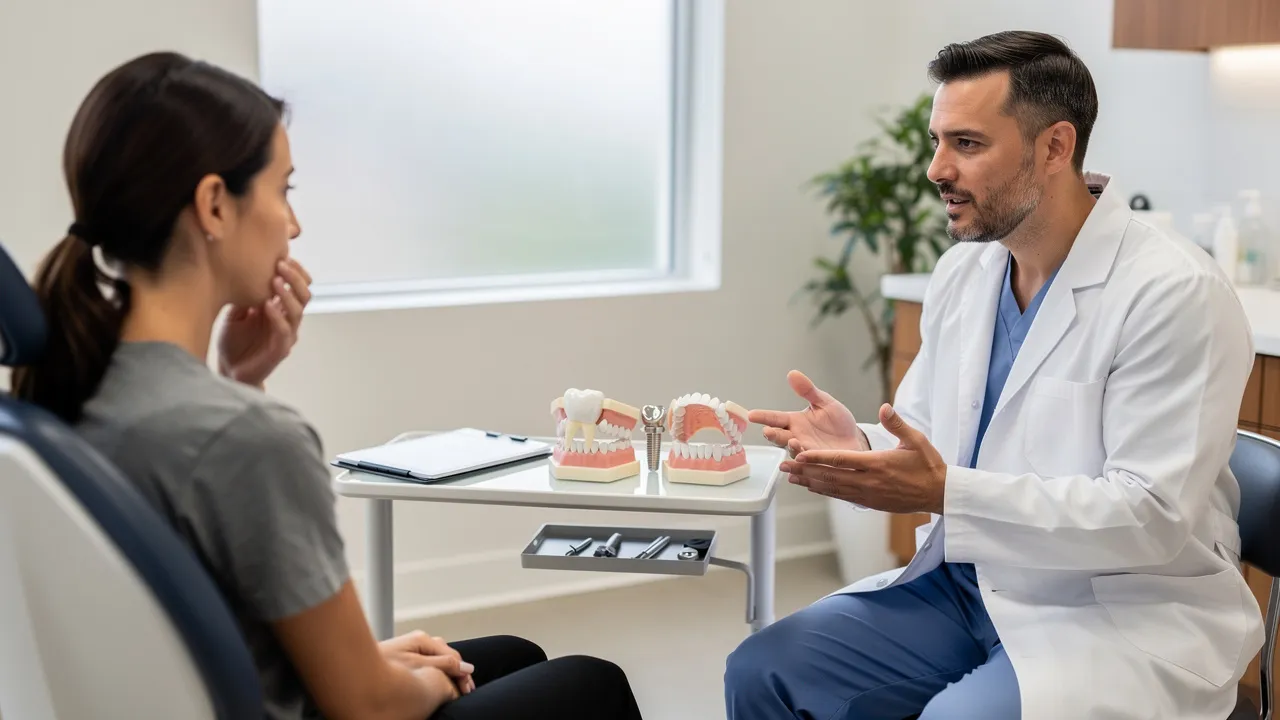
An implant consultation connects your concern with a treatment discussion based on your mouth, goals, and health history. It can help determine which implant-supported replacement option may fit your situation. That evaluation mindset is useful even when you are unsure whether an implant belongs in the conversation.
Start by writing down what you want resolved:
- Is the concern a tooth that is damaged but still present?
- Is there a gap from one missing tooth or several missing teeth?
- Are pain, appearance, chewing, or the possibility of losing a tooth driving the appointment?
- Do you need to understand the stages, timing, or financial responsibility before deciding?
- Do you need an urgent conversation about damage or discomfort before discussing a final restoration?
You do not need to select a procedure before the examination. Bring the concern, your goals, and your questions. Let the evaluation connect them to a treatment discussion.
Separate rebuilding a tooth from replacing a missing tooth
A tooth that remains and a tooth that is missing create different starting points. A crown is a permanent restoration cemented onto an existing tooth or implant and is commonly used to cover or cap a damaged tooth or implant. We include inlays/onlays among our restorative services, but the specific restoration for your tooth still needs to be established during an evaluation.
A missing tooth calls for a replacement discussion. A dental bridge can replace a single missing tooth or a row of missing teeth. A traditional bridge uses artificial teeth with crowns on either side, and the dentist alters the natural teeth on both sides of the gap before bonding the bridge to them. An implant consultation addresses whether an implant-supported replacement option may fit your mouth, goals, and health history.
Your initial sorting exercise can help you ask a more precise question before comparing prices or treatment schedules:
- Existing tooth: Ask whether the plan is intended to cover, cap, or otherwise rebuild the tooth that remains.
- Missing tooth or teeth: Ask whether a bridge, implant-supported replacement, or another option is being considered and why.
- Several concerns: Ask which problem should be addressed first and whether treatment needs to be staged.
- Inlay or onlay question: Ask what part of the existing tooth the proposed restoration would address and why it is being discussed instead of a crown or another option.
- Same-day crown question: Ask what “same-day” means for your proposed plan, what the visit would include, and what would happen if the restoration required more than one visit.
A treatment label tells you what is being discussed, not whether it fits your situation. Ask what structure remains, what the restoration is meant to do, and how the proposed option relates to your goals. Keep the decision attached to your examination rather than choosing from a general list.

Compare the missing-tooth paths by tradeoff
A bridge and an implant can both enter the conversation when you are replacing a missing tooth, but they do so through different treatment paths. Use the comparison to form questions, not to declare one option appropriate before an examination.
| Question | Traditional bridge | Implant-supported replacement |
|---|---|---|
| What supports the replacement? | Artificial teeth are joined to crowns on the teeth beside the gap. | The implant is placed into the jawbone, with a later procedure to place the crown. |
| What happens to nearby teeth? | The natural teeth on both sides of the gap are altered before the bridge is bonded to them. | Ask how the proposed plan relates to the nearby teeth and the space being restored. |
| Does surgery form part of the described path? | The bridge path described here does not include surgery to place a post in the jawbone. | Surgery is required to place the implant into the jawbone. |
| What does timing involve? | Bridges can often be completed in a couple of visits. | Healing after implant placement can take several months before another procedure places the crown. |
| What does bone support change? | A bridge does not require the jawbone for support. | Significant bone loss may mean bone grafting is needed before an implant. |
| What should you ask about cost? | In many cases, the upfront cost is lower, although replacement may affect long-term costs. | Compare the full stages and costs rather than only the initial fee. |
Your evaluation questions should turn broad differences into details that apply to the missing space:
- Adjacent teeth: Would the teeth beside the gap already need crowns because of their own condition, or would they be altered mainly to support a bridge? A traditional bridge uses those teeth as support, so ask how the condition of each nearby tooth affects the discussion.
- Surgery and healing: Does the proposed path include implant surgery, a healing period that may take several months, and a later crown procedure? Ask for the stages in order rather than relying on a single total-time estimate.
- Bone support: Is there a concern about bone loss at the extraction site, and would that change the implant plan by introducing bone grafting? Ask what the examination shows and what the added stage would involve.
- Financial scope: Is the estimate limited to the first procedure, or does it include the stages needed to complete the proposed replacement? In many cases, a bridge costs less upfront than an implant, while long-term costs can differ if a bridge needs replacement after a number of years.
- Personal priorities: How do surgery, treatment stages, the condition of nearby teeth, healing time, and upfront cost affect the choice you are trying to make?
If avoiding implant surgery is a priority, ask whether a bridge is among the options that fit the findings. If an implant path is being discussed, ask how its stages and healing period relate to your health history, goals, and available time. Take the option that remains appropriate after those questions are answered to the next discussion; do not choose from the tradeoff alone.
Clarify what remains unknown about crowns and related options
A restorative service list identifies categories for discussion, but it cannot decide which category fits your tooth. We provide restorative dentistry using crowns, bridges, inlays/onlays, and dental implants. A crown is commonly used to cover or cap a damaged tooth or implant. The evaluation still needs to establish the condition of the tooth, the purpose of the restoration, and the alternatives that apply to you.
Treat inlays and onlays as questions about rebuilding an existing tooth, not as automatic substitutes for a crown. Ask what part of the tooth would be addressed, why the proposed restoration is being selected, and what other options should be compared. The same approach applies to a same-day crown: ask what timing is available for your tooth, what preparation is required, and whether the plan changes if the restoration cannot be completed in one visit.
Your restorative comparison should cover these categories before you accept a recommendation:
- Problem: What is being restored or replaced?
- Purpose: Is the proposed restoration intended to cover, rebuild, or replace?
- Alternatives: Which other restorative categories should you compare, and why are they less suitable for your situation?
- Stages: How many procedures or visits are expected, and what occurs at each stage?
- Health history: Which parts of your medical or dental history affect the discussion?
- Plan boundaries: What would cause the recommendation, sequence, or estimate to change?
An implant consultation connects your concern with a treatment discussion based on your mouth, goals, and health history. Use the same standard for related options. You are asking for an explanation specific to you, not a universal answer about crowns, bridges, inlays, onlays, or implants.
Make permanence and timing part of the discussion
A crown can be a permanent restoration without being a restoration that lasts forever. A crown is cemented onto an existing tooth or implant, and the typical lifespan is 10–15 years depending on several factors. In this context, permanent describes how the restoration is placed as part of the treatment plan; it does not remove the need to discuss future maintenance, replacement, or changes in your circumstances.
Ask how the quoted plan uses the word permanent. You can ask whether the proposed crown is intended to remain in place as the final restoration, what factors may affect its service life, and what follow-up or replacement questions you should keep in mind. Avoid turning the 10–15-year figure into a personal prediction. It is a typical range, not a promise about your tooth.
Your treatment timeline also needs a precise question. A traditional bridge can often be completed in a couple of visits, while an implant path includes surgery, healing that can take several months, and another procedure to place the crown. A same-day crown discussion concerns whether a particular crown can be completed in one visit; it does not answer whether a crown is the right restoration.
Ask for the sequence, the expected number of visits, and the point at which the final restoration is placed. Then ask what could change that sequence. A clear timeline helps you compare treatment stages without treating general timing language as a commitment for your care.

Make the evaluation an information exchange
A restorative evaluation should give you a way to connect the concern you feel with the facts that shape treatment. That means your appointment should leave room for more than a procedure name. You need to understand what is being restored, why the proposed path fits the stated goal, and what other paths deserve discussion.
Bring a short account of the problem:
- When you first noticed the damage, gap, or discomfort.
- Whether the concern affects chewing, appearance, daily comfort, or more than one of those areas.
- What dental work has already been done on the tooth or surrounding area.
- What you want to avoid, such as surgery, several stages, or an unclear financial commitment.
- What outcome would make the appointment useful to you, such as a written plan or a comparison of alternatives.
- Whether the concern has changed since earlier dental work, an extraction, or a previous evaluation.
These details do not determine treatment. They help you explain the question that the examination needs to answer.
Your evaluation questions should make the plan understandable:
- What is the main problem the proposed treatment addresses?
- Which tooth or space is being restored?
- What alternatives should I compare, including a bridge, crown, inlay or onlay, or implant-supported replacement when relevant?
- What stages, visits, healing periods, or temporary restorations are part of each path?
- Which part of my health history or dental history affects the recommendation?
- What needs to be decided today, and what can I take home to consider?
- What would make the proposed sequence or estimate change?
A second-opinion consultation can give you room to ask questions and understand your options rather than feeling rushed into a decision. Consultations vary by practice, so ask how the discussion will proceed and take reasonable time before agreeing to significant treatment. Your goal is a plan you can explain back in ordinary language.
Bring records, history, and coverage information
Preparation can make the first restorative conversation more specific. If you have records from another practice, request them before the appointment when you can and bring the files or images in the format available to you.
In the United States, you have a legal right to copies of your dental records, but you must request them because practices do not send them to a new dentist automatically. Contact the previous practice and ask how to obtain the records, images, treatment notes, and periodontal information that relate to the tooth or area under discussion. Keep your own copy when possible.
Earlier dental images may help the team skip or narrow new X-rays, but a current image may still be needed for a current clinical question, at the treating team’s discretion. Do not assume that an older image answers a new concern simply because it shows the same area. Bring what you have and let the treating team decide whether it is sufficient for the question being asked.
Use this records checklist:
- Insurance card and plan information.
- Current medication list, including medication names and doses if available.
- Prior X-rays and digital image files.
- Dental records, treatment notes, and periodontal charts when available.
- A short timeline of earlier treatment, pain, damage, extraction, or changes in the gap.
- Questions about the proposed restoration, stages, timing, and financial responsibility.
Records do not replace an examination. They give you material to discuss alongside the current concern and help you avoid guessing about prior treatment.
Ask for a written financial explanation
Treatment recommendations and financial responsibility belong in the same conversation, but they are not the same question. Your estimate depends on the proposed treatment, the stages included, your dental findings, and the terms of your plan. Insurance coverage and your share of the cost require plan-specific verification; a general price or procedure label cannot establish your final responsibility.
We provide verification of benefits before treatment, and we publish our UCR fees openly. We accept 14 in-network PPO carriers. Those practice facts can help you organize the financial discussion, but they do not turn a benefit estimate into a guarantee of payment. Ask for the details that apply to the treatment being considered and to your plan.
Your written financial explanation should address:
- The proposed procedure and the tooth or area involved.
- Every planned stage, including temporary work, later procedures, or related restorations.
- The fee for each stage and the estimated total before insurance.
- What the practice expects your plan to cover and what remains your responsibility.
- Whether the estimate depends on a benefit maximum, waiting period, deductible, frequency limit, or other plan term.
- What changes if you select a bridge instead of an implant, or a different restoration for an existing tooth.
- How long the estimate is expected to remain applicable and what could change it.
A written estimate is a tool for comparing questions, not a promise that treatment will cost the same in every situation. If you need more time, ask what decisions can wait until you understand the alternatives. Keep the proposed care, insurance response, and your responsibility in separate lines so you can see what each figure represents.
Know what Westborough can document before treatment
Our first visit lasts about 60 to 90 minutes and includes a comprehensive exam, a full series of digital X-rays, a professional cleaning if gum health allows, and a written treatment plan. That gives you a defined starting point for discussing a damaged, painful, or missing tooth. The contents of the visit do not predetermine the procedure; the examination and plan still need to address your specific concern.
Bring the information that lets the visit focus on your question: your medication list, insurance card, prior dental records or X-rays, and a short account of what changed. Tell the team whether your main concern is a damaged tooth, a gap, discomfort, appearance, chewing, timing, or cost. A written treatment plan can then serve as the document you use to organize the next questions.
We use intraoral scans, CEREC milling, and cone-beam CT for planning and executing dental procedures. Ask which of these tools, if any, belongs in the discussion for your concern and what question it is meant to address. A planning tool does not by itself establish that a crown, bridge, inlay or onlay, or implant is appropriate. Ask how the information from the examination and any imaging connects to the proposed restoration.
We hold time in our daily schedule for urgent visits. If pain or damage is the reason you are seeking care, tell us that when you contact the practice and describe the immediate concern clearly. An urgent visit is a way to begin the conversation; it is not a promise that a specific restoration can be completed at that visit or that a particular treatment is appropriate.

Use comfort concerns to shape the conversation
Dental discomfort and anxiety can make a treatment decision feel larger than the procedure name suggests. You can say that you are worried about pain, surgery, the number of visits, recovery, or being asked to decide before you understand the alternatives. Naming the concern gives the consultation a practical question to answer.
Ask the team to explain the proposed stages in order and to distinguish what happens at the evaluation from what happens during treatment. Ask which alternatives should be compared and what each path would require from you in visits, healing, records, and cost. If the explanation moves too quickly, pause and ask for the plan in writing.
A second-opinion consultation can give you more room to ask questions and understand your options rather than feeling rushed into a decision. You can bring the proposed treatment, images, records, and estimate and ask for a comparison of the choices that apply to your mouth. Consultation practices vary, so ask how the appointment is structured and what information you should bring.
A calmer decision does not require you to promise treatment during the first conversation. It requires you to leave knowing what question was answered, what question remains, and what action you can take next. If you are not ready to choose, ask which records or explanations would make the decision clearer.
Decide whether Westborough fits your next question
Westborough Dental Care may be a relevant next conversation if your concern involves a damaged, painful, or missing tooth and you want to compare restorative paths in South San Francisco. We accept new patients, and you can request an appointment through online booking or by calling us directly. Our restorative dentistry includes crowns, bridges, inlays/onlays, and dental implants to replace or rebuild damaged and missing teeth.
Use the practice as a possible fit when your next question is one we can examine and discuss, such as:
- What type of restoration could address the tooth or missing space?
- Should you compare a bridge with an implant-supported replacement?
- How should an existing tooth be rebuilt or covered?
- What stages, images, records, and financial questions belong in the plan?
- How can you begin if the concern is urgent?
That fit is about the question you need answered, not a promise that a particular treatment will be recommended.
Before contacting Westborough, turn your concern into a short comparison note for the evaluation. The note is not a diagnosis or a choice of treatment. Its purpose is to keep the discussion focused on what needs to be restored, which paths should be compared, and which questions remain unanswered.
Use these five points to organize the conversation:
-
Identify the restoration target. Note whether the concern involves an existing tooth, a missing tooth or row of missing teeth, or several problems at once. If a tooth remains, ask whether the discussion is about covering, capping, or otherwise rebuilding that tooth. A crown is a permanent restoration cemented onto an existing tooth or implant and is commonly used to cover or cap a damaged tooth or implant. If a tooth is missing, ask whether a traditional bridge, an implant-supported replacement, or another option belongs in the comparison. The starting point matters because rebuilding an existing tooth and replacing a missing tooth are different planning questions.
-
Ask how each option uses the available structure. A traditional bridge uses artificial teeth joined to crowns on the teeth beside the gap, and those natural teeth are altered before the bridge is bonded to them. An implant-supported path involves placing an implant into the jawbone before a later procedure places the crown. Ask how the condition of the nearby teeth, the missing space, and the available bone affect the discussion. If an inlay or onlay is mentioned, ask what part of the existing tooth it would address and why that restoration is being compared with a crown or another option. The service category alone cannot establish which restoration fits your tooth.
-
Write down the stages rather than only the procedure name. Ask how many visits or procedures are involved, what occurs at each stage, and when the final restoration would be placed. Bridges can often be completed in a couple of visits. Implant treatment includes surgery, a healing period that can take several months, and another procedure to place the crown. Significant bone loss may mean bone grafting is needed before an implant, while a bridge does not require the jawbone for support. If a same-day crown is discussed, ask what “same-day” means for the proposed plan, what the visit would include, and what would happen if the restoration required more than one visit. The available information does not establish that a same-day schedule is appropriate for a particular tooth.
-
Separate the initial price from the complete financial question. Ask whether an estimate covers only the first procedure or every planned stage, including temporary work, later procedures, or related restorations. In many cases, a bridge costs less upfront than an implant, although long-term costs can differ if a bridge needs replacement after a number of years. Ask how the proposed treatment, the stages, the expected plan coverage, and your responsibility are shown separately. Insurance coverage and patient responsibility require plan-specific verification, so a general fee or procedure label cannot determine the final amount.
-
Record what is still conditional. Write down which answers depend on the examination, your health history, your goals, or the condition of the tooth and surrounding area. An implant consultation connects a concern with a treatment discussion based on the patient’s mouth, goals, and health history; it can help determine which implant-supported replacement option may fit, but it does not select a procedure in advance. Ask which alternatives should remain open, what could change the sequence or estimate, and which questions can be taken home for consideration.
After the evaluation, review whether the explanation covered the restoration target, the supporting structure, the stages, and the financial terms. If one of those points remains unclear, ask for clarification before agreeing to significant treatment. A second-opinion consultation can provide room to understand the alternatives rather than feeling rushed, and consultation practices vary. The useful decision is not the procedure name that sounds familiar; it is whether the proposed path has been explained in relation to your concern, goals, health history, and plan-specific financial responsibility.
Request a restorative evaluation with the right information ready
Restorative care begins with a clear question: what needs to be rebuilt or replaced, and which tradeoffs matter to you? A bridge, crown, inlay or onlay, and implant-supported replacement are not interchangeable decisions. An evaluation can connect your concern with your mouth, goals, and health history, then give you a treatment and financial discussion to consider.
When you are ready to discuss that question, use online booking or call Westborough Dental Care to request an evaluation. Write down whether your main concern is damage, pain, a missing tooth, comfort, timing, treatment stages, or cost so the conversation starts with the question you need answered.
Come prepared to ask what the proposed restoration addresses, which alternatives apply, how many stages are involved, and how your plan-specific responsibility will be determined. A qualified dental professional decides individual suitability after evaluation. Use the appointment to understand the options before choosing a procedure.
Need help applying this?
Talk to a billing specialist who knows your payer mix.
Westborough Dental Care welcomes new patients in South San Francisco. Book a visit to meet Dr. Zoulas and the team.
Schedule a meeting