
sedated dentistry
Sedated Dentistry: Questions to Ask Before You Schedule

Sedation dentistry is a question to clarify, not a promise to be fully asleep
Sedation dentistry is a consultation question, not a promise that you will be fully asleep. The useful decision is whether to discuss a sedation plan with a dental practice and understand what that plan would involve for your appointment.
Sedation may help some patients receive dental care in a more relaxed, comfortable state. The amount and type of sedation matter, and the instructions after treatment can vary with those choices. That is why a practice should explain the proposed approach rather than leaving you to infer it from the word sedation alone.
The terms local anesthesia, sedation, and general anesthesia describe separate parts of the dental-care conversation. The American Dental Association guidelines identify local anesthesia, sedation, and general anesthesia as distinct modalities, while also stating that the level of sedation is independent of the route used to administer it. In practical terms, the name of a delivery route does not answer how deeply sedated you would be.
Ask the practice to explain three points in plain language: what level of sedation is being considered, whether local anesthesia is also part of the dental treatment, and whether the proposed care is sedation or general anesthesia. Those answers give you a more useful basis for deciding than assuming sedation means sleep.
Why people ask about sedated dentistry
Dental anxiety is one reason you may ask about sedation. You may also raise the subject if you have a sensitive gag reflex, are planning a complex dental procedure, or want to discuss a more relaxed and comfortable visit. These reasons explain why the topic comes up; they do not determine which approach is suitable for you.
A conversation about comfort can be direct without making a promise about the result. Tell the practice what concerns you about the appointment, such as the thought of treatment, the setting, the expected length, or how you have felt during earlier dental care. Then ask what the practice can discuss with you. A clear answer should identify the proposed level of sedation and the conditions attached to it.
Your reason for asking should shape the questions you bring, not replace an evaluation. If anxiety is the main concern, ask how the appointment would be organized and what communication you could expect. If a gag reflex or a complex procedure is the concern, ask how the proposed plan relates to that treatment. If comfort is your concern, ask what the practice means by a more relaxed visit and what local anesthesia or other parts of the dental procedure would involve.
Use this short starting list:
- State the part of dental care that worries you.
- Ask what sedation level the practice is discussing.
- Ask whether the planned dental treatment also includes local anesthesia.
- Ask what you should expect after the appointment.
The aim is a specific conversation, not a personal suitability decision made from a general article.
Separate the sedation level from the way it is administered
Sedation level and administration route are different questions. The ADA guidelines state that the level of sedation is independent of the route by which it is administered. The same guidelines also state that moderate or deep sedation and general anesthesia may be achieved through different administration routes.
That distinction matters because a route name does not, by itself, tell you the depth of sedation. Ask the practice to name the intended level and then explain how it would be administered. Ask what you would be expected to notice, how communication would work during care, and what recovery instructions would apply. The practice should answer for the proposed plan rather than asking you to interpret technical terminology on your own.
Local anesthesia belongs in the same clarification conversation, but it should not be treated as a substitute for asking about sedation. The ADA guidance lists local anesthesia, sedation, and general anesthesia as separate modalities. Ask whether the proposed dental treatment involves local anesthesia in addition to any sedation, and ask the practice to explain the purpose of each part of the plan.
General anesthesia also needs a direct explanation. Do not treat a reference to sedation as proof that you would be fully asleep, and do not treat a route of administration as proof of a particular depth. Ask these questions before scheduling:
- What sedation level is being considered?
- Is the proposed care sedation or general anesthesia?
- What route would be used to administer it?
- Would local anesthesia also be part of the dental treatment?
- What would I be expected to remember, communicate, or do during the appointment?
The answers should be tied to your proposed procedure, not to a broad label.
Use the terminology as a prompt for questions. A careful consultation should leave you knowing what the practice is proposing, what remains undecided, and which instructions would apply if you proceed.
You can test that understanding with a short read-back before scheduling: name the sedation level the practice discussed, the route it described, whether local anesthesia is part of the dental treatment, and what it said about general anesthesia. Then identify the practical items still awaiting confirmation, such as preparation, monitoring, transportation, recovery, or fees. This is not a request to interpret clinical terminology independently. It is a way to check that the practice and patient are discussing the same plan. If the words remain unclear, ask for a plain-language explanation and ask which answer applies to your proposed procedure rather than to sedation in general.
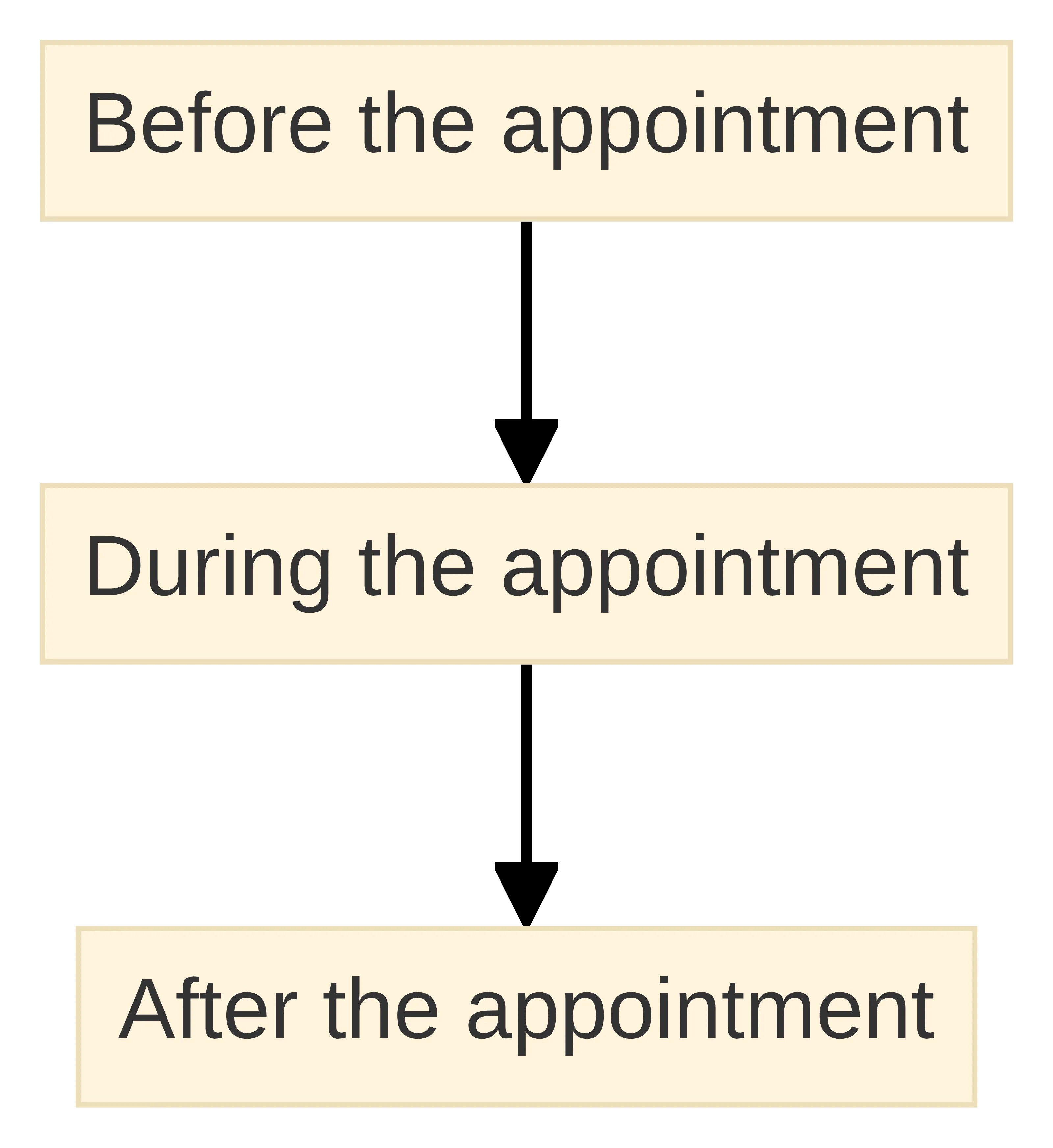
Use a before-during-after map to plan the appointment
A before-during-after map helps you plan a sedation appointment without assuming that every practice uses the same process. The type and amount of sedation can change the instructions you receive after treatment, so ask for the plan that applies to you.
Before the appointment, ask:
- What level and type of sedation are being considered?
- What preparation instructions apply to food, drink, medications, arrival time, and clothing?
- What information does the practice need before deciding whether the plan is appropriate?
- Will the dental treatment and sedation happen during the same appointment?
- What should you arrange for transportation or support afterward?
These questions identify the practical conditions before you commit to a date. Do not fill in missing details from another appointment, another practice, or a general online description.
The during-appointment stage should be explained in terms you can follow. Ask who will provide the sedation, who will provide the dental treatment, how your condition will be monitored, and how the team will communicate with you. Ask what happens if the planned level cannot be maintained or if the dental treatment needs to change.
The ADA guidelines adopted in October 2016 described education, training, and compliance with applicable state laws and regulations as requirements for dentists using sedation and anesthesia. Those points give you a sound basis for asking about the team and the setting. They do not establish that a particular practice offers every sedation level or that a particular plan is suitable for you.
The after-appointment stage deserves its own plan. Ask when you may leave, whether someone must accompany you, whether you may drive, what activities you should avoid, and who to contact if you have a concern. Postoperative instructions can vary according to the type and amount of sedation used, so the practice should give you instructions for the plan being discussed.
Write down the answers before scheduling. If the practice has not explained transportation, recovery, or follow-up instructions, treat that as an unanswered planning question rather than assuming the appointment will fit your day.
A simple way to use the map is to separate answers into three columns: what is known, what the practice still needs from you, and what the practice must confirm. The first column might contain the proposed sedation level or timing the practice has already explained. The second can hold information about your concerns or medications that the practice asks you to provide. The third can hold transportation, monitoring, recovery, or fee questions that remain open. This keeps a general description from becoming a personal plan. Before choosing an appointment time, read the third column back to the practice and ask which answers are required before scheduling and which will be provided during the appointment discussion. If the plan changes, ask which preparation and after-care instructions change with it.
Check training, regulation, and monitoring before treatment
Provider training and regulatory compliance belong near the beginning of your consultation. The guidelines also said that dentists providing sedation and anesthesia must comply with applicable state laws, rules, and regulations in the United States.
Ask the practice:
- Who would administer the sedation?
- What education and training apply to that person’s role?
- Which sedation level is within the proposed provider’s scope?
- What state requirements apply to the planned care?
- Who would provide the dental treatment while sedation is being used?
These questions ask for the facts that matter to the proposed appointment. They do not ask you to decide whether a provider is personally qualified from a title alone.
Monitoring should be discussed as part of the appointment plan. Ask who will monitor you, what the team will monitor, how the monitoring will be documented, and what happens if your condition changes. Ask whether the same person is responsible for sedation and dental treatment or whether responsibilities are divided.
The ADA guidance connects sedation and anesthesia with appropriate education, training, and state-law compliance. It does not give you a practice-specific monitoring plan. That plan must come from the dental practice for the level and route under consideration.
A useful answer should connect the provider’s role to the proposed level and route, not merely repeat that sedation is available. Ask the practice to identify the person responsible for the sedation discussion, the person responsible for dental treatment, and the person who will explain recovery instructions. If one person holds more than one role, ask the practice to say so plainly. Also ask which parts of the plan are confirmed and which depend on information from your health history or the planned procedure. This does not require you to assess clinical qualifications yourself. It gives you a way to notice whether the consultation has addressed the same level, route, monitoring, and recovery questions raised elsewhere in this article.
Safety questions should be specific rather than reassuring in general terms. Ask what risks the practice associates with the proposed level, which personal information could change the plan, what emergency arrangements apply, and what instructions you would receive if the appointment does not proceed as planned.
Do not turn a general statement about training into a guarantee about your individual experience. The useful boundary is simple: the ADA guidance describes professional and regulatory expectations, while the practice must explain how those expectations relate to your proposed appointment.
Use a complete sedation checklist during the consultation
About the team and setting
- Who would administer the sedation?
- What education and training apply to that role?
- Who would provide the dental treatment?
- Who would monitor you during the appointment?
- What state laws, rules, or regulations govern the proposed care?
- What happens if the planned level or procedure must change?
Use those points to make your questions precise without assuming that every practice offers the same service.
About preparation and transportation
- What should you do before the appointment?
- Which pre-appointment instructions should you confirm with the practice?
- Do you need another person to accompany you or take you home?
- May you drive after the appointment?
- What time should you arrive, and how long should you plan to be at the practice?
Postoperative instructions can vary with the type and amount of sedation used. Ask for those instructions before you make transportation or work plans.
About recovery, risks, and fees
- What should you expect immediately after the appointment?
- What activities should you avoid afterward?
- Who should you contact with a question or concern?
- What risks are associated with the proposed plan?
- What does the sedation fee include?
- Is the dental treatment billed separately?
- How would insurance benefits apply to the proposed care?
- What amount would you be expected to pay before treatment?
Westborough Dental Care provides patients with verification of benefits before treatment. That fact does not establish your coverage or personal responsibility for sedation-related care, so ask how the proposed services would be handled in your situation.
Use the cost conversation to separate three decisions: whether the proposed dental treatment is available, whether sedation-related care is part of the proposed plan, and what financial information applies to each. Ask for any distinction between a fee for sedation and fees for the dental procedure, then ask what verification of benefits does and does not confirm. If an amount is not yet known, record it as pending rather than treating a general estimate or benefit statement as a final responsibility. You can then decide whether you have enough information to request an appointment or whether a cost question needs to be answered first. This approach keeps the commercial next step tied to the proposed care without implying that insurance will cover a particular service.
Keep general information separate from personal suitability
General information can help you prepare questions, but it cannot determine whether a particular sedation plan is appropriate for you. A relaxed and comfortable state is one reason you may ask about sedation, yet that description does not establish a sedation level, a treatment plan, or an expected recovery experience.
Keep these statements separate:
- Sedation may help some people receive care in a more relaxed, comfortable state.
- A sensitive gag reflex, dental anxiety, or a complex procedure may be among the reasons you ask about sedation.
- Your proposed level, route, preparation, monitoring, and recovery instructions require a practice-specific discussion.
The ADA guidelines say that education, training, and state-law compliance apply to dentists providing sedation and anesthesia. Those standards support questions about the provider and setting; they do not answer whether a particular plan fits your health history or dental treatment.
Your next step is to describe your concerns accurately and ask the practice what information it needs to assess the proposed care. Share the questions that affect planning, including transportation, recovery time, medication information, fees, and the dental procedure itself. Do not select a sedation level from a checklist or assume that a prior experience will determine the next plan.
Use general information to prepare for a consultation, not to promise yourself a particular result. If the practice cannot yet answer a question about the proposed level, route, preparation, or recovery, keep that question open until the plan is explained.
What Westborough Dental Care can confirm
Westborough Dental Care offers sedation options for the conservative removal of teeth that cannot be saved. That is a specific practice fact about one type of dental care; it does not establish that every sedation method is available for every procedure.
Our staff helps patients feel at ease. You can describe the part of dental care that concerns you and ask what sedation-related options may be discussed for your proposed treatment. The next decision depends on the appointment, the provider’s plan, and your circumstances.
Westborough Dental Care accepts new patients and offers appointment requests through online booking or by phone. We can use that first contact to discuss whether sedation-related care is available for your dental visit and what information is needed to assess suitability.
We do not present a general promise that sedation will be available, that you will be fully asleep, or that recovery will be immediate. Ask us to address the level, route, provider, monitoring, preparation, transportation, recovery, risks, and fees that apply to your proposed care.
When you contact the practice, make the request narrow and easy to answer: say that you are considering a dental visit, explain the concern that led you to ask about sedation, and ask whether a consultation can address availability, proposed level, provider roles, monitoring, preparation, recovery, risks, and fees. You are not asking the first contact to decide your suitability from a general label. You are asking what information the practice needs and which details it can confirm for the proposed visit. If Westborough Dental Care cannot confirm a point before scheduling, keep it on your checklist and ask when it will be addressed. That creates a clear handoff from general education to a practice-specific discussion in South San Francisco.
Prepare for a focused consultation in South San Francisco
The conversation can cover practical questions:
- What part of the appointment concerns you most?
- What level of sedation are you asking about?
- Do you need transportation or recovery time arranged?
- Which fees and insurance questions need an answer before treatment?
- What information should the practice receive before deciding whether the plan is appropriate?
Westborough Dental Care provides verification of benefits before treatment. Ask how that verification relates to the proposed dental and sedation services rather than assuming that a benefit check answers every cost question.
South San Francisco is the relevant location for this consultation. State that you want to discuss sedation-related care, describe the dental visit you are considering, and ask what the practice can confirm before you schedule treatment.
Before requesting the appointment, organize your questions in the order they affect the decision: first, whether sedation-related care is available for the proposed visit; next, what level, route, provider, and monitoring plan the practice can discuss; then, what preparation, transportation, recovery, risk, and fee information you need. This order helps you avoid treating a positive answer about availability as an answer to every safety or cost question. It also gives the practice a concise summary of the information you want confirmed. If the practice recommends an evaluation before discussing a plan, use that visit to identify which questions have been answered and which remain open.
Take the next step after the key questions are answered
Sedation should be treated as a plan to clarify with a dental practice, not as a promise of full sleep or an immediate recovery. Bring your concerns, ask about the level and route, and get clear answers about provider training, monitoring, preparation, transportation, recovery, risks, and fees. Postoperative instructions can vary with the type and amount of sedation, so request the instructions that apply to the proposed appointment.
Westborough Dental Care can discuss whether sedation-related care is available for your proposed visit and can confirm the details that apply in South San Francisco.
What should you confirm before requesting sedated dentistry?
What is sedated dentistry and how does it differ from local or general anesthesia?
Sedated dentistry refers to the use of sedation to help patients feel more relaxed during dental procedures. Understanding the differences is important for determining the appropriate approach for your dental care.
What should I expect before, during, and after a sedation appointment?
Before a sedation appointment, you should discuss the level and type of sedation, any preparation instructions, and transportation arrangements.
What are common reasons patients inquire about sedation dentistry?
Patients often ask about sedation dentistry due to dental anxiety, a sensitive gag reflex, or the need for a complex procedure.
What key questions should I ask a dental practice about sedation options?
When discussing sedation options, ask about the level of sedation being considered, whether local anesthesia will also be used, who will administer the sedation, what monitoring will occur, and what recovery instructions will apply.
How can I confirm whether Westborough Dental Care offers sedation-related care?
You can contact Westborough Dental Care directly to discuss your concerns and inquire about the availability of sedation options for your dental visit. They can provide specific information regarding their sedation practices.
Need help applying this?
Talk to a billing specialist who knows your payer mix.
Westborough Dental Care welcomes new patients in South San Francisco. Book a visit to meet Dr. Zoulas and the team.
Schedule a meeting