
what is preventive dentistry
What Is Preventive Dentistry? A Practical Guide for South San Francisco Families
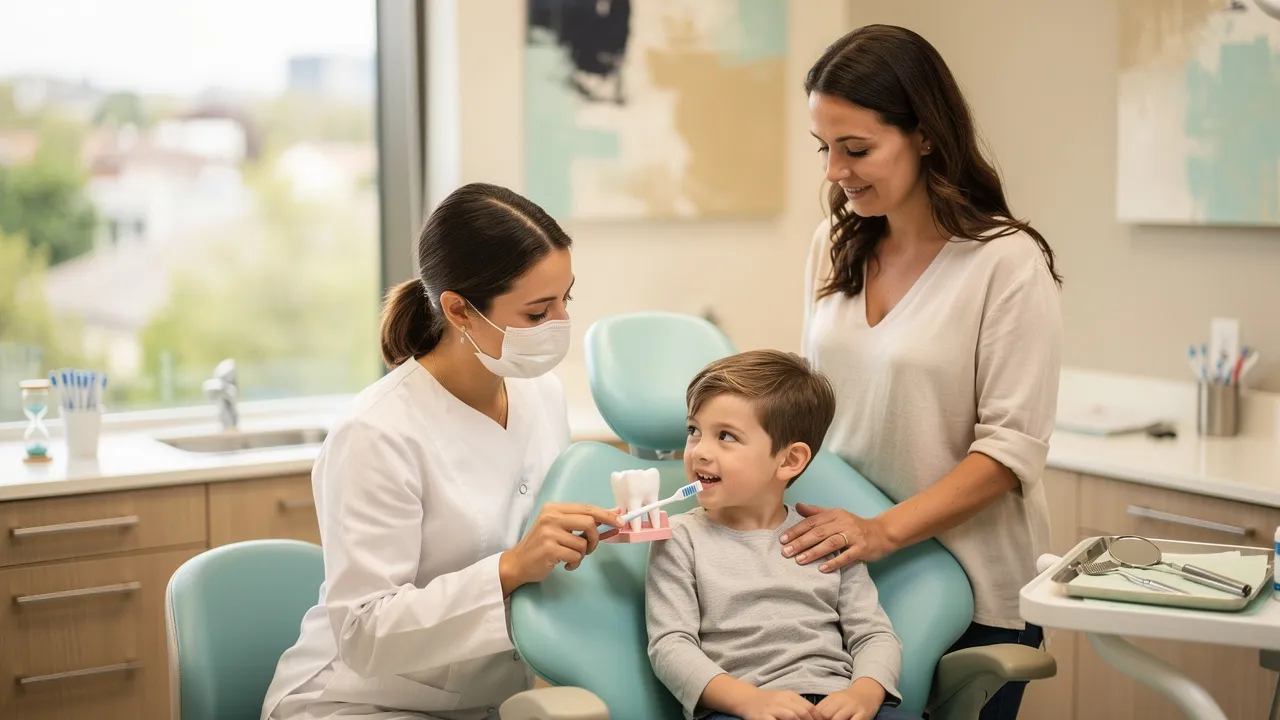
Plan by person, age, and care question
Preventive dentistry is ongoing care planned around the person receiving it, the questions that arise between visits, and the professional assessment that addresses them. For a family, the useful unit is each person’s care plan—not a single cleaning treated as the whole of prevention. Daily oral-health habits, examinations, professional cleanings, and follow-up can each inform the next conversation.
A practical way to begin is to identify whose care you are planning, what you want the dental professional to assess or explain, and what follow-up may be needed. A child’s discussion may involve developing teeth, changing habits, fluoride, or sealants when relevant. An adult’s may center on daily habits, examination findings, and professional cleaning. This age-and-question approach gives a family a way to prepare without assuming that everyone needs the same services.
Routine care also gives a dental professional a chance to look for potential problems early and help you build healthier oral-care habits. Early attention does not promise that every dental problem will be avoided. It gives you clearer information about what is present, what may need follow-up, and how your care can continue.
For you, the practical question is not whether one cleaning is enough. It is whether your household has a repeatable plan that connects home care, professional assessment, and follow-up when a concern appears.
Prepare questions before the preventive visit
Prepare for a preventive visit with three prompts:
- Person: Note whether the appointment concerns an adult or child and what age-related context may matter.
- Purpose: State whether you want a routine examination and cleaning, a discussion of home care, or help understanding a finding.
- Follow-up: Record what you want clarified about the next step after the professional assessment.
These prompts do not select care independently. They keep the conversation tied to the individual’s assessed needs while making it easier to separate routine prevention from follow-up. The same approach can be used for one person or adapted across a household.
A useful preventive conversation should leave you with more than a general reminder to take care of your teeth. You can ask what your examination showed, which home-care habits deserve attention, and whether any service or follow-up is appropriate. For children, oral-hygiene education and dietary counseling may be part of preventive care. Those discussions can help you turn broad advice into habits that fit your household.
The goal is continuity. Keep a simple record of questions or changes you want to discuss, and bring them to the next appointment. You do not need to wait for a major problem before asking how to maintain your oral health, and you should not treat a routine appointment as proof that no future concern can arise.
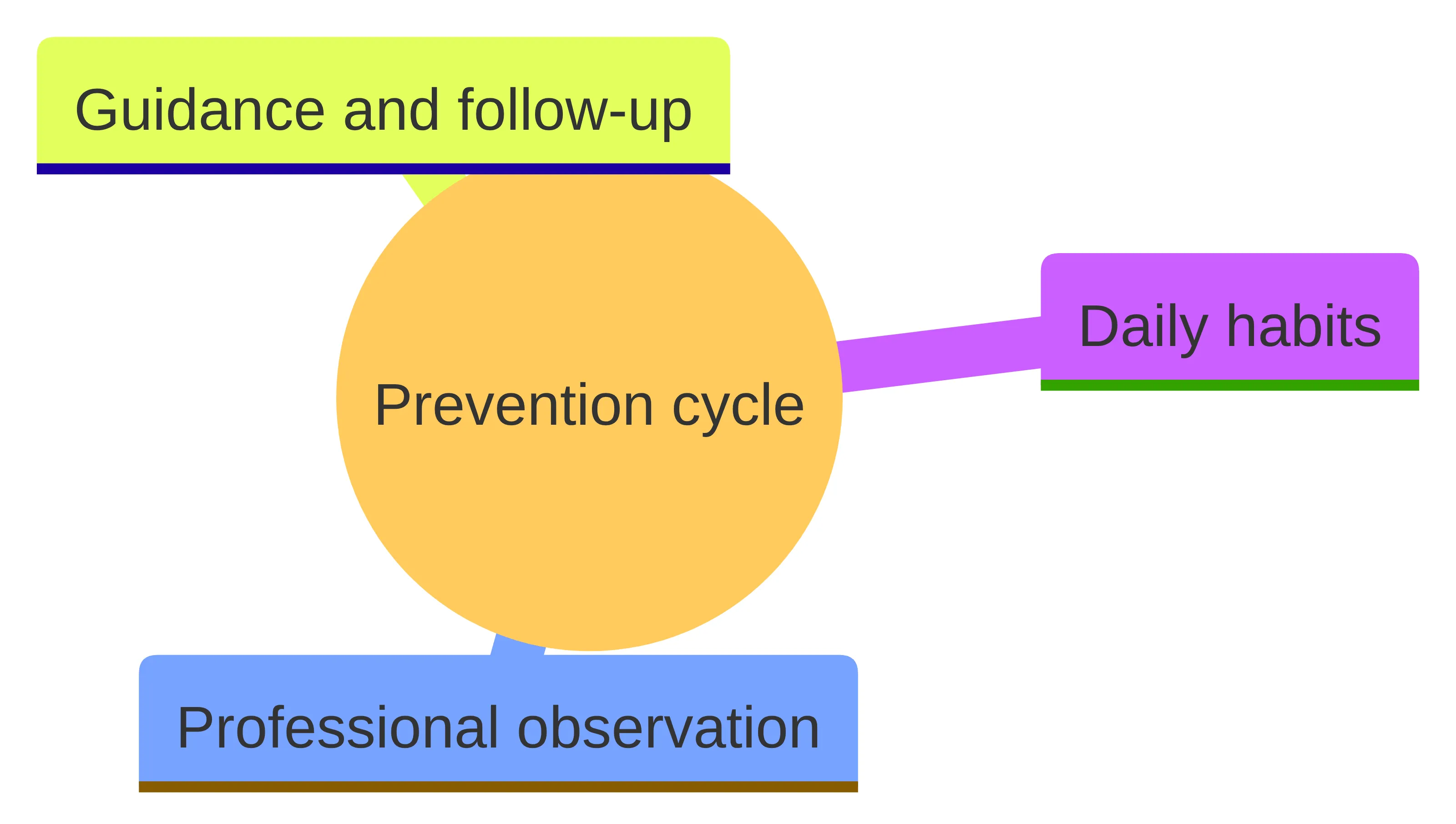
Match visit components to the question being answered
A routine preventive appointment commonly brings together several forms of care. Depending on your circumstances, it may include:
- A dental examination
- A professional cleaning
- X-rays when appropriate
- Discussion of daily oral-hygiene habits
- Preventive services suited to your age and oral-health needs
An examination and a cleaning answer different questions. The examination gives the dental professional an opportunity to assess your teeth, gums, and other areas of your mouth. The cleaning is professional care that forms part of routine prevention. X-rays are not automatically needed in every situation; accepted guidance describes them as being used when appropriate.
A practical way to read that list is to sort each item by its role rather than treating every item as an identical requirement. Assessment includes the examination and X-rays when appropriate: these give the dental professional information about the current situation. Professional prevention includes the cleaning and preventive services that fit the person’s age and needs. Guidance includes discussion of daily oral-hygiene habits and, for children, oral-health education or dietary counseling. One appointment can involve all three roles, but the roles answer different questions.
The wording used to describe a service also matters. “May include” describes a possible part of preventive care, not a promise that the service applies to everyone. “When appropriate” leaves the decision to the circumstances considered during care. “Age-appropriate” signals that a child’s developing teeth and habits may call for a different discussion from an adult’s examination. Reading these qualifiers carefully can prevent a family from treating a general service list as a fixed package.
Before a visit, you can use this framework to organize questions: Which item is assessing the current condition? Which item supports routine prevention? Which item is guidance for what happens between visits? If a service is suggested, ask what circumstance makes it relevant and whether it is preventive care, monitoring, or follow-up after an examination. These questions do not select care on your own. They help you understand why a professional is discussing a component and how it connects to your or your child’s needs.
For children, preventive services may also include fluoride treatments, dental sealants, oral-health education, and dietary counseling. These options are not a universal checklist for every child. Their relevance depends on the child’s circumstances and the dental professional’s assessment.
For adults, the same basic visit can provide a current examination, professional cleaning, discussion of home care, and a clear way to address findings that need attention. The specific combination should follow the assessment rather than a fixed list applied identically to everyone.
Early findings shape the next step in care
An early finding gives you a question to address while the situation is being assessed. A dental professional can look for potential problems early and help you develop healthier oral-care habits. That does not mean every finding requires the same response, and it does not turn a screening observation into a diagnosis.
The next step may be a clearer explanation, a change in home-care guidance, additional assessment, or another form of dental care. The appropriate path depends on what was found and the circumstances surrounding it. Ask what the finding measures, why follow-up is being discussed, and what you should watch for between visits.
The American Academy of Pediatric Dentistry says that preventive-service timing should reflect a comprehensive evaluation and the assessed needs of the individual patient. That principle helps explain why a routine visit should be treated as an assessment and conversation, not as a promise that every appointment will follow an identical schedule.
You can use the appointment to separate three questions:
- What appears healthy today?
- What deserves attention or monitoring?
- What care should come next?
Keeping those questions separate makes it easier to act on a recommendation without assuming more than the finding establishes.
Use age and assessed needs to plan preventive care
Age helps frame the conversation, but it does not determine services by itself. For an adult, preparation may center on daily oral-hygiene habits, an examination and cleaning, and questions about findings that need follow-up. For a child, preparation may include developing teeth, changing habits, fluoride treatments, sealants, oral-health education, or dietary counseling when relevant.
At the appointment, the dental professional uses the examination and the person’s circumstances to discuss appropriate care. Planning by age therefore means choosing better questions—not applying an adult or child checklist without context.
For children younger than 5, the U.S. Preventive Services Task Force review examined caries screening, assessment of future-caries risk, caregiver or guardian oral-health education, preventive medication, and referral to dental care. The review focused on preventive interventions considered through primary care for infants and preschool-aged children.
The same review notes that, as children grow older, dental professionals use sealants rather than fluoride varnish. This is one reason age-appropriate care should be discussed with a dental professional instead of selected from a general list without context.
The American Academy of Pediatric Dentistry describes an early visit as a way to establish a dental home and says the timing of preventive services should reflect a comprehensive evaluation and assessed needs. For both adults and children, that leaves room for a plan to change as oral-health needs change.
Routine care should be consistent without assuming that every person needs identical services at identical intervals. If several people in your household share an appointment pattern, keep each person’s findings and recommendations separate so that one person’s plan does not become another person’s default.
When should a child have a first dental visit?
The cited pediatric guidance recommends a child’s first dental visit by the first birthday or within six months after the first tooth erupts. The American Academy of Pediatric Dentistry also describes the early visit as a way to establish a dental home and says preventive-service timing should reflect a comprehensive evaluation and the child’s assessed needs.
Those statements provide a practical starting point and an individual-care boundary. If your child is approaching the first birthday or has a first tooth, use that milestone as a reason to arrange a dental conversation. The dental professional can then consider the child’s circumstances and explain what care is appropriate.
A first visit can also begin the habits that support later care. Bring questions about oral-hygiene routines, food and drink habits, fluoride, sealants, and how to respond if you notice a concern. For children, preventive care may include education for you as the caregiver, not only services performed during the appointment.
Do not treat the milestone as a substitute for assessment. If you already have a concern about your child’s mouth, contact a dental professional rather than waiting for a routine date.
When a concern appears, contact a dental professional
General preventive information is useful for planning routine care, but it cannot evaluate a concern in your mouth or your child’s mouth. If you notice a concern, or if an examination identifies a potential problem, contact a dental professional and describe what you have noticed or what the appointment found. A professional can assess the situation and explain whether follow-up is needed.
This boundary also applies when you are unsure whether something deserves attention. You do not need to interpret a finding on your own before asking a question. The practical action is to bring the concern into a dental conversation.
Use a short set of questions to make that conversation clearer:
- What did the examination identify?
- What does the finding measure or affect?
- What care or follow-up is being recommended?
- What should you do at home while you decide on the next step?
These questions do not diagnose a problem. They help you understand the connection between an observation, the recommended action, and your ongoing preventive plan. If the recommended timing or service is unclear, ask what factor led to that recommendation.
Keep each household member’s plan distinct
For a household, make one planning note for each person rather than one shared checklist. Include the person’s age or life stage, the last examination or professional cleaning if known, one question for the next visit, and any follow-up already discussed.
At the appointment, use each person’s note to discuss the relevant examination, home-care question, or preventive service. Afterward, record what was explained and what needs to be revisited. This keeps routine planning separate from responding to a finding without diagnosing a problem or deciding which service a person needs. A dental professional can relate the questions to an examination and the person’s assessed needs.
At our South San Francisco practice, we treat patients of all ages. We also offer a Child Membership Plan for patients 13 and under who do not have dental insurance.
For families in South San Francisco and Daly City, gather your household’s questions and identify whether routine preventive care or a concern-specific conversation is needed. A qualified dental professional decides whether an individual service or timing fits you or your child.
Planning preventive dentistry for a family
How can a family plan preventive dentistry by age?
Start with the person receiving care and note the age-related question, the purpose of the visit, and any follow-up to clarify. Age helps frame the conversation, while a dental professional’s examination and assessed needs inform care.
What can a parent or adult prepare before a preventive visit?
Bring questions about the examination, professional cleaning, daily oral-hygiene habits, and services that may be relevant to age and oral-health needs. For a child, questions may include fluoride treatments, sealants, oral-health education, or dietary counseling when relevant.
Why can preventive care differ between children and adults?
Children may need discussion of developing teeth and changing habits, while adults may focus on daily habits, examination findings, cleaning, and follow-up. The same service list does not apply automatically to every person.
How can a household keep different care plans clear?
Keep each person’s questions, findings, and recommendations separate. A shared household routine can support regular care, but a dental professional should relate each person’s care to that person’s examination and assessed needs.
What does Westborough Dental Care offer for children?
We treat patients of all ages and offer a Child Membership Plan for patients 13 and under who do not have dental insurance.
Need help applying this?
Talk to a billing specialist who knows your payer mix.
Westborough Dental Care welcomes new patients in South San Francisco. Book a visit to meet Dr. Zoulas and the team.
Schedule a meeting