
what is the goal of preventive dentistry
What Preventive Dentistry Aims to Do: Lower Risk and Find Problems Early
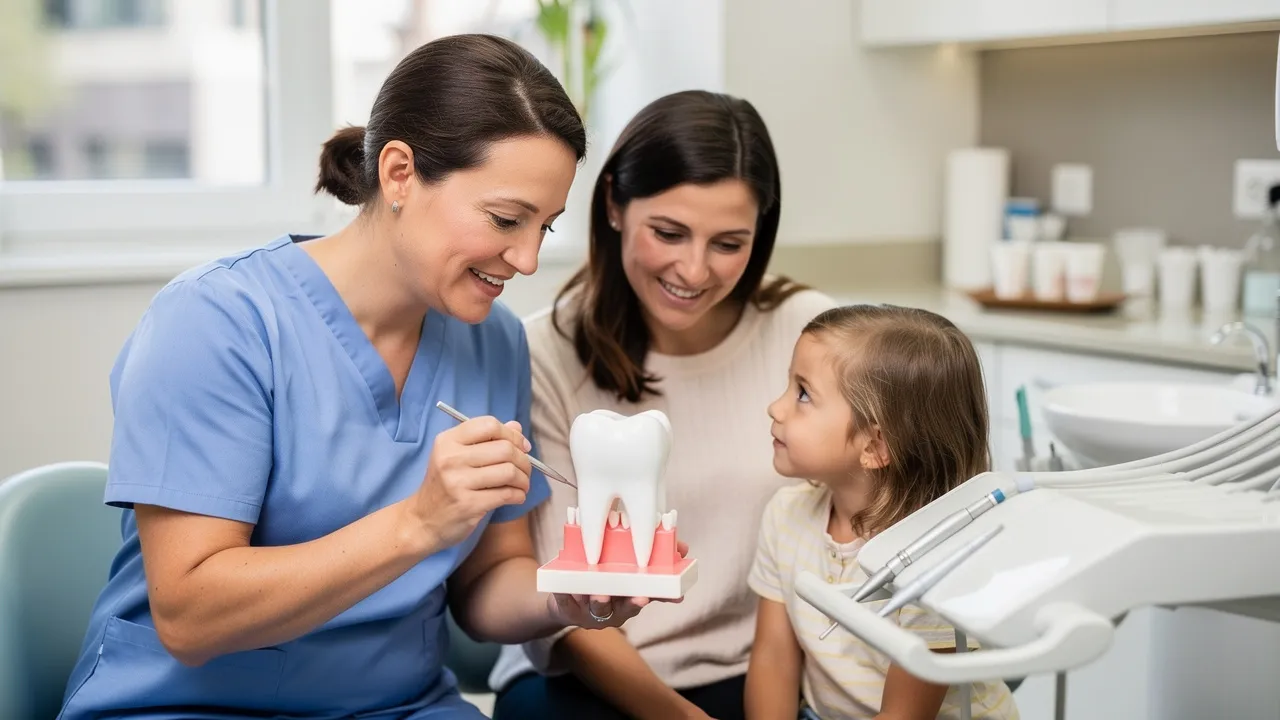
Preventive dentistry aims to lower risk and find problems early
Preventive dentistry aims to manage oral-health risk over time: reduce the chance of problems such as cavities and gum disease, and help identify changes early. Routine exams and professional cleaning can help dentists detect early signs of decay and address them before they become larger problems. The goal is to lower risk and notice possible concerns, not to promise problem-free teeth.
Preventive care has two connected roles. Daily habits support your oral care between appointments, while routine visits provide professional checkups and cleaning that can help identify early decay. Each plays a different part: home care is ongoing, and professional care adds an opportunity for assessment and cleaning. Together, they support risk reduction without making a guarantee about what will happen to your teeth.
How plaque contributes to decay and gum-disease risk
Plaque and tartar buildup also matter to gum-disease prevention. Preventive dentistry focuses on removing that buildup to reduce the risk of gum disease. Risk reduction is the practical point: removing buildup is part of care aimed at lowering risk, not a promise that gum disease will never develop.
Decay and gum disease connect to prevention through different explanations. For decay, plaque produces acids that weaken enamel, and untreated decay can lead to cavities. For gum disease, preventive care focuses on removing plaque and tartar buildup to reduce risk. You can understand the shared purpose without treating the processes as identical: prevention addresses contributing buildup and makes room to notice changes.
A risk is a possibility, not a forecast of what will happen to you. The described decay pathway uses possible outcomes: acids weaken enamel, and untreated decay can lead to cavities. The gum-disease claim is also about reducing risk, rather than eliminating it. Keeping those limits in view makes the purpose of preventive care clearer: address relevant factors without assuming that one action settles every future concern.

Why noticing early changes can matter
Routine exams and professional dental cleaning can help dentists detect early signs of decay and treat them before they become larger problems. Early identification gives a dentist an opportunity to address a change before it has progressed into a larger concern. It is a potential benefit of routine care, not a guarantee that every developing problem will be found.
Gingivitis is an early stage of gum disease characterized by red, swollen, or bleeding gums. This description shows why gum changes belong in a conversation about prevention: gum disease has an early stage, and changes are worth noticing rather than dismissing.
Without proper preventive dental care, gingivitis can progress into periodontitis, which may lead to gum recession, bone loss, and even tooth loss. The words “can” and “may” describe possibilities, not an inevitable course. The value of early attention is the chance to address a change before it becomes a larger problem; it does not mean every sign will follow the same path.
Early identification and risk reduction are related, but they are not the same job. Removing plaque and tartar is part of reducing gum-disease risk. Exams and professional cleaning can help dentists detect early signs of decay. One part addresses buildup; the other can help reveal a change. Both support prevention without promising that every condition will be avoided.
How daily habits and dental visits work together
Daily oral-care habits give you practical actions between professional visits.
Prevention also includes habits beyond cleaning. Drinking water with the right amount of fluoride protects teeth throughout the day, while not smoking is recommended because smoking increases the chance of gum disease. If you are unsure about the fluoride content of local water, guidance recommends checking community water information or asking your water utility. These examples connect different actions to different concerns: fluoride in water supports tooth protection, while not smoking relates to gum-disease risk.
Between-teeth cleaning has several possible tools, including floss, a floss holder or threader, a water flosser, a special brush, or a wooden or plastic pick recommended by a dental professional. The options are not a universal ranking. You can use the type of tool your dental professional recommends rather than assuming that one option suits everyone.
Routine checkups and professional cleaning complement the habits you maintain at home. General oral-hygiene guidance recommends visiting a dentist for both. It does not set one appointment interval for everyone, so treat “routine” as ongoing care rather than a fixed schedule that applies to every person.
Home care and professional visits cover different parts of the same ongoing effort. Brushing and cleaning between teeth are regular habits; checkups and professional cleaning add professional assessment and care. Preventive dentistry focuses on removing plaque and tartar buildup to reduce gum-disease risk, and routine exams and cleaning can help dentists detect early signs of decay. You can think of daily care as what you do between visits and professional care as an added opportunity to assess and clean.
You can keep the everyday part straightforward: brush twice a day with fluoride toothpaste, clean between your teeth regularly with an appropriate option, and include routine checkups and professional cleaning in your oral care. These are general recommendations, not a prediction of your individual outcome. Their role is to support ongoing care; the aim remains lower risk and attention to possible changes.

What a preventive visit can include at Westborough Dental Care
At our practice, every preventive visit includes a professional cleaning, full oral exam, digital X-rays when indicated, oral cancer screening, and an evidence-based home-care plan tailored to specific risk factors.
That list describes the components of a preventive visit at our practice. The X-rays are conditional: they are included when indicated, not automatically at every visit. The home-care plan is tailored to specific risk factors, so the visit includes professional care as well as guidance shaped around those factors. This is a description of our practice’s visits, not a template for every dental office.
A cleaning and exam fit the broader aim of routine preventive care, while a home-care plan connects the visit with the habits you maintain outside the office. Oral cancer screening is also part of our preventive visits. These are the stated components of our service; their inclusion does not turn prevention into a promise that no problem will arise.
Prevention reduces risk; it does not remove every risk
Your circumstances can affect visit timing. If you are at higher risk for gum disease because of a medical condition such as diabetes, your dentist may want to see you more frequently. This is a conditional example, not a schedule for everyone with that condition or a set interval for all patients. It shows why routine care may need to reflect an individual risk factor.
Dry mouth related to medicines is another example of a factor associated with higher tooth-decay risk. In that situation, a dentist or dental hygienist may provide fluoride varnish or foam during an office visit, or recommend fluoride gel or mouth rinse for home use. These are possible professional recommendations for higher-risk situations, not steps everyone needs. Read alongside the gum-disease example, this illustrates how preventive care may be adjusted to the concern at hand: risk factors can shape visit timing or the kinds of fluoride support a professional discusses, rather than prescribe one universal add-on.
Build prevention into your ongoing oral care
Preventive dentistry brings together daily oral-care habits and routine professional care. Brush twice a day with fluoride toothpaste, clean between your teeth regularly, and include checkups and professional cleaning in your ongoing care. These actions support risk reduction, while exams and cleaning can help identify early signs of decay. The aim is steady attention to what you can address, not certainty about every outcome.
A dental professional can help decide what care and visit timing fit your circumstances. If a medical condition such as diabetes places you at higher risk for gum disease, your dentist may want to see you more frequently. Keep your daily habits going and bring personal questions about your care to a dental professional.
Practical questions about preventive dentistry
What is the goal of preventive dentistry?
Its goal is to lower the risk of oral-health problems such as cavities and gum disease and help identify changes early. Prevention supports healthier teeth and gums but cannot guarantee that every problem will be avoided.
How do routine dental checkups help identify problems early?
Exams and professional cleanings can help a dentist notice early signs of decay and address them before they become larger problems. They offer an opportunity for assessment, but they cannot guarantee that every developing issue will be found.
How often should someone have a preventive dental visit?
There is no single visit schedule that applies to everyone. A dentist may recommend more frequent visits when a person has a higher risk of gum disease, such as with certain medical conditions; ask a dental professional what timing fits your circumstances.
What daily habits support preventive dental care?
Brush twice a day with fluoride toothpaste and clean between your teeth regularly, aiming for once a day. Floss or another between-teeth tool recommended by a dental professional can help make home care part of your ongoing routine.
Does preventive dentistry guarantee that cavities or gum disease will be avoided?
No. Professional care and daily habits can reduce risks and help identify some problems early, but they do not eliminate every risk or guarantee that all problems will be detected.
Need help applying this?
Talk to a billing specialist who knows your payer mix.
Westborough Dental Care welcomes new patients in South San Francisco. Book a visit to meet Dr. Zoulas and the team.
Schedule a meeting