dentistry general
General Dentistry in South San Francisco: Services, First Visits, and Planning Your Care

Use three questions to decide whether general dentistry care fits
Choosing a general dentist becomes more manageable when you separate the decision into three questions: does the practice offer the type of care you may need, what will the first visit establish, and how will you plan for insurance or payment before treatment? These questions give you a practical way to compare a practice with your own priorities without trying to diagnose a dental problem from a service list.
For families in South San Francisco and Daly City, the first question is usually broad. You may be looking for preventive care, a routine examination, help with gum concerns, a filling, a crown, or a practice that can see more than one age group. The second question is about process: you should know what information the first appointment is intended to gather and what you may leave with. The third question concerns planning, because coverage and your final responsibility depend on the treatment and your plan.
Use this order:
- Match the practice’s documented services to the kind of appointment you are considering.
- Understand what the first visit includes and what it may establish.
- Ask financial questions before treatment rather than treating a general price range as your personal estimate.
The goal is not to choose treatment before an examination. It is to arrive with clearer questions and a reasonable next step.
We offer general dentistry services including fillings, crowns, gum care, and more. We accept new patients and let you request an appointment through online booking or by calling us directly. Those two facts make the practice relevant to a broad first conversation, but your examination and treatment plan still determine which service addresses your needs.
Start with the care you may be looking for
General dentistry is a starting point rather than a diagnosis. A service list helps you see whether a practice can begin the conversation about the concern that brought you in.
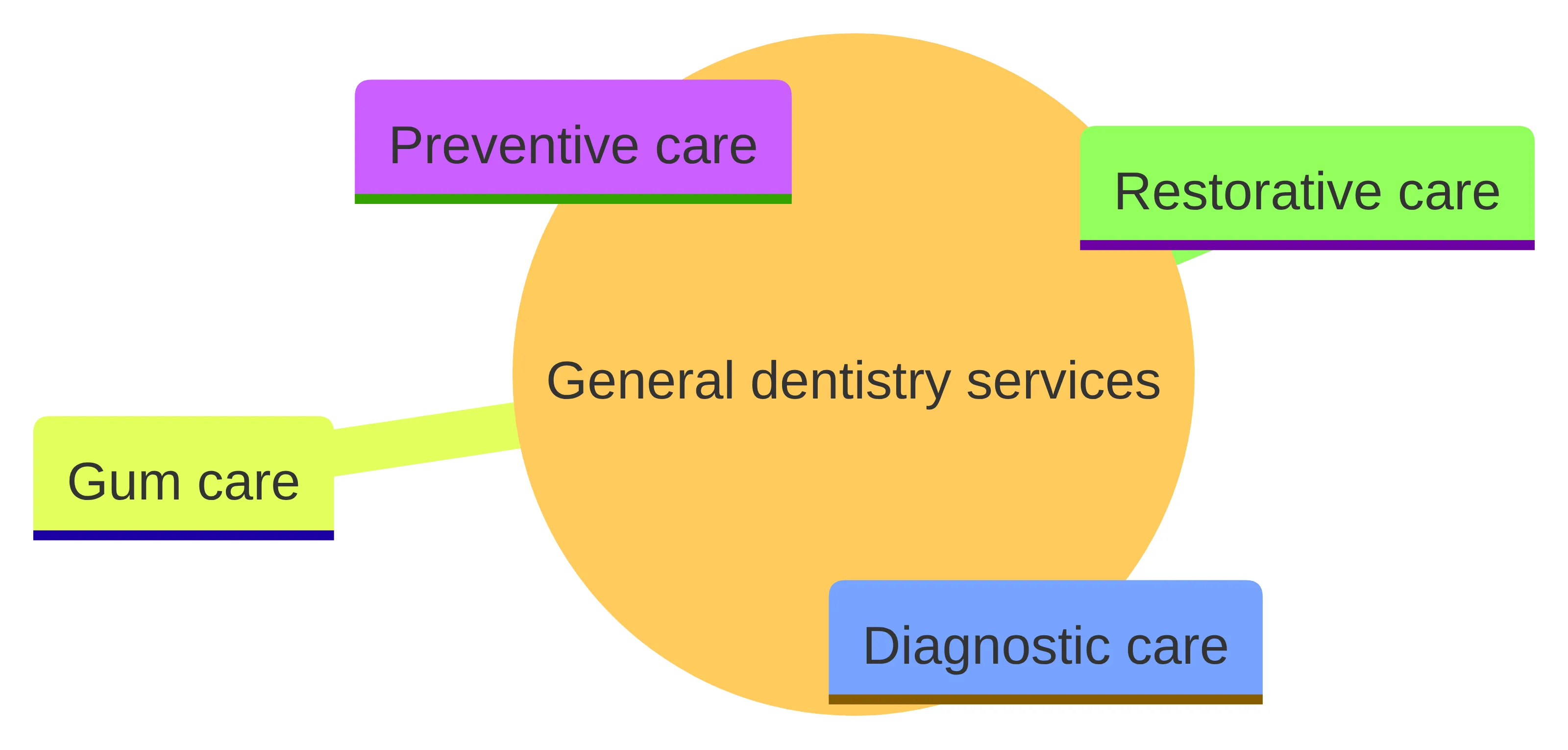
At Westborough Dental Care, our general dentistry services include fillings, crowns, gum care, and other general dental services. That gives you several useful categories to ask about:
- Preventive care: care intended to assess oral health, provide a professional cleaning, and give you a home-care plan.
- Diagnostic care: examination and imaging when clinically indicated so the dentist can assess what is happening.
- Gum care: periodontal therapy, including scaling and root planing for gum disease.
- Restorative care: services such as fillings and crowns when an examination identifies a restorative need.
These labels help you describe what you want to discuss, but they do not tell you which service you should receive. A request for a crown, for example, is a question to bring to an examination, not a conclusion to make from a webpage. The same boundary applies when you are comparing routine cleaning, periodontal therapy, or restorative care.
Before you contact a practice, write down the concern in plain language. You can use prompts such as:
- What would you like the dentist to examine?
- Are you seeking routine preventive care, or do you need to discuss a known dental concern?
- Are you looking for care for yourself, a child, or several family members?
- Do you have prior records, X-rays, or a treatment recommendation to bring?
This short list keeps the first conversation focused. It also helps you distinguish between the kind of care you want to discuss and the treatment a dentist may recommend after reviewing your oral health.
Preventive and diagnostic care establish the baseline
Preventive care gives you a structured way to understand your current oral health and what to work on between visits. Every preventive visit with us includes a professional cleaning, a full oral exam, digital X-rays when indicated, an oral cancer screening, and a home-care plan tailored to specific risk factors.
Each part answers a different practical question. The cleaning addresses the professional-care portion of the visit. The oral exam gives the dentist an opportunity to assess your teeth, gums, and other oral structures. The screening is a separate part of the examination. The home-care plan turns the visit into specific guidance for your daily routine rather than a cleaning alone.
You can make this appointment more useful by bringing a short history of what has changed since your last dental visit. Mention sensitivity, bleeding, discomfort, a damaged tooth, or a change you want examined. You do not need to label the cause. Describe what you notice and when you notice it.
Digital X-rays belong in the diagnostic conversation, not in an assumption that the same imaging is needed at every visit. Our preventive-visit information likewise describes digital X-rays as included when indicated.
That gives you a useful question to ask: which imaging is indicated for the examination being planned, and what question will it help answer? The answer can depend on the purpose of the visit and the findings available to the dentist. The practical boundary is simple: do not use a generic imaging list to decide what you need before the appointment.
Gum care and restorative services address different needs
Gum care and restorative care are different parts of general dentistry, even though they can be discussed during the same evaluation. We provide scaling and root planing for gum disease as part of our periodontal therapy. Scaling and root planing is also called deep cleaning or periodontal cleaning; it removes tartar below the gum line and treats inflamed gums.
The condition of your teeth and gums affects how that conversation proceeds. Depending on the condition of your teeth, scaling and root planing may require more than one visit. That possibility is a planning point, not a prediction about your care. Ask whether the proposed gum treatment would be completed in one visit or more than one visit, and ask what each appointment is intended to address.
Restorative services address a different question: whether a tooth needs a service such as a filling or crown. We offer fillings and crowns within our general dentistry services, but the service label alone cannot establish that either option is appropriate for you.
When restorative care is discussed, ask for the reason for the recommendation, the alternatives that apply to your situation, and what the proposed plan includes. Ask how gum health, existing dental work, and the condition identified during the examination affect the plan. A written treatment plan can give you something concrete to review before you decide how to proceed.
Families can consider care across ages
Family care is easier to plan when you know whether the practice serves the age groups in your household. We treat patients of all ages and offer family, cosmetic, and restorative dentistry in South San Francisco.
That does not mean every family member will have the same appointment or treatment plan. Instead, it lets you ask whether one practice can begin care conversations for children, adults, and older family members. When you contact us, identify who needs an appointment and whether the visit is preventive, an evaluation of a concern, or a discussion of existing restorative work.
We offer a Child Membership Plan for patients 13 and under who do not have dental insurance. If that description fits your child, ask how the plan applies to the care you are considering and how it fits with the appointment process. Do not treat the existence of a membership plan as a statement about your family’s eligibility for a particular service or as a personal cost estimate.
Know what the first visit is designed to accomplish
At Westborough Dental Care, plan for about 60 to 90 minutes; the first visit includes a comprehensive examination, a full series of digital X-rays, a professional cleaning if gum health allows, and a written treatment plan. Bring the concerns you want addressed, listen for the findings that shape the plan, and ask which parts are routine, which parts are recommended for a specific finding, and which decisions can wait for another conversation.
The useful question for you is how the planned imaging relates to your examination and what it is intended to assess. This keeps the visit description and the clinical imaging decision in the right places.
Use the appointment to clarify four points:
- What did the examination identify?
- Which services are recommended now, and which can be discussed later?
- What does the written treatment plan include?
- What financial or insurance questions should be resolved before treatment begins?
You can ask for explanations in ordinary language. A clear plan should help you understand the next conversation without requiring you to select a treatment from a list on your own.
Prepare the information that makes the visit useful
These items give the office information to use during the appointment and can reduce the need to reconstruct your dental history from memory.
Before you arrive, add a few notes of your own:
- the main concern you want examined;
- when you first noticed it;
- any previous dental treatment related to it;
- questions about discomfort, timing, or recovery that you want answered; and
- questions about how your dental coverage may affect planning, if you have insurance.
Keep the notes short. The purpose is to make sure your questions are available when the appointment becomes busy, not to create your own diagnosis.
If you have prior X-rays or a treatment recommendation from another dentist, bring them as background rather than assuming they determine your current plan. Ask how they will be used in the examination and whether additional information is needed. You can also ask for the written treatment plan in a form you can review after the visit, then return with questions before authorizing care.
Plan the financial conversation before treatment
Insurance planning has several separate parts, so begin by identifying which situation applies to you:
- In-network PPO coverage: We accept 14 in-network PPO carriers.
- Out-of-network coverage: We file out-of-network claims for our patients.
- No dental insurance: We offer a membership plan for patients without dental insurance.
These categories describe ways we handle coverage or membership; they do not tell you what your plan will pay for a particular service. Ask which part of the proposed care is subject to your deductible, co-payment, annual limits, waiting periods, or exclusions. Your plan documents and the treatment plan are the basis for your financial decision.
We provide verification of benefits before treatment. We also help you understand your coverage and confirm your insurance benefits before treatment. Use that conversation to separate three amounts that are often confused: the charge for the service, the amount your plan may contribute, and your remaining responsibility.
A benefits check is useful for planning, but it is not the same as a guarantee of payment. Coverage can depend on the service, your plan, and the treatment that is ultimately recommended. Ask what has been confirmed, what remains subject to the insurer’s processing, and when you will receive the information needed to decide.
For context, a January 26, 2024 GoodRx article reported that each scaling-and-root-planing session may cost $150 to $300, or possibly more. That reported range is not a personal estimate from us, is not a promise about your fee, and does not establish your insurance payment or final patient responsibility.
The better financial question is not simply, “What does this service cost?” Ask, “What treatment is being proposed, how many visits may be involved, what will be submitted to insurance, and what amount should I plan to discuss before treatment?” The answer should be tied to your examination and written plan.
Bring these questions to the financial conversation:
- Has my insurance information been used to verify benefits?
- Is the proposed service treated as preventive, periodontal, diagnostic, or restorative care under my plan?
- What part of the plan may be out of network or subject to a limitation?
- If I do not have insurance, how does the membership plan relate to the care being discussed?
- What is the expected patient responsibility for the proposed plan, and what could change it?
This approach keeps coverage information connected to the actual care under discussion instead of treating a general fee or online range as your bill.
Keep general guidance separate from practice-specific information
The practice-specific details in this guide are straightforward: we offer general dentistry services including fillings, crowns, and gum care; our preventive visits include the listed examination, cleaning, screening, indicated imaging, and home-care components; and our first visit lasts about 60 to 90 minutes with the documented examination, imaging, possible cleaning, and written treatment plan.
General guidance helps you use those details well. It tells you to describe your concern, bring relevant records, ask what the examination establishes, and separate coverage verification from your final financial responsibility. It does not select a service for you or turn a published process into a prediction about your appointment.
Use the following framework when you compare your options:
- Service fit: Does the practice list the type of care you want to discuss?
- Visit fit: Does the first-visit process give you the examination and planning conversation you need?
- Family fit: Can the practice begin care conversations for the ages in your household?
- Financial fit: Can you discuss benefits, out-of-network claims, or membership before treatment?
- Communication fit: Can you explain your concern and receive a written plan you can review?
You can use these questions for any general dental practice. The answers about Westborough Dental Care come from our documented services and process; the answer about what you personally need comes from your examination and plan.
Do not use a symptom, a service name, or a general cost range as a substitute for an evaluation. If you are comparing practices, compare the questions each one can answer about the proposed care, visit process, coverage, and financial responsibility. That comparison is more useful than assuming that a longer service list automatically matches your needs.
Request an evaluation when the questions are clear
You have a clear reason to contact Westborough Dental Care when you can describe the care you want to discuss, identify the information you can bring, and list the insurance or payment questions that need an answer. Bring your insurance card, medication list, and prior dental records or X-rays to the first visit. A qualified dental professional must decide what is suitable for your individual needs after an examination and review of the treatment plan.
What should you confirm before requesting general dental care?
What general dentistry services are offered at Westborough Dental Care?
Westborough Dental Care provides a range of general dentistry services including fillings, crowns, gum care, preventive care, diagnostic care, and restorative care.
How does Westborough Dental Care handle insurance verification and out-of-network claims?
Westborough Dental Care provides verification of benefits before treatment and files out-of-network claims for patients.
What types of patients does Westborough Dental Care accept?
Westborough Dental Care treats patients of all ages and offers a Child Membership Plan for patients 13 and under who do not have dental insurance.
What should I ask about my insurance coverage before treatment?
Inquire about which services are covered under your plan, any deductibles or co-payments, and how the proposed treatment fits within your insurance benefits.
Need help applying this?
Talk to a billing specialist who knows your payer mix.
Westborough Dental Care welcomes new patients in South San Francisco. Book a visit to meet Dr. Zoulas and the team.
Schedule a meeting