how much does it cost to have cosmetic dentistry
How Much Does It Cost to Have Cosmetic Dentistry in South San Francisco?

What a cosmetic dentistry price can—and cannot—tell you
Cosmetic dentistry cost is a planning question, not a single number you can apply to every smile. A published range may help you understand the scale of an option, but it does not establish which treatment suits you, how many teeth may be involved, what preparation could be needed, or what your final responsibility will be.
A useful cost conversation separates three kinds of figures. An illustrative range gives you a broad planning reference. A practice-specific fee shows what a dental office publishes for a defined service. An individualized estimate connects the proposed procedure, number of teeth, materials, related services, benefits, and payment arrangements to your situation. Those figures answer different questions, so comparing them as though they were interchangeable can make a treatment plan look clearer than it is.
Westborough Dental Care publishes UCR fees openly. That gives you a practice-based reference to discuss, but a published fee still needs to be matched to the service being considered and the terms that apply on the day of treatment. Ask for the proposed care and financial responsibility in writing rather than relying on a headline amount.
Your smile goal should come before your budget comparison. Define whether you want to address one tooth or change your full smile, because that choice shapes the procedure discussion and total budget. The practical decision is whether you have enough treatment-specific information to request an evaluation and compare a documented estimate—not whether a general range looks affordable by itself.
Published examples for common cosmetic dentistry options
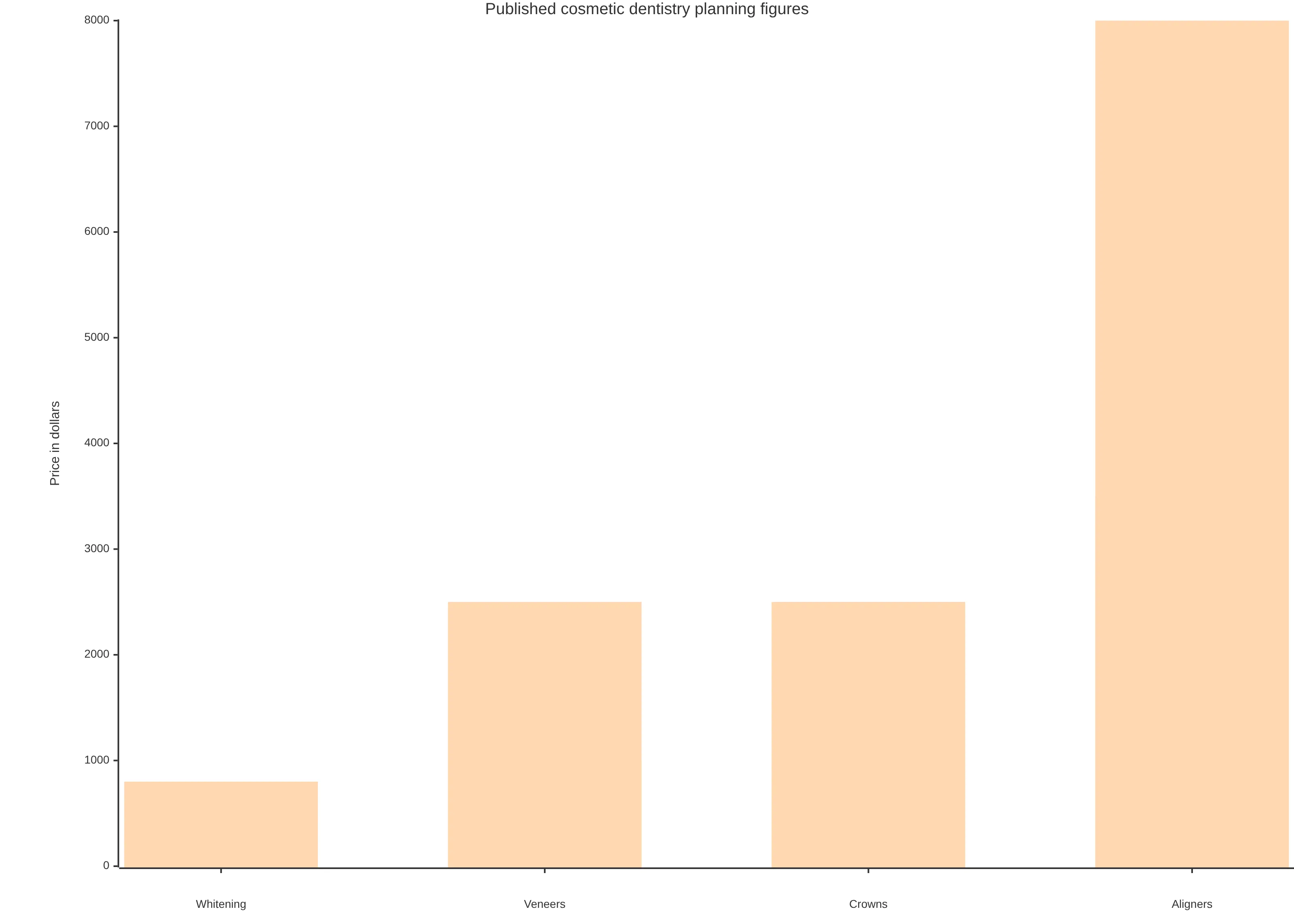
Published Westborough Dental Care planning figures give the following examples for common smile-improvement options. These amounts are ranges or per-unit figures described on the published page; they are not individualized quotes, and they should not be treated as a promise of final treatment responsibility.
The published examples are:
- Teeth whitening: typically $300 to $800 for in-office treatments or take-home kits.
- Dental veneers: $1,000 to $2,500 per veneer.
- Dental crowns: $800 to $2,500 each.
- Invisalign or orthodontic treatment: $3,500 to $8,000, depending on case complexity.
The unit matters. A per-veneer or per-crown amount does not tell you the total for several teeth, and an aligner range does not tell you where your case would fall within it.
A whitening range also represents different formats, since the published example includes both in-office treatment and take-home kits. Ask which format the estimate describes, what is included, and whether any later refresh is a separate cost. For veneers and crowns, ask how many teeth the figure covers. For aligners, ask how the proposed complexity and treatment duration affect the amount.
Our cosmetic dentistry treatments include porcelain crowns, dentures, Invisalign clear aligners, and bleaching. That practice description helps you identify services to discuss with us, but it does not turn every published planning example into a Westborough Dental Care quote. Separate the question of whether a service is part of the practice’s stated cosmetic scope from the question of what your treatment plan would cost.
How the scope of your smile goal changes the estimate
Your smile goal determines the first questions in a cost estimate. Define whether you are fixing one tooth or transforming your full smile, because that choice shapes procedure selection and total budget. A one-tooth concern and a multi-tooth plan should not be compared using the same assumed scope.
The number of teeth and the number of procedures should appear separately in the estimate. Ask:
- Which teeth are included?
- Is the amount stated per tooth, per arch, per visit, or for the complete plan?
- Does the estimate cover only the visible cosmetic step, or does it also list related preparation and follow-up?
- Would addressing fewer teeth change the proposed procedure or total?
These questions turn a broad smile goal into a defined financial comparison.
Material choice can create another cost question. Ask your provider to compare composite and porcelain for your specific case; the choice depends on the location in your mouth and your lifestyle. Request the price and practical difference for each option instead of assuming that a material named in a general article is the right choice for you.
Treatment duration belongs in the written discussion, especially when you are considering clear aligners. The published aligner example varies with case complexity, while Westborough Dental Care’s published member rates distinguish plans lasting more than six months from plans lasting less than six months. Ask how the proposed duration is defined and whether retainers or other later services are priced separately.
Maintenance should be treated as part of the budget conversation rather than an afterthought. Ask about follow-up polishing, bonding touch-ups, or whitening refreshes, and budget for those items when they are part of the proposed plan. A treatment estimate that describes only the initial procedure may not describe every later cost you want to plan for.
Compare treatment options by the cost questions they raise
The following comparison keeps the financial questions distinct without ranking one treatment above another. Published figures apply only where a supported example exists; the remaining prompts tell you what to request before you compare estimates.
| Option | Published planning figure or practice detail | Cost questions to take to the consultation |
|---|---|---|
| Teeth whitening | Typically $300–$800 for in-office treatment or a take-home kit | Which format is proposed? What does it include? Would a later whitening refresh be separate? |
| Veneers | $1,000–$2,500 per veneer | How many teeth are included? Should composite and porcelain both be discussed? What preparation, maintenance, or related services are listed? |
| Crowns | $800–$2,500 each | Which teeth need crowns? Which material is proposed? Are preparation and any related services itemized separately? |
| Clear aligners | $3,500–$8,000, depending on case complexity | What complexity and duration apply to the plan? Are retainers included or separate? |
| Bonding | Use a case-specific estimate rather than borrowing a range from another treatment | What is the price per tooth? Which material is proposed? What follow-up or touch-up costs should be included? |
Teeth whitening raises a format and maintenance question. The published example combines in-office treatment and take-home kits within one range, so ask which approach the estimate uses. Ask as well whether the plan includes a later refresh, since whitening refreshes are among the maintenance items that may need budgeting.
Veneers raise a per-tooth and material question. The published figure is stated per veneer, so the number of teeth changes the arithmetic before any other item is considered. Ask for a comparison of composite and porcelain for your case, along with the preparation, maintenance, and payment assumptions behind each estimate.
Crowns and clear aligners raise different planning questions. A crown example is stated per tooth, while the aligner example changes with case complexity. Our published cosmetic dentistry scope includes porcelain crowns and Invisalign clear aligners, and our membership page lists separate member rates for clear aligners and retainers. Ask for the complete plan rather than transferring a crown figure to an aligner plan or treating an aligner figure as a retainer-inclusive total.
Bonding should be priced for the teeth and materials under discussion rather than assigned a guessed range. Ask how many teeth are included, whether composite is proposed, what preparation is planned, and whether bonding touch-ups or other maintenance should be added to the estimate. This keeps bonding in the comparison without presenting an unsupported price or longevity promise.
How insurance and benefits verification affect your responsibility
Dental insurance usually treats cosmetic enhancements differently from medically necessary care. Most dental insurance plans generally do not cover cosmetic enhancements, although veneers may sometimes be covered when medically necessary, such as for severe enamel erosion or trauma. A cosmetic label or a published treatment range cannot tell you what your plan will pay.
Your insurer can help separate an expected benefit from an assumption. Contact your insurance provider and consider requesting a pre-determination of benefits to clarify potential veneer expenses. Ask how the plan treats the proposed procedure, deductible, coinsurance, annual limit, waiting period, exclusions, and any out-of-network reimbursement. Keep the answer tied to the exact procedure and tooth or teeth being considered.
Westborough Dental Care accepts 14 in-network PPO carriers, verifies your benefits before treatment, and files out-of-network claims for patients. Those processes can help organize the financial discussion, but they do not guarantee that a particular cosmetic service will be covered or that your final responsibility will equal an estimate. Ask which benefit information has been confirmed and which amount remains your responsibility.
A written estimate should distinguish the practice fee, the expected insurance contribution, and the amount you may need to pay. Benefits verification is useful for planning, but your plan’s terms control the final payment decision. If the proposed care changes, ask for the financial estimate and benefits discussion to be updated before proceeding.
What to check about membership plans and payment options
Westborough Dental Care offers a membership plan for patients without dental insurance. If you are considering that route, ask whether the service you are discussing qualifies under the plan and which terms apply to the proposed treatment. Membership status alone does not turn every cosmetic option into a covered service or replace a treatment-specific estimate.
Our published flat member rate for clear aligners is $6,500 for more than six months and $5,250 for less than six months. Our flat member rate is $650 for retainers and $775 for night guards. These are separate published member rates, so ask what the proposed aligner plan includes and whether retainers, night guards, or other services are additional.
We can discuss financing options including CareCredit for larger treatment plans. Ask about the payment schedule, the amount financed, and the terms that would apply to you. Planning guidance also recommends asking about financing before assuming that the full treatment cost must be paid at once. A financing option changes how you pay; it does not change the treatment fee or establish insurance coverage.
Our published new-patient fees include $209 for an exam, $274 for a full digital X-ray series, and $209 for an adult cleaning. Ask which of these, if any, applies to your first visit and whether the proposed cosmetic discussion has other separate charges. Treat these published amounts as practice-specific examples subject to change, not as a statement that every person needs every service.
Before choosing between insurance, membership, financing, and direct payment, place the same treatment scope beside each option. Compare the proposed procedure, included services, timing, and expected responsibility. That approach prevents a lower-looking monthly amount or member rate from being mistaken for the total cost of a different treatment plan.
Build an itemized estimate you can compare
An itemized estimate gives you a clearer basis for comparing cosmetic dentistry plans. Request an estimate broken down per tooth and per procedure rather than accepting a single lump number. The written document should make the proposed scope visible enough for you to compare like with like.
Use these questions during the financial discussion:
- What is included per tooth and per procedure? Ask for the number of teeth, the procedure assigned to each one, and the fee for each item.
- What preparation is included? Ask whether examinations, imaging, temporary steps, or other related services appear separately and whether they are part of the proposed plan.
- Which material options should you compare? Ask your provider to compare composite and porcelain for your specific case, since the choice depends on the location in your mouth and your lifestyle.
- How does duration affect the amount? For clear aligners, ask how case complexity and the expected treatment length affect the estimate.
- What follow-up should you budget for? Ask about polishing, bonding touch-ups, whitening refreshes, retainers, night guards, repair, or replacement when those items may apply.
- What does insurance change? Ask which information has been verified, whether a pre-determination is appropriate for veneer expenses, and what amount remains outside the expected benefit.
- What payment options apply? Ask whether membership or financing is relevant to the exact plan and what terms are attached.
A comparable estimate uses the same units and the same scope on both sides. Compare per-tooth fees with per-tooth fees, complete aligner plans with complete aligner plans, and included follow-up with included follow-up. If one estimate combines several services into one amount, ask for the same breakdown before drawing a cost conclusion.
Your expected responsibility should remain clearly labeled as an estimate. Benefits verification, a pre-determination, a membership rate, or a financing discussion can improve your planning, but each applies only under its own terms. Ask what would cause the amount to change before you authorize treatment.
Request a consultation when you need treatment-specific numbers
A South San Francisco consultation makes sense when you need a treatment-specific estimate rather than another general range. Bring your insurance card, a list of current medications, and any prior dental records or X-rays to your first visit. Bring your written questions too, especially the ones about scope, materials, follow-up, coverage, and final responsibility.
We accept new patients, and you can request an appointment through online booking or by calling us directly. Once that discussion identifies the proposed treatment, use the itemized estimate and benefits information to decide whether the plan fits your goals and budget.
What should you ask before accepting a cosmetic dentistry estimate?
What are the typical costs for cosmetic dentistry procedures at Westborough Dental Care?
The published examples for common cosmetic dentistry options at Westborough Dental Care are: teeth whitening typically ranges from $300 to $800, dental veneers cost between $1,000 and $2,500 per veneer, dental crowns range from $800 to $2,500 each, and Invisalign or orthodontic treatment costs between $3,500 and $8,000 depending on case complexity.
How does insurance coverage affect the cost of cosmetic dentistry?
Most dental insurance plans generally do not cover cosmetic enhancements, although veneers may sometimes be covered if deemed medically necessary. It’s advisable to contact your insurance provider to clarify potential expenses and verify coverage.
What should I ask during a consultation for cosmetic dentistry?
During a consultation, you should ask for an itemized estimate broken down per tooth and procedure, inquire about the materials being used, discuss the expected duration of treatment, and ask about any follow-up costs for maintenance.
What financing options are available for cosmetic dentistry at Westborough Dental Care?
Westborough Dental Care can discuss financing options including CareCredit for larger treatment plans. It’s recommended to ask about the payment schedule and terms that would apply to your situation.
What should I bring to my first visit for cosmetic dentistry?
For your first visit, bring your insurance card, a list of current medications, and any prior dental records or X-rays.
How can I ensure I receive a clear estimate for cosmetic dentistry costs?
Request a written estimate that clearly distinguishes the practice fee, expected insurance contribution, and your potential out-of-pocket responsibility. This will help you understand the total costs involved.
Need help applying this?
Talk to a billing specialist who knows your payer mix.
Westborough Dental Care welcomes new patients in South San Francisco. Book a visit to meet Dr. Zoulas and the team.
Schedule a meeting