Westborough Dental Care
Westborough Dental Care: A Restorative-Fit Guide for South San Francisco Patients
Begin with the restorative-fit question
Your restorative-fit question is whether our documented South San Francisco practice scope matches the damaged, painful, or missing-tooth concern you want to discuss. We offer family, cosmetic, restorative, preventive, and general dentistry in South San Francisco. That broad scope makes the practice relevant to an initial conversation, but it does not determine which service or procedure fits your mouth.
Our stated goal is to achieve the smallest, most durable intervention that meets your desired outcome. That goal describes how we frame treatment planning; it is not a promise about the procedure, timing, durability, comfort, or result you will receive. Your diagnosis, oral-health status, preferences, and practical circumstances still need to be discussed with a dentist.
Dental-care anxiety can make a restorative decision feel harder to organize. A Westborough Dental Care passage states that about 36 percent of people in the United States feel anxious about dental care. You can make the first conversation more manageable by separating the decision into a few concrete questions:
- Does the documented service scope include the kind of concern you need to discuss?
- What information will the first visit provide?
- Which treatment, timing, insurance, and cost details remain personal questions?
This guide uses those questions to help you decide whether contacting the practice is a sensible next step, not to decide treatment for you.
Locate Westborough Dental Care and its broader practice scope
Westborough Dental Care provides care in South San Francisco, which gives you a practical location question before you spend time comparing restorative options. We document family, cosmetic, restorative, preventive, and general dentistry as part of our practice scope. If you live or work nearby, consider whether the location fits the visits, discussions, and follow-up questions your concern may require.
Our general dentistry services include fillings, crowns, gum care, and more. This broader scope may matter if your restorative concern sits alongside another dental question, but the service list does not tell you whether one issue affects another. Bring the full picture to the appointment so the dentist can address the questions that apply to your care.
A location and scope check gives you an initial fit screen rather than a final choice. Use it to decide whether the practice is geographically workable and whether its documented categories overlap with your concern. Then move to the more specific restorative list, first-visit process, and personal financial questions. Those details will give you a clearer basis for deciding whether to request a discussion.
Match your concern to the documented restorative services
Our restorative dentistry service description includes crowns, bridges, inlays/onlays, and dental implants for rebuilding or replacing damaged and missing teeth. These names give you a useful vocabulary for describing what you want to ask about. They do not establish that any particular option is appropriate for your tooth, teeth, oral-health status, or schedule.
A damaged-tooth concern can lead you to ask about crowns, inlays, onlays, or another restoration named in the documented scope. A missing-tooth concern can lead you to ask about bridges or dental implants. If same-day timing is part of your question, mention it directly rather than treating the service name as a commitment to a same-day appointment or completed procedure.
Use the service list to prepare questions such as:
- Which documented service categories relate to the concern I am describing?
- What information would determine whether more than one option should be discussed?
- What steps, appointments, or timing questions should I understand before choosing among the options?
- What should I expect to learn during the first visit rather than assume from the service page?
The purpose of these questions is to connect your concern with the right conversation. The purpose is not to select a procedure before an examination.
A service page can tell you what our practice documents as part of its restorative scope. It cannot tell you whether your tooth can be restored, whether replacement is needed, or whether a particular option fits your circumstances. Keep those decisions for the clinical discussion.
Use the service list as a starting point, not a treatment plan
The American Dental Association says treatment options may include restorations, crowns, bridges, implants, or dentures depending on your diagnosis, oral-health status, needs, and preferences. That condition matters because two people who describe a similar problem may still need different conversations. A list of available services cannot supply the diagnosis or determine your individual options.
The ADA states that dentists remain responsible for patients’ diagnoses, treatment planning, and care regardless of practice ownership. You can therefore treat a first visit as a chance to obtain professional information, ask about alternatives, and understand the reasoning behind a proposed plan. You should not treat this article or a service page as an eligibility decision or treatment recommendation.
A useful treatment-planning conversation can begin with questions that keep the decision specific:
- What diagnosis is the proposed treatment addressing?
- Which alternatives are relevant to that diagnosis and my oral-health status?
- What would each option require in visits, timing, maintenance, or follow-up?
- What personal factors or preferences could change the discussion?
The ADA encourages patients to ask about treatment options and alternatives. If a recommendation leaves you uncomfortable, the ADA also says you may seek a second opinion. That gives you room to understand the plan before you make a decision.
Understand what the first visit is designed to clarify
Our first visit lasts about 60 to 90 minutes and includes a comprehensive exam, digital X-rays when indicated, a professional cleaning if gum health allows, and a written treatment plan. This published process gives you a concrete picture of what the practice says the initial visit covers.
The first visit is designed to gather information and develop a written plan, not to promise a diagnosis, procedure, completion date, or final cost before your circumstances are assessed. The cleaning is conditional on gum health, so you should regard it as part of the described process rather than an assured component of every appointment. Ask how the planned visit will address the concern that led you to seek restorative care.
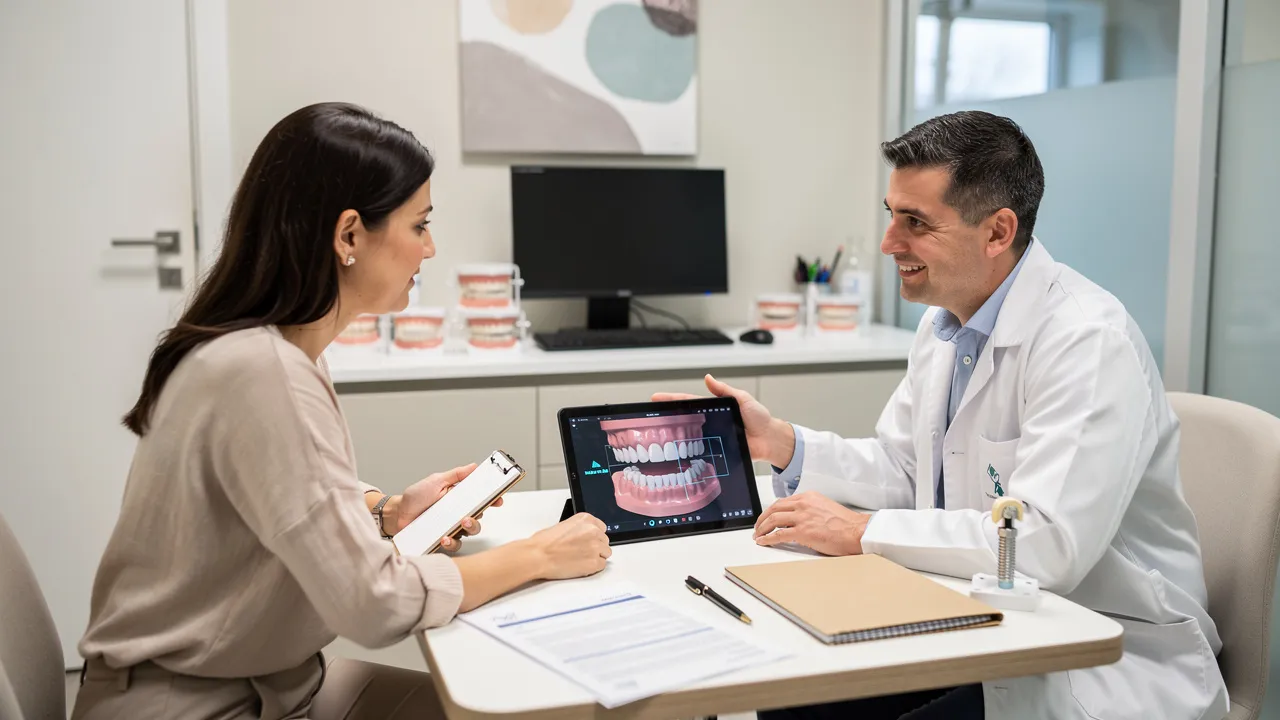
Use the visit to turn a general concern into a clearer set of decisions. You can ask what the examination found, which options relate to that finding, what remains uncertain, and what the next appointment would address. If a written treatment plan is provided, read it as a basis for questions about diagnosis, alternatives, timing, and cost rather than as a reason to skip those questions.
Before arranging the visit, write down when the problem began, what has changed, and what you most want the appointment to clarify. Those notes do not replace an examination, but they can help you describe the concern accurately and keep the discussion focused.
Prepare the information needed for a useful evaluation
Your first-visit preparation should include an insurance card, a list of current medications, and any prior dental records or X-rays. We ask patients to bring those items to the first visit. Put them together before the appointment so the conversation can include the information already available about your dental and coverage history.
A simple preparation checklist is:
- Insurance card or plan information
- Current-medication list
- Prior dental records
- Prior dental X-rays, if you have them
- A short description of the tooth or teeth that concern you
- Questions about treatment choices, timing, and cost
The first four items come from the practice’s stated first-visit guidance. The final two help you organize the conversation around your own concern.
Bring questions that distinguish information you want from decisions that require a dentist’s assessment. For example, ask what the examination will evaluate, whether prior records can inform the discussion, and when you will receive the written treatment plan. You can also ask which details about your medications or dental history may affect the treatment conversation.
Preparation does not determine eligibility or guarantee that an appointment will answer every question at once. It gives you relevant information to discuss and helps you identify what still needs a professional explanation.

Ask how the practice's digital tools fit into planning
Our practice uses intraoral scans, CEREC milling, and cone-beam CT for planning and executing dental procedures. Those tools are part of the documented practice process, so you can ask whether any of them will be relevant to the concern you bring to the appointment.
Ask what each proposed tool is intended to contribute to your planning discussion, what information it provides, and how that information relates to the treatment options being considered. You can also ask whether the tool changes the number or type of visits being discussed. The practice’s use of digital tools does not, by itself, determine your diagnosis, suitability, treatment timing, or outcome.
Keep the technology question connected to your care question. If your concern involves a damaged tooth, ask how the planning process addresses that tooth. If your concern involves a missing tooth, ask how the available restorative options will be compared. If timing matters, ask which part of the proposed process affects the schedule. This keeps the discussion practical rather than treating equipment as a substitute for clinical reasoning.
Separate published financial information from your actual responsibility
We provide verification of benefits before treatment and accept 14 in-network PPO carriers. We publish our UCR fees openly. These details tell you how the practice describes its financial process. They do not establish your coverage, your insurer’s payment, your patient responsibility, or the final cost of a procedure.
Your coverage questions should stay tied to your specific plan and proposed care. Ask which services are being discussed, whether the practice’s in-network information applies to your plan, what benefit information has been obtained, and which amount may remain your responsibility. Ask how exclusions, deductibles, waiting periods, frequency limits, or claim decisions could affect the amount you pay when those issues apply to your plan.
Your cost questions should also separate a published fee from a treatment-specific estimate. Ask which procedure or procedures the estimate covers, whether related visits or diagnostic services are included, what could change the estimate, and when payment would be due. A UCR fee is a published fee reference; it is not a personal quote or a guarantee of insurance payment.
Timing belongs in the same conversation because a treatment plan, an insurance process, and your schedule may each affect when care can proceed. Ask what information is needed before a date can be discussed and which steps must occur before treatment. Keep the answer specific to your proposed care rather than assuming that a general service description establishes a date.
Use the practice’s published financial process to frame questions, then ask about the personal details that affect your responsibility. Do not treat the number of accepted PPO carriers, benefit verification, or openly published fees as a promise about your coverage or final bill.
Compare alternatives before discussing financing
When a dentist discusses more than one option, compare the options by asking the same questions about each one:
- What diagnosis or care objective does this option address?
- What are the relevant alternatives?
- How many visits or stages are being discussed?
- What timing conditions should you understand?
- What care, maintenance, or follow-up questions should you ask?
- What part of the cost is known, estimated, or dependent on coverage?
The ADA identifies restorations, crowns, bridges, implants, and dentures as possible treatment categories that may depend on your diagnosis, oral-health status, needs, and preferences. The comparison should therefore follow your clinical discussion rather than a generic ranking.
A second opinion is an available boundary if you feel uncomfortable with a recommendation. The ADA says patients should feel free to seek one in that situation. You can ask for the diagnosis, proposed options, alternatives, and reasons for the recommendation in plain language before deciding whether another professional discussion would help.
Discuss financing only after you understand what treatment options are under consideration. Then ask how the proposed payment arrangement relates to the specific option, what amount it covers, and which costs remain outside it. Financing can address payment logistics, but it does not decide which treatment fits your diagnosis or preferences.
Decide whether the remaining questions justify contact
We accept new patients and allow appointment requests through online booking or by calling directly. Those details give you a defined way to begin asking about diagnosis, options, timing, and personal cost questions.
Our goal is to achieve the smallest, most durable intervention that meets your desired outcome, while the ADA places diagnosis, treatment planning, and care responsibility with dentists. A qualified dental professional must decide what is suitable for your individual situation. Use your appointment questions, records, medication list, and coverage information to make that discussion more useful.
Contact the practice when the South San Francisco location works for you, the documented restorative scope matches the issue you want to discuss, and you are ready to ask for information rather than assume a procedure, cost, or timeline. If those conditions fit, take the next step toward a personal evaluation.
What should you clarify before contacting Westborough Dental Care?
What restorative services does Westborough Dental Care offer?
Westborough Dental Care provides restorative services including crowns, bridges, inlays/onlays, dental implants, and same-day crowns to rebuild or replace damaged and missing teeth.
What should I expect during my first visit to Westborough Dental Care?
The first visit at Westborough Dental Care lasts about 60 to 90 minutes and includes a comprehensive exam, a full series of digital X-rays, a professional cleaning if gum health allows, and a written treatment plan.
What information should I bring to my first visit?
Patients should bring their insurance card, a list of current medications, and any prior dental records or X-rays to their first visit at Westborough Dental Care.
Can I schedule an appointment online at Westborough Dental Care?
Yes, Westborough Dental Care accepts new patients and allows appointment requests through online booking or by calling directly.
What is the goal of treatment at Westborough Dental Care?
The goal at Westborough Dental Care is to achieve the smallest, most durable intervention that meets the patient’s desired outcome.
What should I ask about treatment options during my visit?
During your visit, ask about the diagnosis, relevant alternatives, the number of visits required, and any timing or follow-up questions related to your treatment.
Need help applying this?
Talk to a billing specialist who knows your payer mix.
Westborough Dental Care welcomes new patients in South San Francisco. Book a visit to meet Dr. Zoulas and the team.
Schedule a meeting