
How much does cosmetic dentistry cost in the United States?
How much does cosmetic dentistry cost in the United States?
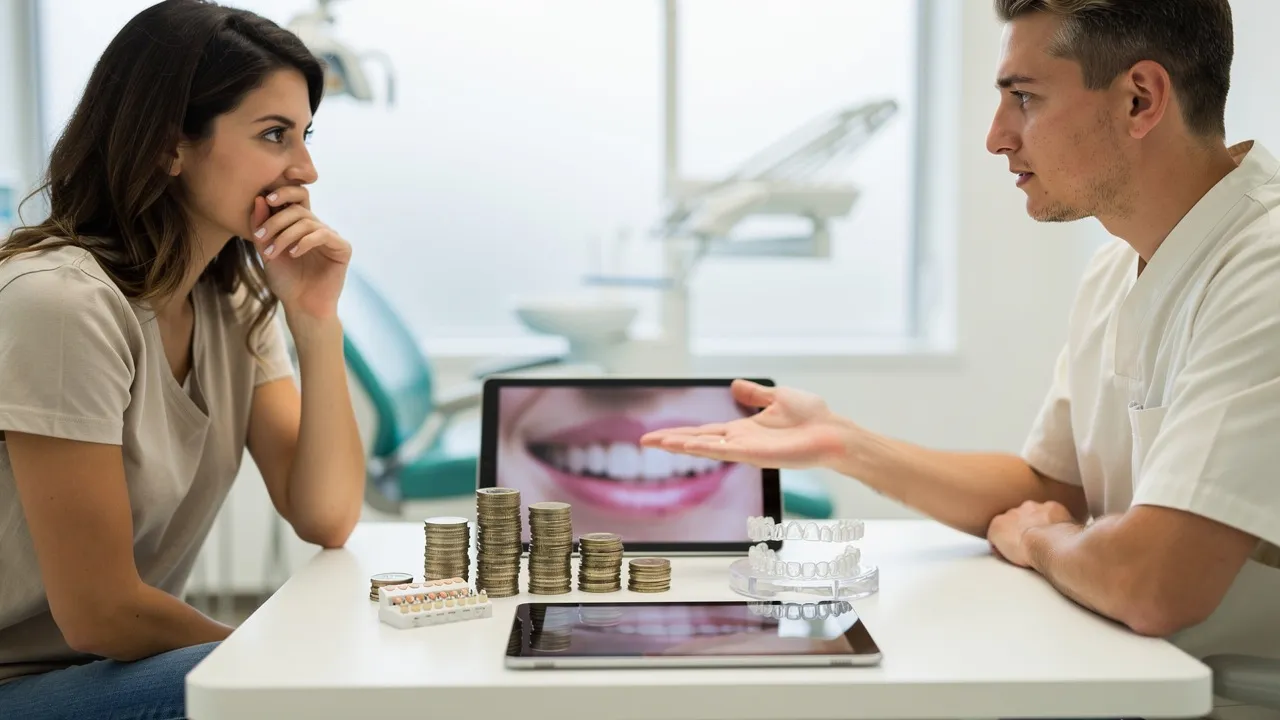
Start with what cosmetic dentistry prices actually mean
Cosmetic dentistry in the United States can cost from a couple of hundred dollars to thousands, depending on the extent of the restorations. That broad span is useful for deciding which options deserve further investigation, but it is not an individualized quote or a prediction of your final balance. A published price range may describe one tooth, one session, one kit, a course of treatment, or a larger combination of procedures.
Published examples show why the unit matters. One guide lists bonding at $150 - $500 per tooth, veneers at $900 - $2,000 per tooth, and porcelain crowns at $800 - $2,000 per tooth. The same guide lists clear-aligner therapy at $2,800 - $5,000 for the therapy. These figures describe broad planning information; they do not establish which treatment suits your teeth or how many teeth your plan would include.
A listed fee is a published charge for a defined service. A treatment estimate connects that service to your proposed materials, number of teeth, preparation, appointments, and related services. The practical starting point is therefore a written, treatment-specific estimate rather than a single national average.
Typical costs for whitening, bonding, and veneers
A planning guide published on November 16, 2026, lists the following U.S. figures. The table keeps the unit beside each amount because a session, kit, and tooth are different things to compare.
| Treatment | Published planning figure | What the figure measures |
|---|---|---|
| In-office whitening | $300 - $800 | One session in a 2026 planning guide |
| Take-home whitening | $100 - $400 | One professional kit in a 2026 planning guide |
| Dental bonding | $100 - $600 | A 2026 planning figure; confirm the unit and number of teeth in your estimate |
| Dental bonding | $150 - $400 nationally; $200 - $500 in California | Per tooth in a published 2026 table; the table lists longevity of 3-7 years |
| Composite veneers | $250 - $1,500 | Per tooth in a 2026 planning guide |
| Porcelain veneers | $900 - $2,500 nationally; $1,200 - $3,000 in California | Per tooth in a published 2026 table; the table lists longevity of 10-20 years |
Whitening prices can vary with the system used, the number of sessions, and dental benefits coverage. One published source lists in-office laser or LED whitening at $250 - $800 per session and professional take-home kits at $100 - $400 per kit; it describes the take-home approach as gradual over 2-4 weeks and at roughly half the in-office cost. Those descriptions do not mean every kit, session, or result follows the same schedule. Ask which format is proposed and what the quoted amount includes.
Bonding and veneers also require careful comparison. Bonding is priced per tooth in one 2026 table, while the separate planning guide gives a broader $100 - $600 figure whose unit you should have the practice define. Porcelain veneer figures differ between the national and California columns, and the listed longevity ranges are planning information rather than a promise about how long your restoration will last. Compare the material, number of teeth, preparation, and follow-up terms before comparing the dollar amounts.

Typical costs for crowns, aligners, implants, and larger plans
Crowns, clear aligners, implants, and broader smile plans cover different purposes and pricing units. A published 2026 table gives the following national and California planning figures:
| Treatment | National figure | California figure or additional published range | Listed duration information |
|---|---|---|---|
| Dental crown | $1,000 - $3,500 | $1,200 - $4,000 | The 2026 table lists 10-15 years |
| Clear aligners | $2,800 - $5,000 for published therapy in one guide | $3,000 - $8,500 in another general guide | No duration is established by these figures |
| Single dental implant | $3,000 - $6,000 | $3,500 - $7,000 | The 2026 table lists 20+ years |
The implant figure measures one single implant, while a smile makeover figure covers a broad treatment category. Published examples in one summary range from under $200 for simple whitening to $6,000 or more per tooth for implants. That comparison shows the size of the possible planning span, not a recommended treatment path or a final price for your care.
A crown estimate may describe one tooth, while an aligner estimate may cover a complete treatment plan with different complexity. A full smile makeover may combine several procedures, so ask for each component and its unit rather than accepting one large label without a breakdown.
Why published cosmetic dentistry prices disagree
Published crown figures illustrate why there is no single definitive U.S. price. One source states that the national average cost of a crown ranges from $697 to $1,399, with listed averages of $1,399 for porcelain crowns, $1,114 for porcelain-and-metal crowns, $1,211 for metallic crowns, and $697 for resin or temporary crowns. A different source gives an average range of $800 - $2,500 without insurance, while another gives $800 - $1,700 or more per tooth. These figures use different dates, materials, definitions of average, and pricing methods.
Those amounts are not interchangeable with the national-average crown figures because each line may use a different treatment definition and source method.
Whitening provides a second example. Professional teeth-whitening cost can vary according to the whitening system, the number of sessions required, and dental benefits coverage. A price for one in-office visit should not be compared directly with a take-home kit or with a plan that includes more than one session.
Use a range as an early question, not as an expected bill. For a crown, ask which material and tooth are involved, what work must happen first, and whether the figure describes one crown or a wider restorative plan. This approach preserves the useful information in published prices without pretending that conflicting ranges can be averaged into one answer.
The factors that move a cosmetic dentistry estimate
Cosmetic dentistry prices can vary with procedure complexity.
The cost drivers are easier to use when you turn them into questions:
- Treatment type and complexity: Procedure type can affect the price of whitening, bonding, veneers, aligners, crowns, and implant treatment.
- Material and customization: Material choice and customization can affect the estimate.
- Number of teeth: A per-tooth fee grows as more teeth are included.
- Location and practice overhead: Urban practices often have higher overhead costs, which can lead to higher prices.
- Preparation and related services: Records, temporaries, follow-up visits, and treatment needed before a cosmetic restoration can add separate line items.
Crowns show how preparation changes the total. Crown costs can depend on the material, which tooth is treated, work needed first, how the crown is made, and where you live. A tooth may need decay removal, a core buildup, or a root canal before a crown, and each is usually a separate fee. Ask whether those services are included, excluded, or not expected in the proposed plan.
The size of a plan can change quickly. One cost guide gives a range from $300 for whitening to $25,000+ for a full smile makeover and says veneers average $1,000 - $2,500 per tooth. Another guide lists professional whitening at $300 - $800, composite bonding at $250 - $600 per tooth, composite veneers at $600 - $1,500 per tooth, porcelain veneers at $1,000 - $2,500 per tooth, Invisalign at $3,000 - $7,500, and a 6-10-veneer smile makeover at $7,500 - $25,000.
A cosmetic transformation for moderate crowding, severe discoloration, or worn-down teeth is listed at $5,000 - $20,000 and often combines clear aligners, professional whitening, and 4 to 8 porcelain veneers or custom crowns. Some insurance plans have reported coverage for cosmetic procedures such as porcelain crowns and veneers ranging from about $1,500 to $4,500, but that figure applies only to the reported plans and procedures. It does not establish what your plan will pay.
How individual procedures become a larger treatment total
A larger treatment total is usually a collection of defined services rather than one cosmetic fee. Depending on the plan, listed inclusions may include records, temporaries, laboratory fees, visits, implants, abutments, crowns, extractions, and bone grafting where needed.
The number of teeth and the added services matter even in a smaller example:
- One chipped front tooth: One planning example lists bonding at roughly $100 - $600 or a porcelain veneer at roughly $900 - $2,500 when the chip is large or the shade is hard to match, plus a follow-up polishing visit.
- Four upper front teeth with whitening: Four veneers are listed at roughly $3,600 - $10,000, in-office whitening at roughly $300 - $800, plus records and temporaries, for a planning range of $4,500 - $12,000.
- Eight to ten veneers with whitening and one crown: One example gives a range of roughly $10,000 - $25,000; the crown and any buildup add to the veneer total.
These examples are useful because they show what to look for in an estimate: the number of teeth, the material, preparation, records, temporary work, laboratory charges, polishing or other follow-up, and the services that are included only if needed. Ask the practice to separate each item so you can see which part of the total changes if the treatment plan changes.
What the estimate, insurance benefit, and final balance each mean
A practice’s listed fee is the charge attached to a defined service. A written estimate is a proposed total based on your planned treatment, materials, number of teeth, and included services; the final balance may differ. An insurance benefit is the amount your individual plan may apply under its rules. Your final balance is the amount left after the practice’s charges, applicable benefits, and any agreed payment arrangement are considered.
Most cosmetic procedures are elective, and one cost guide says dental insurance rarely covers them; coverage depends on the plan and procedure. Another source says insurance is not likely to cover cosmetic costs unless treatment is deemed medically necessary, although some plans have options for adult orthodontia. Dental insurance often pays part of a crown’s cost when the crown is needed to protect a damaged tooth. The treatment purpose therefore matters, and you should not assume that a cosmetic label or a restorative label determines your benefit by itself.
At Westborough Dental Care, we publish UCR fees and provide written treatment plans with cost estimates for free. We can discuss financing options, including CareCredit, for larger treatment plans, and we offer an in-house membership plan for uninsured patients with various pricing tiers. These are practice-specific options to discuss; they do not determine insurance eligibility, financing approval, or your final balance.
We are out of network with Delta Dental PPO, but we can file the claim for you. Filing a claim is different from promising a payment amount. The plan, procedure, network rules, and benefit details still determine what may be applied.
Ask whether your proposed estimate includes diagnostic services, and ask which services would be billed separately if they are needed.
Questions to ask before accepting a written estimate
Before you compare or accept an estimate, ask the practice to define the treatment and its boundaries. Use this checklist:
- What format is proposed? Ask whether whitening means an in-office session or a take-home kit, whether aligners include retainers, and whether veneers or crowns are porcelain, composite, or another material.
- How many teeth and surfaces are included? A per-tooth figure cannot be compared fairly with a whole-mouth or multi-visit total.
- What preparation is included? Ask whether records, imaging, temporary restorations, decay removal, a core buildup, a root canal, or other related services are itemized separately.
- Which visits are included? Ask about fitting, bonding, delivery, polishing, follow-up, refinements, and touch-ups.
- What could cost extra? Ask whether replacement materials, additional appointments, retainers, laboratory charges, or changes to the plan would create another fee.
- What does the estimate measure? Ask whether each amount is per tooth, per session, per kit, per phase, or for the complete proposed plan.
Use published figures as prompts for those questions. For bonding, use a case-specific estimate rather than borrowing a range from another treatment.
Request the written estimate in a form you can read later, with each treatment, quantity, material, included service, possible separate fee, and payment assumption identified. If a line is unclear, ask the practice to define it before you compare totals. A lower headline figure may cover fewer teeth or fewer visits, while a higher figure may include services that another estimate lists separately.
When to contact a qualified dental professional
If you are unsure what a dental symptom means, contact a qualified dental professional promptly. Do not use a national price range to decide whether to delay care. The appropriate next step depends on your oral-health findings, symptoms, goals, and treatment plan, so a cost guide cannot determine whether cosmetic treatment is suitable for you.
Do not self-diagnose from a price list, choose a procedure solely because it appears less expensive, or assume that a cosmetic service addresses an untreated dental problem. Describe the concern and its timing when you seek help, and wait for qualified guidance before treating appearance changes as the first priority.
Request an estimate built around your treatment plan
U.S. cosmetic dentistry price ranges are useful for orientation, but the number that matters for your decision is the written estimate that connects your goals with a defined treatment plan. Bring the questions above, ask for each service and possible extra charge to be listed, and compare like with like. A qualified dental professional must assess your oral health, goals, and treatment plan before confirming suitability or price. We provide written treatment plans with cost estimates for free and publish UCR fees for you to review as part of that conversation.
Questions readers often ask before comparing cosmetic dentistry costs
How much does cosmetic dentistry cost in the United States without insurance?
Published 2026 planning figures range from about $100 - $600 for bonding per tooth, $900 - $2,500 for porcelain veneers per tooth, $1,000 - $3,500 for crowns, $2,800 - $8,500 for clear aligner therapy, and $5,000 - $30,000 or more for a full smile makeover.
What should be listed in a cosmetic dentistry estimate?
Ask for each procedure, quantity, material, and pricing unit - such as per tooth, session, kit, phase, or complete plan. The estimate should also identify diagnostics, preparation, temporary restorations, laboratory charges, retainers, delivery or fitting visits, follow-up, touch-ups, and services that may be billed separately. This makes it possible to compare two plans without treating different scopes as equivalent.
Does dental insurance pay for cosmetic dentistry?
Coverage depends on the plan, procedure, and treatment purpose. Many plans provide limited or no benefits for elective cosmetic services, while a crown needed to protect a damaged tooth may receive partial coverage; some plans also include adult orthodontia or selected crown and veneer benefits.
Why can two U.S. cosmetic dentistry estimates differ even for the same type of treatment?
The estimates may use different materials, numbers of teeth, treatment complexity, provider fees, locations, or preparation requirements. They may also include different visits, records, temporaries, laboratory work, retainers, or follow-up care. Ask each practice to state what is included and what could create an additional charge before comparing the totals.
What should I do if I have an urgent dental symptom while considering cosmetic treatment?
Pause cosmetic planning and contact a qualified dental professional promptly, particularly when a symptom feels urgent or is worsening. Do not self-diagnose from a price list, delay needed evaluation because a cosmetic option appears less expensive, or assume an appearance-focused service will address an untreated dental problem. Describe the concern and when it began so the professional can determine the appropriate next step.
Need help applying this?
Talk to a billing specialist who knows your payer mix.
Westborough Dental Care welcomes new patients in South San Francisco. Book a visit to meet Dr. Zoulas and the team.
Schedule a meeting