
mercury teeth filling
Mercury Teeth Fillings: What the Evidence Says, What They Cost, and What to Ask Your Dentist
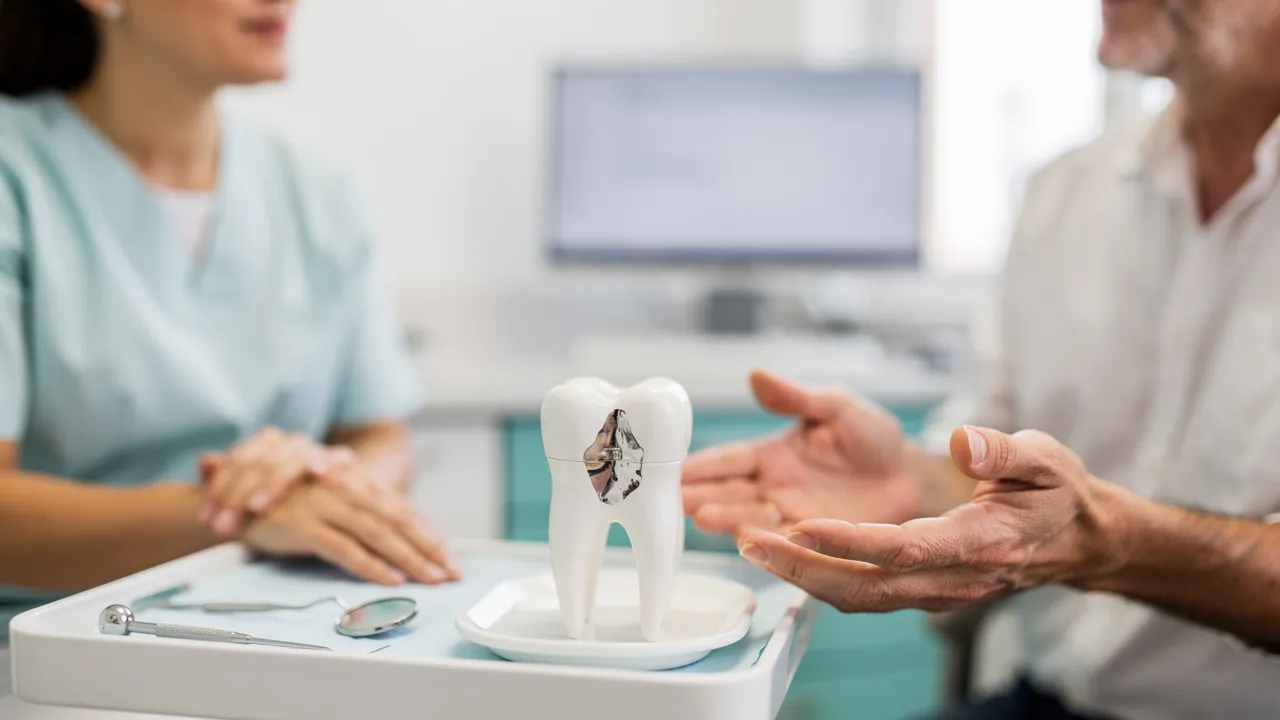
Start with what “mercury filling” means
A dental amalgam filling is a restorative material made from mercury combined with a powdered alloy of silver, tin, and copper. Approximately half of amalgam is elemental mercury by weight. Mercury binds the alloy particles together, creating a solid filling that has traditionally been valued for strength and durability.
A composite filling is a different material: a tooth-colored resin containing glass or quartz filler. Composite can be used on front or back teeth and provides good durability and fracture resistance for small- to mid-size fillings under moderate chewing pressure. Resin-based composite also typically requires removal of less healthy tooth structure than amalgam and can be matched to the color of your tooth, although it may raise chemical hypersensitivity concerns and may not last as long under higher biting forces.
Amalgam has traditionally cost less than tooth-colored or gold fillings, while tooth-colored materials provide a more natural appearance and gold generally costs more. One cost source describes amalgam as averaging around $160 per tooth, but an average is not a quote for your care. The final price depends on the tooth, the restoration, coverage, and other services.
The words “mercury filling,” “amalgam,” and “silver filling” commonly point to the same general restorative material, while “composite” usually refers to a tooth-colored alternative. The names describe material categories, not the condition of a particular filling or the treatment your tooth needs. Use the material name as a starting point for questions, not as a diagnosis.
Put mercury exposure from amalgam in context
Dental amalgam fillings may release small amounts of elemental mercury vapor. Release can vary with the number and age of your fillings and with habits such as tooth grinding and gum chewing. The amount released from a particular filling cannot be determined from its silver color alone.
Mercury vapor release may be higher with chewing or gum chewing. That is one reason a decision about replacement should begin with an assessment of the tooth and filling rather than with an attempt to change the filling yourself.
The mercury in amalgam is elemental mercury, which can release vapor; the mercury found mainly in fish is methylmercury. Your body absorbs and processes these forms through different routes. The distinction matters because information about mercury in seafood cannot be applied directly to an amalgam filling.
Mercury from amalgam is absorbed into the body, with 80% of the dose primarily absorbed through the lungs, then distributed systemically and generally excreted through urine. That figure describes the route of the dose discussed in the cited FDA review; it is not a personal exposure measurement.
Exposure information can explain why placement and removal deserve care, but it cannot tell you whether an existing filling is damaged or whether your symptoms come from mercury. Those questions require an examination of the tooth and a discussion of your health history. Avoid treating a general exposure statement as a personal test result.
What current evidence says about health concerns
For the general population, the FDA says most evidence does not show negative health effects from mercury exposure from dental amalgam, although some groups may face greater potential risk. This population-level conclusion cannot tell you whether a particular filling is intact, whether a tooth has decay beneath it, or whether replacement is appropriate.
FDA-reviewed measurements from large study populations did not confirm high and widespread mercury levels or tangible adverse health effects from dental-amalgam exposure. The same review found insufficient evidence to support a total ban or routine removal of intact fillings when no adverse effects attributable to mercury exposure have been established.
Systematic reviews cited by the American Dental Association found no increase in systemic disease among children or adults with amalgam restorations compared with people who received resin-based composites. The reviews also found insufficient evidence to confirm that amalgam causes kidney toxicity compared with resin composites. Separately, an FDA review found insufficient evidence to establish an association between mercury exposure from dental amalgams and adverse health effects in humans.
The practical meaning is narrower than either “every filling is harmless” or “every filling is dangerous.” Population studies do not establish a general health reason to remove an intact filling, while the condition of your tooth, your health history, and the material options for a new restoration still need separate consideration.
These findings answer population questions, not the question of what you should do with one filling. A study can report what happened across many people without showing whether a particular restoration is leaking, fractured, decayed around the edges, or functioning normally. Keep the general evidence in view, then separate it from the clinical findings that only an examination can establish.
Who may need extra caution and what remains uncertain
The FDA identifies several situations that may require extra caution with new amalgam fillings: pregnancy or plans to become pregnant, nursing, young childhood - especially before age six - certain neurological conditions, impaired kidney function, and known sensitivity to mercury or other amalgam components. If any of these situations applies to you or your child, include it in the dental discussion before a material is selected.
Known sensitivity to amalgam metals can change the decision. The FDA says people who are allergic or otherwise sensitive to mercury or other amalgam metals should not receive amalgam fillings and may develop oral lesions or other sensitivity reactions. Some patients also appear to develop worsened allergic reactions or mucosal conditions such as oral lichen planus after exposure to dental amalgam.
Important uncertainty remains about long-term effects in higher-risk groups, acceptable exposure levels for mercury vapor, how mercury may accumulate in the body, and whether accumulation produces adverse health outcomes. Uncertainty does not prove that a filling is causing symptoms, so symptoms or health concerns need their own qualified evaluation rather than an automatic removal decision.
For a new filling, the cited FDA guidance recommends avoiding amalgam when appropriate for certain higher-risk groups, including pregnant or nursing women, young children, and people with kidney problems or mercury allergies. Discuss the relevant health history and available alternatives before treatment begins.
Extra caution does not mean that every person in one of these groups has the same risk or needs the same material. It means the health history belongs in the material discussion before a new restoration is placed. Tell the dentist about the condition, its timing, any known allergy or sensitivity, and whether the proposed filling is new or already in place.
How common amalgam fillings are in U.S. data
U.S. survey examination data from 2015-2018 included 17,040 participants aged 2 years and older. Across the examined age and population groups, the prevalence of amalgam restorations ranged from 4% through 69%. The range describes how often amalgam restorations appeared in the study groups; it does not measure mercury exposure, health risk, or whether a filling should be removed.
Age patterns in the same U.S. study show a shift toward nonamalgam restorations. Nonamalgam restorations were most common in primary teeth of children older than 5 years and in permanent teeth of adults younger than 40 years. Amalgam restorations were more common in older adults, while amalgam and nonamalgam restorations were equally common in children younger than 5 years.
The study also found that amalgam restorations were more prevalent among children and adolescents from racial and ethnic minority groups and from families with higher poverty levels and lower education. That pattern describes differences in the study data, not a reason to assume that any particular person needs a specific material or treatment.
Amalgam use has generally declined with the development of tooth-coloured adhesive materials. A decline in use does not mean every existing amalgam filling needs replacement; it means that a new restoration may involve a broader material discussion than it did in the past.
The 4% - 69% prevalence range is not one national percentage for every person in the United States. It spans the examined groups in the study, which differed by age and other characteristics. Use it to understand that amalgam restorations remain present in U.S. dental data, while recognizing that the study does not identify the condition or cause of any one filling.

Why dentists may still discuss amalgam
Amalgam may still enter a treatment discussion because it is durable and generally more affordable than tooth-colored or gold fillings. Composite is tooth-colored and may preserve more healthy tooth structure, but composite can raise chemical hypersensitivity concerns and may not last as long in areas exposed to higher biting forces. Each benefit comes with a corresponding limitation.
Primary-tooth evidence illustrates why material choice cannot be reduced to one universal winner. Resin materials failed more often than amalgam, especially when cavities involved 3 or more surfaces. The cited European scientific committee nevertheless did not consider amalgam the first choice for primary-tooth cavities. Tooth type, cavity design, expected time in the mouth, and the child’s circumstances all matter.
Dental amalgam has been used for more than 100 years. The precise historical duration varies by source and by how dental use is defined; that difference does not decide whether a particular restoration is suitable today.
Other restorative options include resin composite, glass ionomer, ceramic, and gold. Not every option fits every tooth or cavity. A material list becomes useful only after the tooth, restoration size, chewing demands, and health factors are considered.
The decline in amalgam use reflects the wider availability and effective use of alternative restorative materials, not a single answer about every existing restoration. Appearance, tooth preservation, cost, chewing demands, and patient health factors can point in different directions. That is why a dentist may still explain amalgam even when a tooth-colored option is also available.
Compare composite and amalgam by the tooth and restoration
Composite and amalgam differ in preparation, appearance, and reported performance. The comparison below keeps those criteria together rather than treating one study or one lifespan range as a universal prediction.
| Criterion | Amalgam | Composite |
|---|---|---|
| Tooth preparation | Amalgam requires more tooth to be removed because it needs undercuts to stay in. | Composite bonds to the tooth and typically requires removal of less healthy tooth structure. |
| Appearance | Silver-colored and less natural-looking. | Tooth-colored and color-matched to the tooth. |
| Typical lifespan listed | 10-15 years. | 7-12 years. |
| Evidence on durability | Durable and often useful where chewing forces are high. | Good durability for small- to mid-size fillings under moderate chewing pressure, but performance can vary by situation. |
| Reported study findings | A randomized trial found fewer secondary-caries events than with composite in the studied restorations. | A 2012 study reported about 90% overall success after 10 years, not different from amalgam; another randomized trial of 1,748 restorations found a 3.5-times greater risk of secondary caries than with amalgam. |
Evidence comparing longevity is mixed because studies can differ in restoration size, tooth location, biting forces, follow-up, technique, and the failure outcome being measured. The 7-12-year composite and 10-15-year amalgam figures are broad planning ranges, while the 90% composite result describes one 2012 study. Use both as planning context, not as a promise about your tooth.
For a proposed filling, ask which performance concern matters most in your tooth: preserving structure, managing biting force, controlling decay risk, appearance, or expected maintenance. Ask your dentist to explain how the evidence applies to the actual cavity rather than choosing from a lifespan number alone.
A reported success rate and a typical lifespan are not interchangeable measurements. The 2012 study’s about 90% result describes overall composite-restoration success after 10 years, while the 7-12-year and 10-15-year figures are listed typical ranges from a separate comparison. The 3.5-times result describes secondary-caries risk in 1,748 restorations from a randomized trial. Ask which outcome matters for your tooth before comparing the numbers.
Match material choice to clinical circumstances
Material choice depends on the tooth and cavity, caries risk, medical conditions or allergies, and your ability to follow treatment and care recommendations. A dentist may also consider oral hygiene, treatment compliance, restoration size and location, and whether moisture control will be difficult during placement.
The FDA describes dental amalgam as approximately 50% elemental mercury by weight, while another review describes the mercury content as approximately 40% - 50% by weight along with other metals. These figures describe the material’s composition, not the amount of mercury in your body or the risk posed by one particular filling.
A useful clinical discussion should connect each factor to a consequence for the proposed restoration:
- Tooth and cavity: Ask whether the tooth is front or back, how many surfaces are involved, and how much chewing force it receives.
- Decay risk: Ask how your current caries risk and oral-hygiene pattern affect the material recommendation.
- Health history: Mention pregnancy, nursing, kidney or neurological conditions, allergies, and known sensitivity to dental materials.
- Treatment conditions: Ask whether moisture control, cavity depth, restoration size, or access changes which materials are workable.
- Follow-up: Ask what care, monitoring, or possible future repair the proposed restoration may require.
Alternatives to amalgam include resin composites, compomers, giomers, glass ionomers, ceramics, gold, and stainless-steel crowns, among other materials. The presence of an alternative does not establish that it is appropriate for your tooth. The relevant comparison is between materials that can actually restore that cavity under its clinical conditions.
A material recommendation should account for the whole restoration rather than a single feature such as color or mercury content. Ask for the reason behind the recommendation and for the main trade-off if you choose a different material.
You can organize the discussion in three steps: identify what the tooth needs, identify which materials can meet that need, and compare the trade-offs that matter to you. A large or hard-to-isolate restoration may raise different questions from a small filling under moderate chewing pressure. A known sensitivity or relevant medical condition may change the acceptable options. The decision should follow those details rather than a general preference for silver or white material.
Use cost ranges to prepare better questions
For planning without insurance, amalgam fillings may cost $75 - $250 and composite fillings may cost $90 - $450. These are general ranges, not a local quote or a prediction for your tooth. The ranges overlap, so material alone will not determine what you pay.
Some cost estimates place many amalgam fillings somewhere around $100 to $250 and place an uninsured small amalgam filling under $150, while a larger composite restoration may cost several hundred dollars. Exams, X-rays, and the filling may be charged separately. The different published ranges reinforce the need for a written estimate tied to your proposed care.
Filling cost can change with:
- cavity size and decay severity;
- the selected material;
- the number of fillings;
- the tooth’s location and access;
- geographic location;
- whether the dentist is in your insurance network; and
- added services such as X-rays, an exam, or a cleaning.
Insurance plans may cover a larger portion of some silver fillings than tooth-colored restorations, but coverage is plan-specific.
Ask for the total expected cost, not only the filling line. Ask whether the estimate includes the examination, imaging, anesthesia if needed, the restoration, follow-up, and your expected insurance responsibility. Also ask whether leaving an existing filling in place changes the immediate cost or creates a separate monitoring plan.
A practical cost conversation separates three amounts: the evaluation, the proposed restoration, and any additional services. Then ask how insurance changes your share and whether the estimate is based on an in-network or out-of-network benefit. This approach keeps a broad published range from being mistaken for the price of your specific appointment.
Build the dentist conversation before choosing a filling
A proposed or existing amalgam filling deserves a conversation that covers the tooth, the material, the alternatives, and the financial consequences. FDA and ADA guidance supports discussing the benefits and risks of amalgam and other restorative materials with your dental provider before deciding.
Take these questions to the appointment:
- What is happening in the tooth? Ask whether the concern is a new cavity, a failing restoration, a crack, or another problem that changes the treatment options.
- Does the tooth need treatment now? Ask what could happen if the proposed restoration is delayed or if an existing filling is left in place.
- Which materials fit this cavity? Ask why amalgam, composite, glass ionomer, ceramic, gold, or another option is suitable or unsuitable for this tooth.
- What are the benefits and risks? Ask about tooth preservation, appearance, chewing forces, sensitivity, durability, and the possibility of future repair.
- What does the evidence mean here? Ask whether the size, location, moisture control, or decay risk changes the comparison.
- What will it cost? Ask for the procedure cost, examination and imaging charges, insurance estimate, and expected out-of-pocket amount.
- What is the plan for an existing filling? Ask what the dentist sees, whether it is in good condition, and what specific finding would make replacement medically necessary.
The goal of the checklist is a shared decision based on the tooth and your circumstances. Ask your dentist whether to leave a particular restoration in place, replace it, or choose another material after an individualized assessment.
Start the visit by stating whether you are asking about an existing filling or a proposed one. Then give the dentist the health details that could affect material selection and ask for the reason behind each recommendation. Finish by asking for the clinical plan and financial estimate separately. You should leave knowing what the tooth needs, which options are suitable, what trade-off each option carries, and what happens if you wait.

Treat an existing filling differently from a proposed one
An existing amalgam filling in good condition is not treated the same way as a new filling that has not yet been selected. The FDA does not recommend removing or replacing a good-condition amalgam filling unless removal is medically necessary. The ADA supports leaving such a filling in place unless a health care professional considers removal medically necessary.
Removal can temporarily increase exposure to mercury vapor and may remove healthy tooth structure. Those procedural trade-offs mean that concern about mercury alone is not a sufficient reason to remove an intact restoration. The tooth, the condition of the filling, symptoms, and any relevant health history need to be assessed together.
One longitudinal study reported that people who had amalgam removed showed more self-reported symptom improvement and less self-reported symptom deterioration than people who retained their fillings. The same study reported urine mercury levels that Health Canada considered too low to pose health risks. The finding does not establish that removal caused better health, and it does not override FDA and ADA guidance about the procedural risks of removing a good-condition filling.
If you are worried about an existing filling, arrange an examination and ask what the dentist sees in the tooth and restoration. Do not decide on removal from a general claim about mercury, a symptom list, or a cost comparison alone.
The decision path is different for a good-condition filling and a filling with a clinical problem. If the restoration is intact and no medical need for removal is identified, FDA and ADA guidance generally supports leaving it in place. If the tooth or restoration needs treatment, ask which finding requires action and which replacement material fits the repaired tooth. In either branch, the examination comes before the removal decision.
Take safe first steps when you are concerned
Your first step should be to arrange a qualified dental discussion about the existing or proposed restoration. Bring the filling concern, your health history, and any question about alternatives to that appointment instead of trying to settle the treatment decision from general information.
For a first visit at Westborough Dental Care, please bring your insurance card, a list of current medications, and any prior dental records or X-rays. Those materials can give the dental team more context for discussing an existing restoration or a proposed filling.
Do not remove, drill, file, heat, or otherwise modify a mercury-containing filling at home. Removal can temporarily increase mercury-vapor exposure and may remove healthy tooth structure, so any removal decision belongs in a qualified dental setting.
If your dental concern feels urgent, or you are unsure whether it can wait, contact a qualified dentist or the appropriate medical service promptly rather than waiting for a routine appointment. We hold time in our daily schedule for urgent visits. A dental office can direct the next appropriate step after learning what is happening.

Arrange an individualized evaluation before deciding
We provide verification of benefits before treatment. That step can help separate the material decision from assumptions about what insurance will pay.
We publish UCR fees and provide written treatment plans with cost estimates for free. Ask for the proposed material, expected services, and estimated patient responsibility in writing so you can compare the clinical and financial parts of the decision.
The purpose of the evaluation is not to force a material choice. It is to identify the condition of the tooth and filling, discuss suitable alternatives, account for your health history, and clarify the cost before treatment proceeds.
Before treatment, ask for a clear record of the tooth being evaluated, the recommended material, the reason it fits the clinical situation, the services included, and the estimated amount you may owe. A written plan gives you something concrete to discuss and keeps the clinical decision separate from a general online price range.
Move from general information to an informed dental discussion
Mercury-containing amalgam fillings have a defined composition, a long history of use, and evidence that does not establish general harm for most people, while uncertainty and extra caution remain relevant for some health situations. The right next step depends on the condition of your tooth, the state of an existing restoration, your health history, suitable alternatives, and the cost of each option. A qualified dentist must decide individual suitability after evaluating those details.
We accept new patients and allow appointment requests through online booking or by calling us directly. Bring your questions, medication list, insurance information, and prior dental records so the discussion can begin with the details that affect your decision.
Questions to ask about a mercury-containing filling
Should a mercury filling in good condition be removed?
Usually not solely because it contains mercury. U.S. guidance does not recommend removing or replacing a good-condition amalgam filling unless removal is medically necessary, because removal can temporarily increase mercury-vapor exposure and remove healthy tooth structure. A dentist should assess the filling, tooth, symptoms, and health history first.
Can mercury fillings cause health symptoms?
Most evidence does not show negative health effects from amalgam-related mercury exposure in the general population, but uncertainty remains for some higher-risk groups and people with known sensitivity to amalgam metals. Symptoms cannot establish that a filling is the cause. Arrange an evaluation rather than deciding on removal from a symptom list or online information.
What should I do if I am worried about an existing amalgam filling?
Arrange a qualified dental evaluation, bring your medication list and prior dental records or X-rays, and explain whether the concern involves an existing or proposed filling. Do not remove, drill, file, heat, or otherwise modify it at home. Seek prompt qualified dental help if the concern feels urgent rather than waiting for a routine visit.
How common are mercury fillings in the United States?
In U.S. survey examination data from 2015-2018, amalgam restorations appeared in 4% to 69% of the examined population groups among 17,040 participants aged 2 years and older. The study found amalgam restorations more often in older adults, while nonamalgam restorations were more common in many younger groups. These figures describe restoration patterns, not mercury exposure or treatment need.
What does a mercury filling typically cost without insurance?
An amalgam filling without insurance may cost about $75 - $250. The actual amount can change with cavity size, decay severity, tooth location, number of fillings, geographic location, network status, and separate exams or X-rays. Request a written estimate for the evaluation, restoration, additional services, and expected insurance responsibility.
Need help applying this?
Talk to a billing specialist who knows your payer mix.
Westborough Dental Care welcomes new patients in South San Francisco. Book a visit to meet Dr. Zoulas and the team.
Schedule a meeting