westborough dentist
Is Westborough Dental Care the Right Dentist for You in South San Francisco?

Decide whether the South San Francisco location fits your search
Our practice is in South San Francisco, California, not in the city of Westborough. We offer family, cosmetic, and restorative dentistry from that South San Francisco location. If you live in Daly City, your first local-fit question is whether traveling to South San Francisco works for the care you want, the people who may attend appointments with you, and the amount of follow-up you may need.
The location answers one part of your decision. It does not establish that a specific treatment is suitable for you, that an appointment is available at a preferred time, or that your insurance will pay a particular amount. It does give you a clear starting point: compare the practice’s documented services and visit process with your actual reason for looking for a dentist.
Use this guide to make that comparison in a practical order:
- Start with location and the type of care you need.
- Separate preventive, general, family, cosmetic, digital, and restorative services.
- Understand what our first visit includes and what you should bring.
- Put anxiety, questions, insurance, and patient responsibility into the conversation before treatment decisions are made.
If those details fit your search, the next step is an appointment inquiry rather than an assumption about treatment.
Start with location and service scope
Start with location and service scope. Westborough Dental Care is in South San Francisco, California, and we offer family, preventive, general, cosmetic, digital, and restorative dentistry. Our services also include Invisalign and dental implants. If you are comparing options from Daly City, consider whether South San Francisco works for the visits and follow-up you may need; the location is a practical fit question, not a judgment about your treatment needs.
The range is useful for deciding whether to make an inquiry:
- Families: We treat patients of all ages and offer a Child Membership Plan for patients 13 and under who do not have dental insurance.
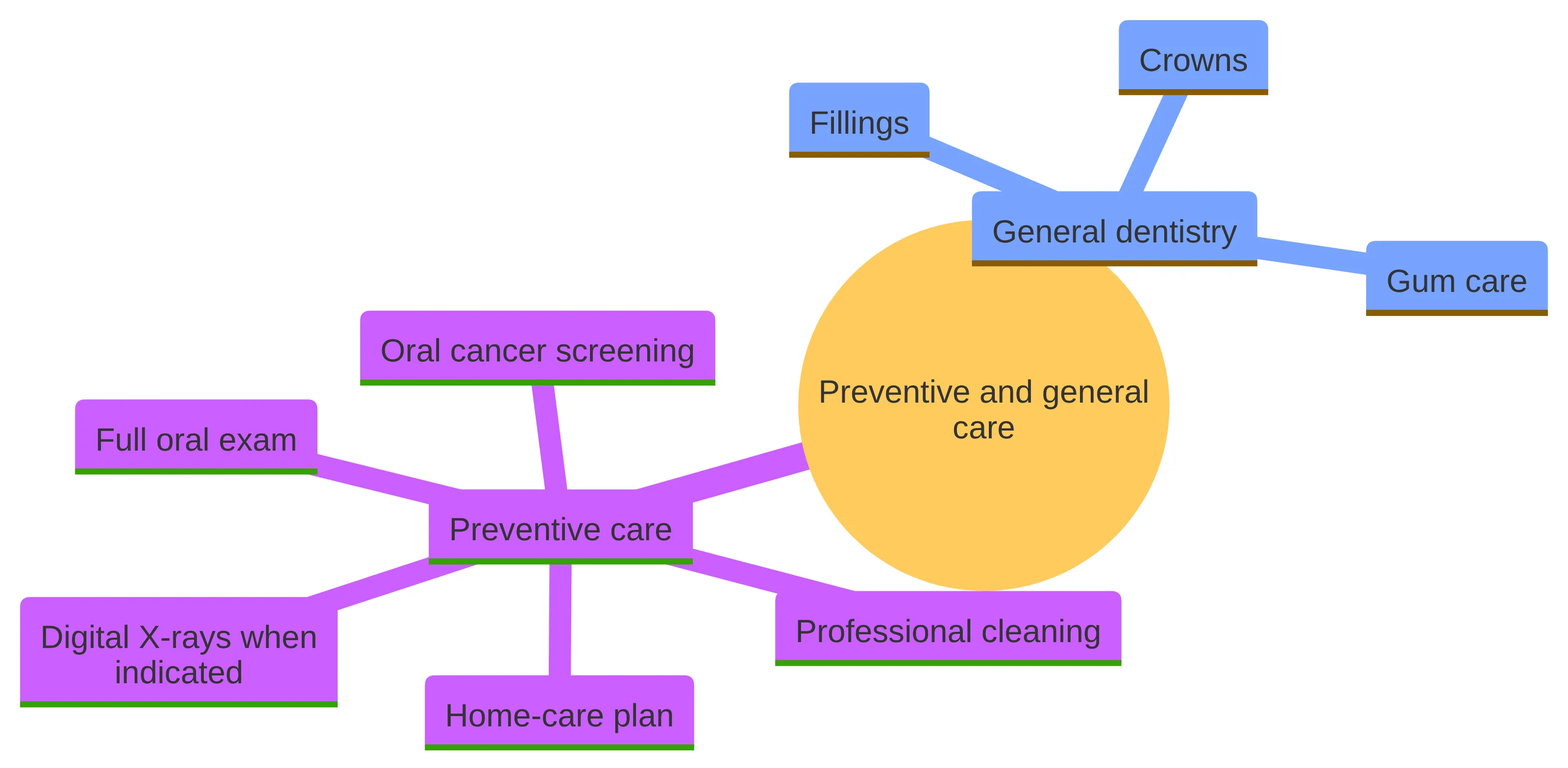
- General and preventive needs: We offer fillings, crowns, gum care, cleanings, examinations, and related care.
- Cosmetic, digital, and restorative goals: We offer cosmetic dentistry, teeth whitening, digital dentistry, restorative care, Invisalign, and dental implants.
A service category tells you what we offer, not which service you need. If having one practice for these conversations matters to your decision, this scope gives you a reason to ask about fit without assuming a diagnosis, treatment plan, coverage, or outcome.
Reading the list by purpose can make it easier to decide what to mention in an inquiry. Preventive and general categories relate to recurring oral-care conversations and common services such as fillings, crowns, gum care, cleanings, and examinations. Family care matters when more than one age group may use the practice, while the Child Membership Plan is a specific practice offering with its stated age and insurance condition. Cosmetic and teeth-whitening services relate to appearance goals; digital dentistry describes tools or capabilities that may be relevant to planning; restorative care, implants, and same-day crowns relate to the restorative scope identified in the supplied practice information. Invisalign is another listed service, not a conclusion that alignment care is appropriate for a particular person.
This distinction helps keep a search result from doing too much work. A category can tell you what to ask about, but it cannot identify the cause of a concern, select among alternatives, or predict the result. For a family inquiry, you might describe the age groups and the type of care each person wants to discuss. For a restorative inquiry, you might mention whether your interest concerns a damaged, decayed, or missing tooth without treating that description as a diagnosis. For a cosmetic inquiry, state the appearance change you want to discuss. The practice’s documented scope then gives the conversation a relevant starting point.
Test the practice against your ongoing-care needs
Use preventive and general care to test whether the practice matches the kind of ongoing care you want to discuss. We offer general dentistry including fillings, crowns, gum care, and more, and we treat patients of all ages. For children 13 and under who do not have dental insurance, we offer a Child Membership Plan.
Every preventative visit with us includes oral cancer screening and an evidence-based home-care plan tailored to specific risk factors. This gives you a concrete way to compare the practice’s preventive scope with your household’s needs. It does not tell you what is causing a symptom or which service is appropriate for an individual.
If your local decision depends on combining routine care with a later general, restorative, or cosmetic discussion, raise that broader goal when you inquire. The service range can inform your choice of practice; a dental professional must address individual treatment questions.
Preventive care is also a useful place to distinguish a documented service from a personal conclusion. The practice describes a preventive visit as including oral cancer screening and a home-care plan tailored to specific risk factors. Those inclusions describe the practice’s stated visit format; they do not interpret a finding or tell you how often you personally should attend. General dentistry supplies a separate way to describe common care, including fillings, crowns, and gum care. The two categories can overlap in a real conversation, but a category label alone does not turn a concern into a diagnosis.
For a household decision, note whether you are looking for routine care, care for a child, a general concern, or a later restorative discussion. The practice treats patients of all ages, and its child plan has the stated limit of patients 13 and under who do not have dental insurance. That information may help you frame a question about family care, while the practice would need to address current terms and an individual’s circumstances directly.
This section is most useful as a comparison point. It lets you ask whether the practice’s preventive and general scope matches the kind of relationship you want to establish, without presenting the listed services as a promise of a particular visit or outcome.
Consider cosmetic and digital capabilities in context
Cosmetic and digital dentistry can be useful parts of your inquiry when your goal involves appearance, tooth shape, tooth color, planning, or restoration. These are documented services and tools, not guarantees about what your treatment will involve or what result you will receive.
A useful consultation separates three questions:
- What change are you seeking? You might want to discuss color, shape, alignment, a damaged tooth, or a replacement for a missing tooth. Describe the change in ordinary terms before settling on a treatment label.
- What does the examination show? The condition of the teeth and surrounding oral structures can affect which options a dental professional discusses. An online service description cannot make that determination for you.
- What would the proposed option require? Ask about the steps, tooth preservation, maintenance, costs, and alternatives connected to the plan that is actually proposed.
If digital dentistry is part of the discussion, ask what role it would play in the proposed plan rather than treating its availability as a reason by itself.
If you are considering Invisalign or dental implants, include that goal in your inquiry so the practice can direct the conversation appropriately. The service list identifies those options, but only an individualized dental evaluation can address whether either option belongs in your care plan. Keep the decision centered on your concern, the proposed treatment, and the conditions attached to it.
Digital capability is best assessed by its role in a proposed conversation. Ask whether the practice’s digital approach would be relevant to examination, planning, communication, or a restorative discussion, and ask what information the team can explain before a decision is made. The availability of a digital service does not, by itself, answer whether it will be used or whether it changes the options for a particular person.
The same separation applies to cosmetic services. Teeth whitening is listed as a service, while the practice’s cosmetic approach is described as preserving healthy tooth structure rather than aggressively reshaping teeth. That is a statement of practice approach, not a promised result and not a direction to select whitening or another procedure. You can ask how the proposed option relates to the appearance change you want, what it would involve, and how maintenance would be discussed.
For restorative goals, describe the practical concern in plain language and ask which part of the service range is relevant. Implants, same-day crowns, restorative care, and digital dentistry may all appear in a practice description, but the description does not determine the sequence, extent, or suitability of care. A useful inquiry keeps the goal, examination, options, and conditions as separate parts of the discussion.
Use the first visit as a fit question
Use the first-visit format as a practical fit question rather than as a treatment prediction. We allow about 60 to 90 minutes for a first visit that covers an examination and a written treatment plan.
That format tells you what to expect from the initial conversation, while the conditional cleaning and approximate timing leave room for individual circumstances. It does not establish which treatment you need, what your final cost will be, what insurance will pay, or when an appointment is available. If that format suits the questions you want to bring to a South San Francisco practice, it supports making an inquiry.
The stated duration is an expectation about the first-visit format, not a promise about how a particular appointment will unfold. It can help you decide whether you have enough time to explain your concern, hear the practice’s response, and review the written plan. It also gives you a reason to ask in advance how the practice handles questions about preventive, general, cosmetic, or restorative care.
The written treatment plan is a point for clarification, not a treatment decision made by this guide. Ask what the plan addresses, which items are immediate versus optional, and what questions should be answered before you agree to anything. If a proposed plan involves more than one service, ask how the services relate and whether the financial discussion applies to each part. The practice’s supplied information supports discussing these topics; it does not supply an individualized plan.
When comparing practices, keep the first-visit information in its proper role. A stated time range and visit components can help you judge whether the process fits your needs, while availability, final fees, insurance determinations, and suitability still need current confirmation. That boundary allows a reader to make an informed contact decision without treating a general description as a personal recommendation.
Assess communication and comfort fit
Communication fit can matter as much as service range when dental visits feel stressful. We aim to provide a comfortable and respectful environment with personalized patient care. If discomfort or anxiety is part of your decision, ask how the team explains options, responds to questions, and discusses the concerns you bring.
A literature review recommends an open, welcoming dental environment that encourages questions about oral health, procedures, and treatment options. Use that as a question for the practice, not as a promise about your own experience. A clear explanation of what a proposed service is intended to address can help you decide whether the conversation feels appropriate for your needs.
This lens keeps the local choice personal without turning it into a treatment judgment: you can assess whether the practice’s stated approach matches the way you want dental care discussed, while a dental professional addresses individual suitability.
Communication fit can be assessed before a reader decides whether to continue a conversation. Notice whether the practice’s stated approach addresses the concerns that led you to search: discomfort, anxiety, questions about restorative care, or the need to understand choices. The supplied practice information describes a comfortable and respectful environment and personalized patient care. Those are the terms to compare with your expectations, not a guarantee about how an individual visit will feel.
Questions can also make the inquiry more specific without asking for a diagnosis in advance. You can explain what has made dental care difficult, what you want explained, and whether you need time to consider options. You can ask what information the team would want before discussing a plan and how the proposed care would be described. A literature review’s recommendation of an open, welcoming environment supports asking about this communication style; it does not establish that every practice interaction will have a particular effect.
For a restorative dentistry patient, this may be especially relevant when the concern involves a damaged or missing tooth, anticipated discomfort, anxiety about a visit, or questions about recovery time. Those concerns identify topics to raise, not outcomes to predict. The local-fit decision is whether the practice’s documented approach and the conversation you are seeking appear aligned enough to justify an inquiry.
A small amount of preparation can make that first conversation more focused without turning preparation into a treatment decision. Before the visit, gather your insurance card, a list of current medications, and any prior dental records or X-rays. These are the items the practice asks new patients to bring. Keep them together so you can provide the information when requested; bringing them does not guarantee coverage, a particular service, or a specific recommendation.
It can help to separate the information you are providing from the questions you want answered. Your insurance card supports a conversation about plan information, but benefit verification is not the same as a guarantee of payment or a final statement of what you will owe. A medication list is information for the dental team to consider in the context of your visit, not a reason to change or stop any medication. Prior records or X-rays can be brought as part of the information you want the practice to have available, without assuming that they will determine the next step.
Before contacting the practice, write down the main reason for the inquiry in ordinary language. You might be seeking routine or family care, asking about a general concern, discussing a damaged or missing tooth, or raising an appearance goal. If dental visits have been difficult, note whether your main concern is anxiety, discomfort, understanding the options, or having time to review a plan. This gives the conversation a starting point while leaving diagnosis and treatment choices to the dental professional.
A short question list can keep the visit aligned with your priorities. Ask which part of the proposed discussion addresses your stated concern, what information the practice still needs, and which points require confirmation with your insurer. If more than one family member may receive care, note each person’s age group and the type of discussion sought rather than treating one person’s needs as representative of everyone’s. For restorative or cosmetic questions, ask how the proposed option relates to the goal you described, what alternatives should be discussed, and what maintenance or follow-up questions remain.
This preparation does not make the practice a fit by itself. It simply helps you use the available conversation to compare the practice’s documented services, communication approach, first-visit format, and financial questions with what you are actually seeking.
Assess the approach if dental care feels stressful
Dental anxiety can affect well-being, satisfaction, self-esteem, and daily chewing function, according to a selected survey-based article. The same article reports that delaying or avoiding routine dental care may lead to emergency treatment involving invasive or surgical procedures, which can aggravate anxiety. Those findings explain why comfort and communication belong in your practice-fit decision, even before you know which dental service you may need.
A literature review recommends an open, welcoming dental environment that encourages you to ask questions about your health, procedures, and treatment options. You can turn that recommendation into specific questions for your first conversation:
- Can you explain the purpose of each proposed step in plain language?
- What part of the visit can be discussed before treatment begins?
- What should you tell the team about anxiety, discomfort, or a difficult past dental experience?
- How will the written treatment plan distinguish immediate concerns from later choices?
- What should you ask about the expected number of visits and the financial side of the plan?
That structure gives you a defined occasion to raise concerns and request explanations. It does not promise that you will feel comfortable, eliminate anxiety, or make any procedure appropriate for you.
You can also decide what boundary you need before scheduling. You might want an explanation before agreeing to a procedure, a written plan to take home, or time to discuss insurance and costs. State that preference during the inquiry. A practice may fit your needs more closely when its documented visit structure and your communication expectations line up, but that fit still does not predict an individual emotional or treatment outcome.
Use conservative care as a question for cosmetic decisions
Our cosmetic dentistry approach focuses on preserving healthy tooth structure rather than aggressively reshaping teeth. If appearance is your main concern, make that preservation principle a question to explore instead of treating it as a recommendation for a particular procedure.
You can ask:
- What part of the tooth would the proposed treatment change?
- How does the plan account for healthy tooth structure?
- Are there less extensive options to discuss for the change I want?
- What maintenance or future care would the proposed option involve?
- Which part of the plan is cosmetic, and which part addresses function or existing dental concerns?
- How would teeth whitening, alignment, restorative care, or another option relate to my stated goal?
These questions do not establish that a less extensive option exists for your situation. They help you keep the conversation centered on the amount of change proposed and the reason for it. A cosmetic label alone cannot tell you whether care is suitable or what preparation may be involved.
The same approach can help if you are comparing cosmetic goals with restorative needs. Describe the appearance you want to discuss, then ask how the dental professional would separate that goal from any examination findings. Our conservative approach is a documented practice position; it is not a universal rule that every cosmetic concern should be handled in one particular way.
Check financial fit without assuming coverage
Financial fit is a separate local-choice question. We accept 14 in-network PPO carriers, provide verification of benefits before treatment, and file out-of-network claims for patients. Our supplied pricing lists a new-patient exam at $209, a full digital X-ray series at $274, and an adult cleaning at $209.
These facts identify what to confirm; they do not establish coverage or final patient responsibility. A practice-published article also notes that prosthetic coverage may be excluded or limited and that annual caps may create unexpected out-of-pocket costs.
If the practice’s payment information is relevant to your choice, ask how the listed fees, benefit verification, and claim filing relate to the services you want to discuss. Keep the insurer’s determination and the final treatment details separate from the decision to make an inquiry.
Before relying on a fee or insurance statement, separate four pieces of the financial conversation. First, ask whether your carrier and plan fall within the practice’s listed in-network PPO arrangements. Second, ask what benefit verification can confirm before treatment. Third, ask how an out-of-network claim would be handled if that route applies. Fourth, ask which amount remains subject to your plan’s terms and the proposed services. The practice’s stated processes help define these questions, but they do not replace the insurer’s determination.
The listed figures should be read as supplied prices for the named items: a new-patient exam, a full digital X-ray series, and an adult cleaning. They are not a guarantee of the total amount for an individual visit or treatment plan. A treatment discussion may involve different services, and plan terms may affect responsibility. Keep the figures available as questions to verify rather than using them to calculate a personal estimate.
Coverage questions can be particularly important for restorative or implant-related discussions because the selected practice-published article notes possible limitations for prosthetic coverage and annual caps. That general article does not determine how your plan will treat a specific service. Ask the practice and insurer to distinguish network status, benefit information, exclusions, limitations, caps, and patient responsibility. Confirm current details before publication or before relying on them for a care decision.
Keep practice fit separate from treatment suitability
A local-fit decision can stay narrower than an individual treatment decision. Consider four questions:
- Location: Is South San Francisco workable from where you live, including if you are in Daly City?
- Scope: Does the range—family, preventive, general, cosmetic, digital, restorative, Invisalign, and implants—cover the care you want to discuss?
- Approach: Does a comfortable, respectful, personalized setting match what you want from a dental practice?
- Practical questions: Are you ready to confirm current visit details, fees, benefits, and patient responsibility rather than assume them?
If the answers point toward a conversation, the practice may be worth contacting. They do not mean you need a particular procedure, qualify for coverage, or will receive a particular result. Individual suitability remains a matter for a dental professional after reviewing your circumstances.
Use Start Now when the local fit is clear
Westborough Dental Care may fit your local search if South San Francisco is workable and our service range matches the preventive, family, general, cosmetic, digital, or restorative care you want to discuss. The next step is to use the Start Now form to begin an appointment inquiry. That inquiry does not assume a diagnosis, treatment outcome, appointment availability, insurance payment, or final patient responsibility.
Local-fit questions to ask before contacting Westborough Dental Care
What services does Westborough Dental Care offer?
Westborough Dental Care provides a range of services including family, preventive, general, cosmetic, digital, and restorative dentistry, as well as Invisalign and dental implants.
What are the costs associated with a new patient exam?
A new-patient exam at Westborough Dental Care costs $209, a full digital X-ray series costs $274, and an adult cleaning costs $209.
What insurance plans does Westborough Dental Care accept?
Westborough Dental Care accepts 14 in-network PPO carriers and provides verification of benefits before treatment.
Need help applying this?
Talk to a billing specialist who knows your payer mix.
Westborough Dental Care welcomes new patients in South San Francisco. Book a visit to meet Dr. Zoulas and the team.
Schedule a meeting